

Tropical Wedding Bouquets Flame Bird
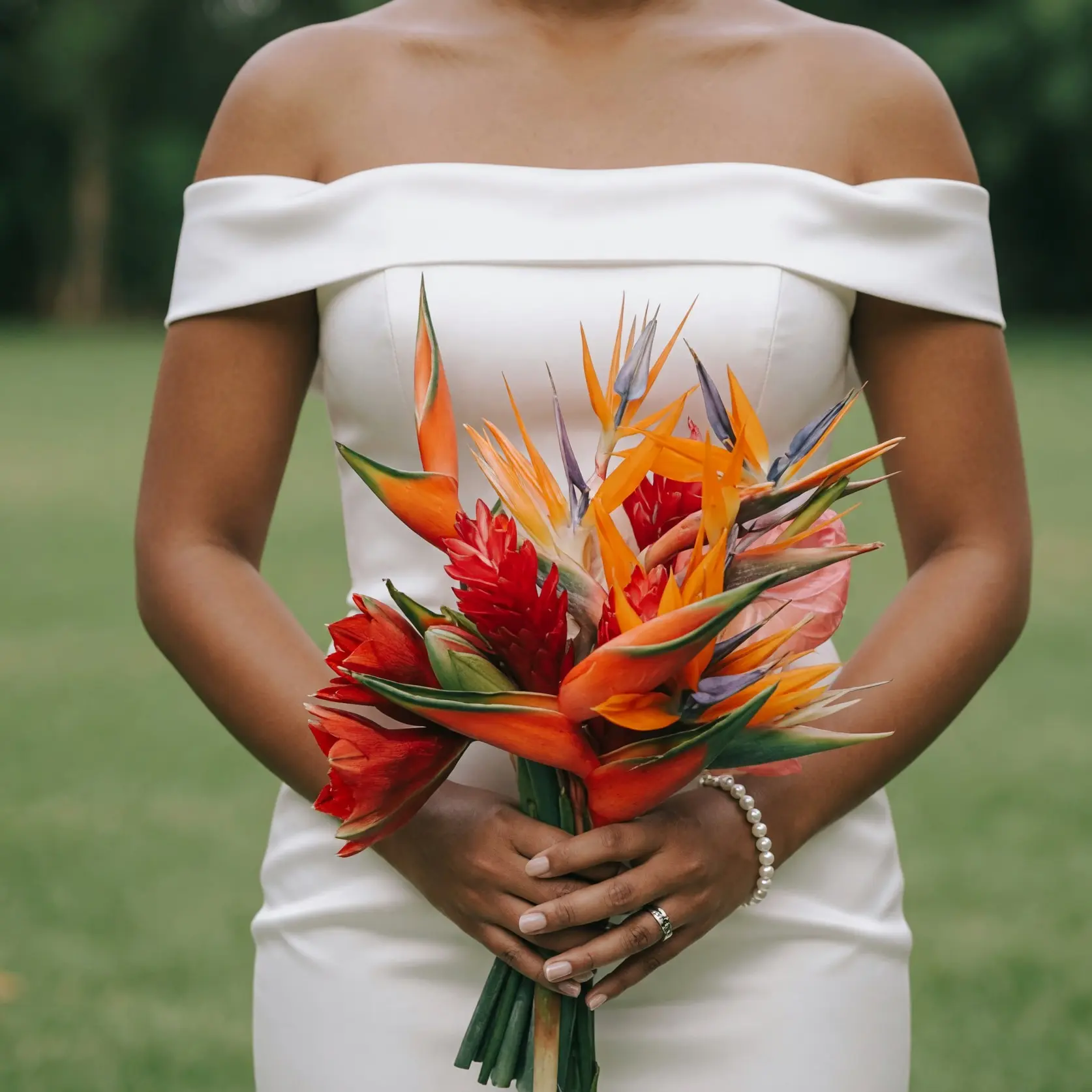
Tropical Wedding Bouquets Flame Bird features brilliant bird of paradise, scarlet ginger, heliconia, and sculptural orange-red tropical blooms in a clean architectural arrangement. Ideal for destination, beach, botanical garden, resort, summer, and modern weddings.

-
Free standard delivery on orders of $50 or more in the Greater Vancouver Area
bridal flower centerpieces inspire this fiery tropical bouquet with bird of paradise, red ginger, heliconia, and sculptural orange blooms.
Tropical Wedding Bouquets Flame Bird is an unapologetically architectural bridal arrangement designed around shape, movement, and saturated tropical color. Rather than relying on roses or soft garden flowers, this bouquet celebrates the graphic beauty of bird of paradise, heliconia, red ginger, and other exotic blooms. Fiery orange, scarlet, coral, and flashes of blue-violet create a vivid composition that stands beautifully against a clean white wedding gown.
Bird of paradise is the defining element of Flame Bird. Its long orange petals and distinctive dark blue accents rise above the bouquet like elegant botanical wings. Several stems point in different directions, creating a sense of motion that gives the arrangement its energetic personality. Instead of appearing carefully rounded, the bouquet feels almost sculptural, with each flower contributing to an expressive silhouette.
Large heliconia-style blooms form another important layer. Their orange-red bracts extend horizontally and diagonally from the center, adding weight and structure around the bride’s hands. Deep green edging on some petals provides subtle contrast and connects the flowers naturally with the stems below.
Red ginger introduces a richer, more compact shape. The tightly layered crimson blooms sit between the longer tropical flowers, preventing the design from becoming too spiky. Their dense texture adds depth while reinforcing the bouquet’s fiery color story.
Coral and red tropical flowers appear throughout the lower portion, creating a strong visual base. These blooms keep the arrangement balanced and give the bouquet a gradual transition from broad flowers near the hands to narrow bird of paradise petals above.
One of Flame Bird’s most appealing characteristics is its limited palette. Nearly every flower remains within a spectrum of scarlet, orange, coral, and warm red. The small flashes of violet-blue found in bird of paradise act as natural accents rather than introducing an entirely separate color family.
This controlled palette allows the dramatic flower shapes to become the primary focus. Instead of looking busy, the arrangement feels intentional and graphic.
The bouquet contains noticeably less filler foliage than many tropical designs. Green stems and narrow botanical elements are visible, but the flowers themselves create most of the silhouette. This gives Flame Bird a contemporary, editorial quality that works especially well with sleek bridal fashion.
A minimalist off-the-shoulder gown is an ideal pairing. The dress provides a smooth neutral background, allowing the fiery flowers to appear almost like botanical sculpture. The strong horizontal neckline also balances the upward movement of the bouquet.
Flame Bird can work beautifully with structured satin, mikado, crepe, or silk gowns. These fabrics offer clean surfaces that emphasize the unusual tropical geometry. Brides wearing simpler dresses may particularly appreciate how much personality the bouquet adds without requiring elaborate accessories.
The arrangement can also accompany lace, though the effect becomes more eclectic. Intricate embroidery paired with bold tropical flowers creates a mixture of traditional bridal romance and modern destination styling.
Gold jewelry works naturally with Flame Bird. Warm metal tones enhance orange petals and complement the bouquet’s sunlit character. Pearls provide a softer contrast and can make the overall look feel more classic.
For brides who prefer a highly coordinated wedding palette, bridesmaid dresses in terracotta, coral, paprika, rust, burnt orange, deep red, or forest green can complement the flowers. Neutral champagne and beige dresses would allow the bouquets to become the strongest source of color.
Smaller bridesmaid arrangements should not necessarily duplicate Flame Bird. A simple gathering of one red ginger flower and a few bird of paradise stems can create a coordinated but lighter companion bouquet.
Another attractive option is to give attendants mostly orange tropical flowers while reserving the deepest scarlet blooms for the bride. This creates subtle hierarchy while keeping the wedding party visually connected.
The bouquet is naturally suited to destination weddings, tropical resorts, modern beach ceremonies, botanical gardens, contemporary estates, greenhouse venues, and bold summer celebrations. It can also work surprisingly well at minimalist city weddings where dramatic flowers provide contrast against simple architecture.
The same fiery botanical language can inspire bridal flower centerpieces throughout the reception. Low arrangements can combine red ginger, heliconia, and bird of paradise in dark ceramic bowls or clear glass vessels.
Rather than densely packing every centerpiece, allow several tropical flowers to stand individually. Their unusual forms are most impressive when guests can see the shape of each bloom.
For long reception tables, individual bird of paradise stems can alternate with red ginger and heliconia in slender vases. This creates rhythm without requiring large floral arrangements at every seat.
If a wedding arch is planned, Flame Bird’s asymmetry can be translated into strong directional clusters. Position bird of paradise stems so they radiate outward from selected points, then build depth underneath with ginger and tropical foliage.
Leaving parts of the arch uncovered will make the flowers appear more architectural. Tropical flowers rarely need to cover every inch of a structure to create visual impact.
For aisle decor, one bird of paradise or a compact red ginger cluster can be enough. Repeating the flowers only at selected rows keeps the design sophisticated and allows the bridal bouquet to remain distinctive.
The color palette also translates beautifully into stationery. Burnt orange envelopes, warm red wax seals, ivory invitations, dark green typography, or subtle gold foil can echo the bouquet without copying it literally.
Table decor can stay restrained. White or cream linens provide the strongest contrast, while natural wood, woven textures, amber glass, and brass candleholders complement the tropical warmth.
For evening receptions, dark green or charcoal table accents can deepen the atmosphere. Against darker backgrounds, orange and red tropical flowers can appear especially luminous under candlelight.
When discussing the arrangement with your florist, describe Flame Bird as tropical, structural, flower-forward, vertical, warm-toned, and contemporary. Emphasize that you want the long bird of paradise forms to remain visible rather than being shortened or buried inside the arrangement.
Ask for a bouquet that has movement in several directions. It should feel balanced in the hands but not perfectly symmetrical. The upper petals can extend vertically, while broader heliconia flowers create width through the middle.
Specialty tropical flower availability can vary. If an exact variety is unavailable, a florist may use related heliconia, ginger, strelitzia, or sculptural tropical blooms while preserving the same fiery palette and directional character.
The stems can be wrapped simply in ivory, white, warm beige, or muted terracotta ribbon. Because the flower shapes are already visually complex, an understated handle is usually the most elegant choice.
Before the ceremony, keep Flame Bird in a shaded indoor location away from direct sunlight. Tropical flowers are often durable, but cut stems can still lose freshness when exposed to prolonged heat.
If your florist recommends hydration, place the stems in clean water while keeping the wrapping dry. A tall supportive vase is preferable so the long upper flowers are not forced against a wall or surface.
Carry the bouquet from the wrapped stem section. Avoid holding bird of paradise petals or repeatedly repositioning the heliconia because pressure can alter their sculptural lines.
When placing the bouquet down, keep it upright in a vase rather than laying it flat. The pointed flowers can bend or shift if pressure is applied from the side.
During outdoor photographs, place Flame Bird in the shade during extended pauses. Although its stronger tropical flowers can handle wedding-day movement well, excessive heat and direct sun should still be minimized.
If the wedding schedule includes a long break between the ceremony and reception, follow the florist’s specific instructions regarding water, temperature, and handling.
After the celebration, selected tropical flowers may be suitable for drying or professional preservation. A preserved bird of paradise petal, section of ginger, ribbon, or pressed botanical detail can become a distinctive keepsake.
Tropical Wedding Bouquets Flame Bird is created for a bride who wants the bouquet to feel expressive rather than conventional. Bird of paradise provides dramatic movement, red ginger adds concentrated color, heliconia contributes structure, and the fiery orange-red palette creates a wedding arrangement that is energetic, polished, and unmistakably tropical.
Only logged in customers who have purchased this product may leave a review.
Related Products


Peach Petals flower centrepiece for Wedding table
Price range: $79.00 through $149.00
Recently Viewed Products


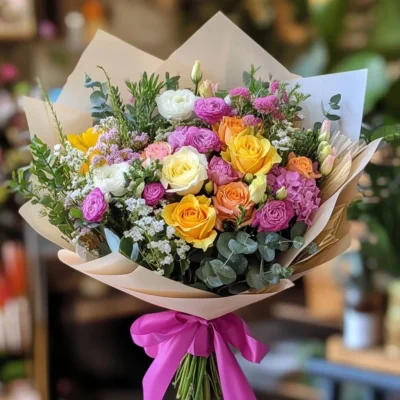

Birthday Bouquet Spring Notes: A Cheerful Celebration in Full Bloom
Price range: $99.00 through $229.00


Reviews
There are no reviews yet.