

Tropical Wedding Bouquets Coral Anthurium
Tropical Wedding Bouquets Coral Anthurium combines red anthurium, vivid orange heliconia, coral tropical blooms, blush accents, golden textures, and glossy dark foliage. Its compact sculptural design is ideal for destination, beach, resort, botanical garden, greenhouse, summer, and contemporary weddings.

-
Free standard delivery on orders of $50 or more in the Greater Vancouver Area
bridal flowers bouquets turn tropical with coral ginger, orange heliconia, red anthurium, pink accents, and glossy green foliage.
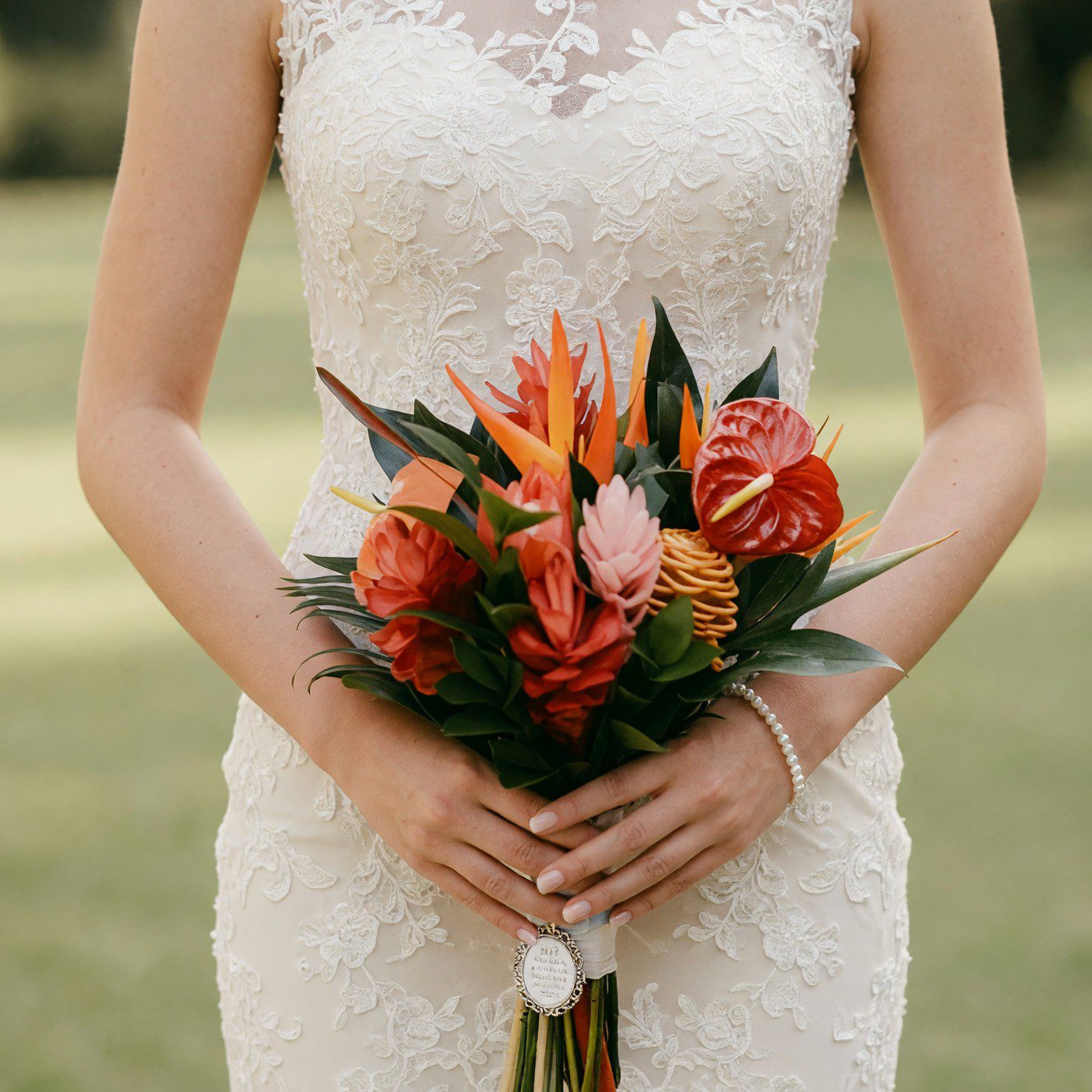
Tropical Wedding Bouquets Coral Anthurium is a compact statement bouquet created for a bride who wants tropical flowers without an oversized cascade. The arrangement combines vivid orange and coral petals, sculptural red anthurium, pale pink tropical blooms, golden textural accents, and layers of glossy dark green foliage. Its silhouette is tidy enough for a formal ceremony, yet the pointed flowers and architectural leaves give it unmistakable destination-wedding energy.
The most striking element is the rich red anthurium positioned near the upper right side. Its polished heart-shaped surface contrasts with almost every other texture in the bouquet. A pale central spadix brings definition to the flower, while its warm red tone connects beautifully with the surrounding coral and orange blooms. Because only a small number of anthuriums are needed to create impact, the design feels intentional rather than overloaded.
Bright orange heliconia-style flowers give Coral Anthurium its strong upward movement. Their pointed petals rise through the center like tropical flames, producing a narrow architectural profile. These shapes are especially effective against a lace bridal gown because the clean tropical lines stand apart from the intricate embroidery of the dress.
Coral flowers add softer volume around the lower center. Their layered petals introduce a more romantic shape and keep the arrangement from becoming too sharp or geometric. Some lean toward deep salmon, while others appear warmer and almost burnt orange, creating natural variation within the tropical palette.
A pale blush tropical bloom offers an unexpected moment of softness. Positioned among darker reds and oranges, it acts almost like a visual pause. Its powder-pink petals make the bouquet feel bridal rather than purely botanical and provide an elegant connection to softer wedding details such as blush stationery, champagne linens, or rose-toned bridesmaid dresses.
Golden textural flowers add another distinctive layer. Their curled or radiating forms are dramatically different from the smooth anthurium and pointed heliconia. Warm ochre and amber tones also bridge the transition between coral flowers and deep green leaves, making the entire arrangement feel more unified.
The foliage is deliberately dark and glossy. Broad tropical leaves surround the flowers and form a strong green base, while narrower pointed leaves project outward to create direction. Instead of using greenery only to fill empty spaces, Coral Anthurium treats leaves as important design elements in their own right.
This is one of those bridal flowers bouquets where shape matters as much as color. The design remains relatively compact near the hands, which makes it comfortable to carry, but pointed blooms extend upward and outward in selected places. The result is sculptural rather than round, creating a modern tropical silhouette without becoming difficult to manage.
Coral Anthurium works beautifully with lace because the smooth tropical flowers contrast with intricate fabric. It can be equally effective with satin or crepe, where the flowers become even more graphic against a minimalist gown. Off-the-shoulder dresses are particularly suitable because the bouquet’s vertical lines echo the clean structure of the neckline.
Pearl accessories create an appealing contrast with the tropical palette. They bring traditional bridal softness to an arrangement filled with strong reds, oranges, and dark greens. Warm gold jewelry can instead emphasize the bouquet’s amber and coral tones, giving the overall look a richer destination atmosphere.
The bouquet suits beach ceremonies, botanical gardens, tropical resorts, greenhouse weddings, modern estates, destination celebrations, and summer receptions. It can also provide an exotic focal point in a clean indoor venue where the couple wants flowers to introduce most of the color.
Bridesmaid bouquets can be significantly simpler. One red anthurium, one orange tropical flower, and a few glossy leaves may be enough to create a strong connection to the bridal bouquet. This keeps the bride’s arrangement visually richer while maintaining a consistent floral language across the wedding party.
Another option is to give bridesmaids arrangements made mostly from tropical greenery with coral accents. This is especially effective with warm neutral dresses, terracotta, sage, champagne, deep green, or muted pink. The bride then carries the fullest concentration of vivid flowers.
For ceremony styling, use tropical foliage as the main structure rather than covering an arch with flowers from edge to edge. Broad leaves can create volume, while orange heliconia and red anthurium appear in concentrated clusters. Leaving open sections between floral groups will make the installation feel contemporary and architectural.
The aisle can remain minimal. A single tropical leaf tied to selected chairs or small groups of coral flowers and greenery can create enough continuity without overwhelming the ceremony setting. Tropical designs often become more luxurious when individual botanical elements have space around them.
Reception centerpieces can reinterpret Coral Anthurium in lower arrangements. Wide bowls with dark greenery, red anthurium, coral tropical blooms, and a few golden accents would create dramatic tables without blocking conversation. Long tables could use separate bud vases featuring individual tropical flowers for a cleaner editorial effect.
The bouquet’s palette coordinates naturally with burnt orange, terracotta, coral, deep red, blush, black-green, warm ivory, and gold. For a brighter beach aesthetic, pair the flowers with white linen, pale wood, and woven natural textures. For an evening celebration, consider dark green napkins, amber glass, black details, or warm metallic accents.
Coral Anthurium can be especially attractive for summer and destination weddings, but the palette can also work in early autumn. A florist can deepen the reds, increase burnt orange tones, and use darker tropical leaves to create a richer seasonal interpretation.
Exact tropical flower availability varies, so substitutions may be necessary. Anthurium, ginger, heliconia, protea-style textures, or related exotic flowers can be adjusted depending on the season and market. The bouquet’s identity comes from the combination of sculptural red flowers, pointed orange forms, coral petals, blush details, and dark tropical foliage.
When discussing bridal flowers bouquets with your florist, describe this design as compact, tropical, sculptural, warm-toned, and architectural. Mention that you want clear individual flower shapes rather than a densely packed round arrangement. Ask for strong red and orange focal blooms balanced by glossy foliage and one or two softer blush accents.
Before the ceremony, keep Coral Anthurium in a cool shaded location away from prolonged direct sunlight. Tropical flowers are often relatively sturdy, but extreme heat and sudden temperature changes can still affect their freshness. Avoid leaving the bouquet inside a parked vehicle.
If your florist recommends hydration, place the stems in clean fresh water while keeping decorative wrapping dry. Use a container with enough space that large leaves are not folded against the rim.
Carry the bouquet from the wrapped stem area rather than gripping the flowers or broad foliage. Anthurium surfaces can mark when repeatedly touched, while pointed tropical petals may shift if handled too much. The florist’s original angles should be preserved whenever possible.
When resting the bouquet, keep it upright in a supportive vase. Avoid laying it flat on a chair or tabletop because broad leaves can crease and sculptural flowers can be pressed out of position.
During photography, hold the bouquet slightly forward from the dress. This makes the orange and red flowers easier to see and allows the dark greenery to form a clean outline against the gown. Rotating it subtly between portraits can reveal different tropical textures.
For an outdoor ceremony, return the bouquet to shade during longer breaks. Even durable tropical varieties benefit from protection when they are not actively being photographed or carried.
After the wedding, selected tropical leaves and some sturdy flowers may be suitable for drying or professional preservation. A preserved anthurium, a piece of foliage, ribbon, and invitation paper can create a bold botanical keepsake with a very different character from traditional pressed rose petals.
Tropical Wedding Bouquets Coral Anthurium combines heat, structure, and bridal elegance in one compact composition. Red anthurium brings polish, orange heliconia creates movement, coral petals add warmth, blush flowers soften the palette, and glossy foliage gives the bouquet its distinctive tropical finish.
Only logged in customers who have purchased this product may leave a review.
Related Products
Recently Viewed Products


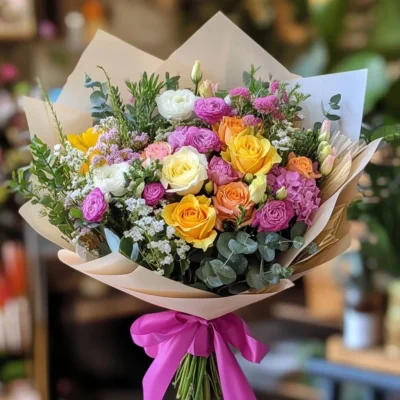

Birthday Bouquet Spring Notes: A Cheerful Celebration in Full Bloom
Price range: $99.00 through $229.00


Reviews
There are no reviews yet.