

Garden Style Wedding Bouquets Coral Fern
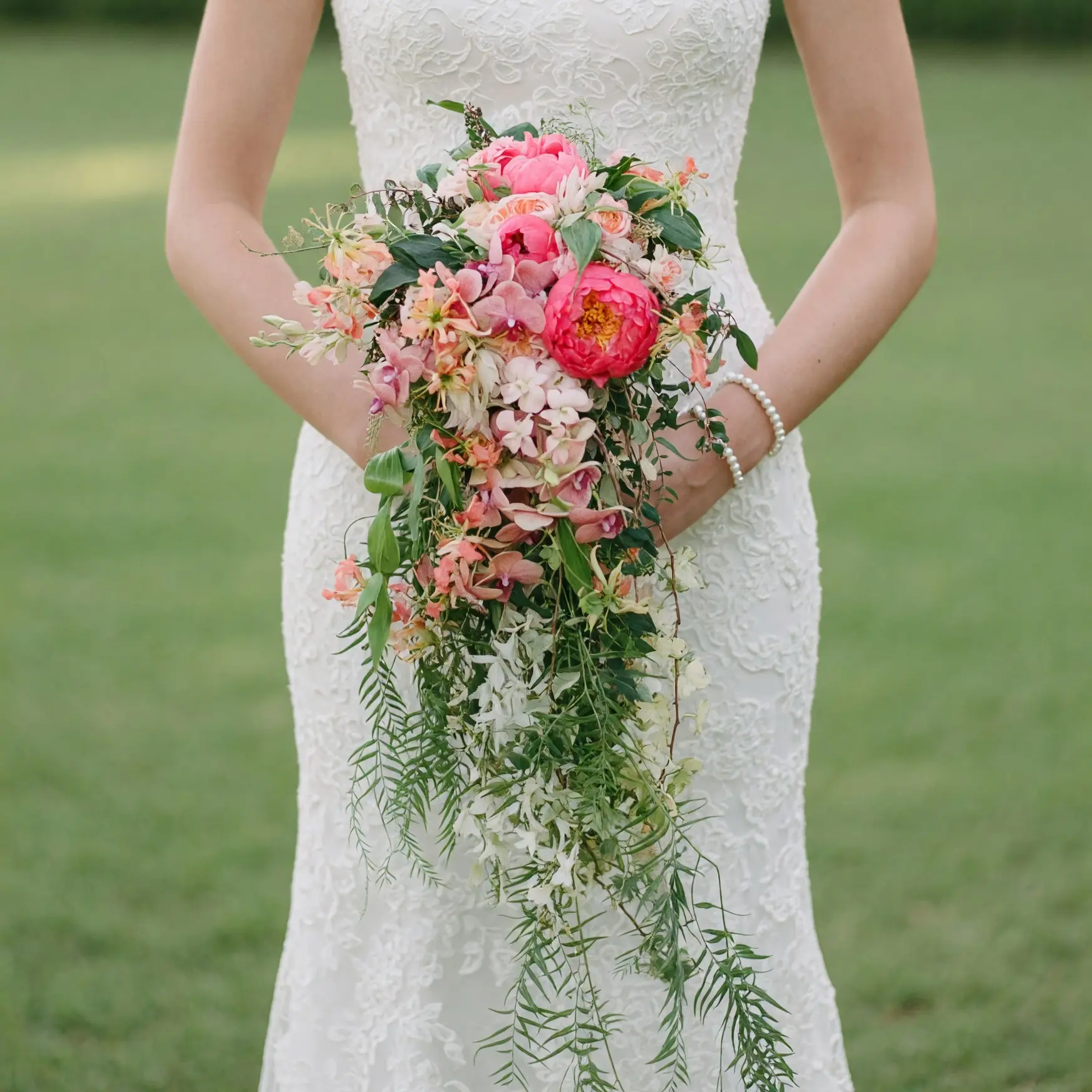
Garden Style Wedding Bouquets Coral Fern combines vivid coral peony-style blooms, peach roses, blush orchids, ivory flowers, delicate vines, and exceptionally long fern greenery. Its dramatic botanical cascade is ideal for garden, vineyard, estate, greenhouse, summer, and romantic outdoor weddings.

-
Free standard delivery on orders of $50 or more in the Greater Vancouver Area
bridal flowers bouquets become expressive with coral peonies, blush orchids, ivory blossoms, fern fronds, and an exceptionally long cascade.
Garden Style Wedding Bouquets Coral Fern is less about perfect symmetry and more about the sensation of flowers continuing to grow after they have been gathered. A vivid coral peony-style bloom anchors the composition, surrounded by peach roses, blush orchids, creamy flowers, pale pink petals, and layers of deep botanical greenery. From this colorful floral center, the bouquet stretches dramatically downward through delicate fern fronds, fine vines, white blossoms, and narrow leaves.
The first impression is warm and joyful. Coral sits at the heart of the palette, but it appears in several interpretations rather than one solid shade. The largest flowers carry saturated pink-coral petals, while nearby roses lean toward peach and apricot. Softer flowers bring shell pink and blush into the mix, creating a gradual transition from vivid color to gentler bridal tones.
A large coral peony-style flower becomes the natural focal point. Its open petals reveal a textured golden center, giving the bouquet an almost painterly quality. Instead of surrounding it with identical flowers, the design places smaller blooms nearby, making the large flower feel even more generous. It gives the bouquet personality without needing multiple oversized focal flowers.
Orchid-like blossoms introduce a different mood. Their sculptural petals are smoother and more delicate than the roses and peonies, creating an elegant counterpoint to the garden flowers. Pale pink and peach orchid tones appear throughout the middle section, linking the stronger coral blooms with ivory flowers and greenery.
Creamy white flowers gradually become more visible as the bouquet begins to cascade. They provide essential lightness and stop the arrangement from feeling overly saturated. Their placement also creates a beautiful relationship with the wedding dress, especially where the cascade crosses white or ivory fabric.
The greenery is where Coral Fern becomes unmistakably distinctive.
Rather than using leaves only around the perimeter, this bouquet allows foliage to take over the lower half. Fern-like stems create delicate feathered lines, while narrow trailing leaves add length and movement. Fine vines twist between the flowers and continue far below the central arrangement. The cascade feels wild at first glance, yet the repeated green tones give it a clear visual rhythm.
The long fern fronds are particularly beautiful because they contrast with the softness of the flowers. Large coral petals feel lush and romantic; the greenery beneath them looks light, linear, and almost weightless. This creates a bouquet that changes character as the eye moves downward—from abundant floral color to a floating botanical waterfall.
Unlike a traditional cascade where flowers remain densely packed from top to bottom, Coral Fern becomes increasingly transparent. Individual vines and leaves remain visible against the gown, leaving generous areas of negative space. This allows the dress to remain part of the composition rather than disappearing behind the bouquet.
The arrangement is especially effective with a fitted bridal gown. Its vertical movement follows the line of the dress and visually lengthens the silhouette. Lace works beautifully because the fine greenery echoes embroidered botanical motifs. With smooth satin or crepe, the contrast becomes more modern, allowing every vine and flower to stand out clearly.
Coral Fern can suit a variety of venues while keeping its own personality. In a garden, it feels naturally abundant. At a vineyard, the warm flowers complement outdoor light and greenery. At an estate, the dramatic cascade becomes a sophisticated statement. In a greenhouse or conservatory, the fern-heavy lower section feels almost architectural.
For brides who love bridal flowers bouquets with movement, this design offers something more expressive than a compact hand-tied arrangement. It has enough floral volume for traditional bridal romance, but its elongated greenery introduces a freer, more botanical character.
Bridesmaids can carry simplified bouquets rather than scaled-down cascades. Smaller arrangements of peach roses, blush orchids, ivory flowers, and short greenery would coordinate beautifully while leaving the long fern movement exclusively for the bride. This difference helps the bridal bouquet feel intentional and special.
Another option is to give bridesmaids softer versions of the palette. Champagne, blush, and cream bouquets with only small coral accents would create a gradual visual build toward the bride’s stronger flowers. Sage or dusty rose dresses would work especially well with this approach.
The ceremony setting could borrow the same transition from flowers to greenery. An arch might feature concentrated coral and peach flowers around one focal area, with loose vines and fern-like greenery extending outward. Leaving portions of the structure uncovered would echo the bouquet’s open, organic lower section.
For aisle styling, consider small floral clusters that become progressively more colorful closer to the ceremony space. Early rows might use only greenery and ivory flowers, while coral and blush tones appear nearer the altar. This creates visual progression without requiring elaborate arrangements on every chair.
Reception flowers can interpret Coral Fern more horizontally. Low arrangements of peach roses, ivory blossoms, coral focal flowers, and fern textures could spread gently across the tables. Long greenery runners would also work beautifully on banquet tables, especially when broken up with small clusters of warm flowers.
The color palette offers plenty of decorative options. Dusty coral, blush, peach, warm ivory, sage, and muted green can appear in napkins, menus, candles, ribbons, or bridesmaid dresses. Couples who prefer a cleaner reception can keep the room neutral and let the flowers provide nearly all the color.
Coral Fern is particularly attractive from late spring through early autumn, but its mood can be adapted throughout the year. Spring versions might use more pale blush and fresh green. Summer can emphasize vivid coral and peach. Early autumn could introduce slightly deeper rose and copper tones while keeping the same cascading structure.
The exact flowers may naturally change with seasonal availability. That does not weaken the design because its identity depends primarily on the relationship between warm coral flowers, orchid-like details, ivory blossoms, and extremely long fine greenery. A florist can select fresh seasonal alternatives while preserving the same visual energy.
When discussing bridal flowers bouquets with your florist, emphasize the length and openness of the cascade. Ask for a floral-rich upper section that gradually transitions into separate fern fronds, vines, and lightweight greenery. Mention that the lower half should remain airy enough for the dress to show through.
Before the ceremony, keep Coral Fern in a cool location away from direct sun and warm airflow. Large soft flowers can lose moisture quickly, while fine fern stems may wilt if exposed to heat for extended periods. Never leave the bouquet inside a parked vehicle.
If your florist recommends hydration, use a tall clean vessel with fresh water. The container should be high enough to support the stems without forcing the cascading greenery onto the table. Keep ribbon and decorative wrapping safely above the water line.
When lifting the bouquet, always use the wrapped handle. Do not gather the hanging greenery into your other hand unless absolutely necessary. The free movement of the fern fronds is an intentional design feature, and folding them upward may create bends that remain visible.
For photographs, hold the bouquet slightly away from the dress so the longest stems can fall naturally. A photographer may also ask you to rotate it slightly, revealing different flowers and showing the dimensional quality of the cascade.
If the bouquet needs to rest, return it to a tall vase rather than placing it flat. Check that no trailing stems are trapped beneath the container. Delicate greenery can crease easily when pressed for long periods.
During outdoor portraits, give the bouquet occasional breaks in the shade, especially on warm days. If several hours separate the ceremony from the reception, ask the florist whether the main stems should return to water.
After the wedding, selected coral petals, orchids, and smaller flowers can be pressed or professionally preserved. Fern leaves are also especially attractive in botanical frames. A preserved combination of one coral flower, fine greenery, and a piece of wedding stationery could capture the character of the bouquet beautifully.
Garden Style Wedding Bouquets Coral Fern is designed for a bride who wants her flowers to feel alive. Coral blooms provide warmth and romance, orchids introduce refinement, ivory petals bring bridal softness, and the extraordinary fern cascade creates a flowing botanical finish that is impossible to overlook.
Only logged in customers who have purchased this product may leave a review.
Related Products

Recently Viewed Products


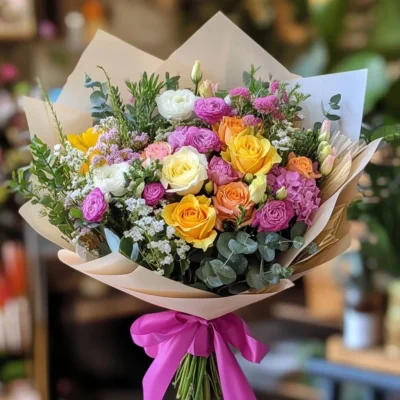

Birthday Bouquet Spring Notes: A Cheerful Celebration in Full Bloom
Price range: $99.00 through $229.00


Reviews
There are no reviews yet.