

Fall Wedding Bouquets Autumn Garden Reverie
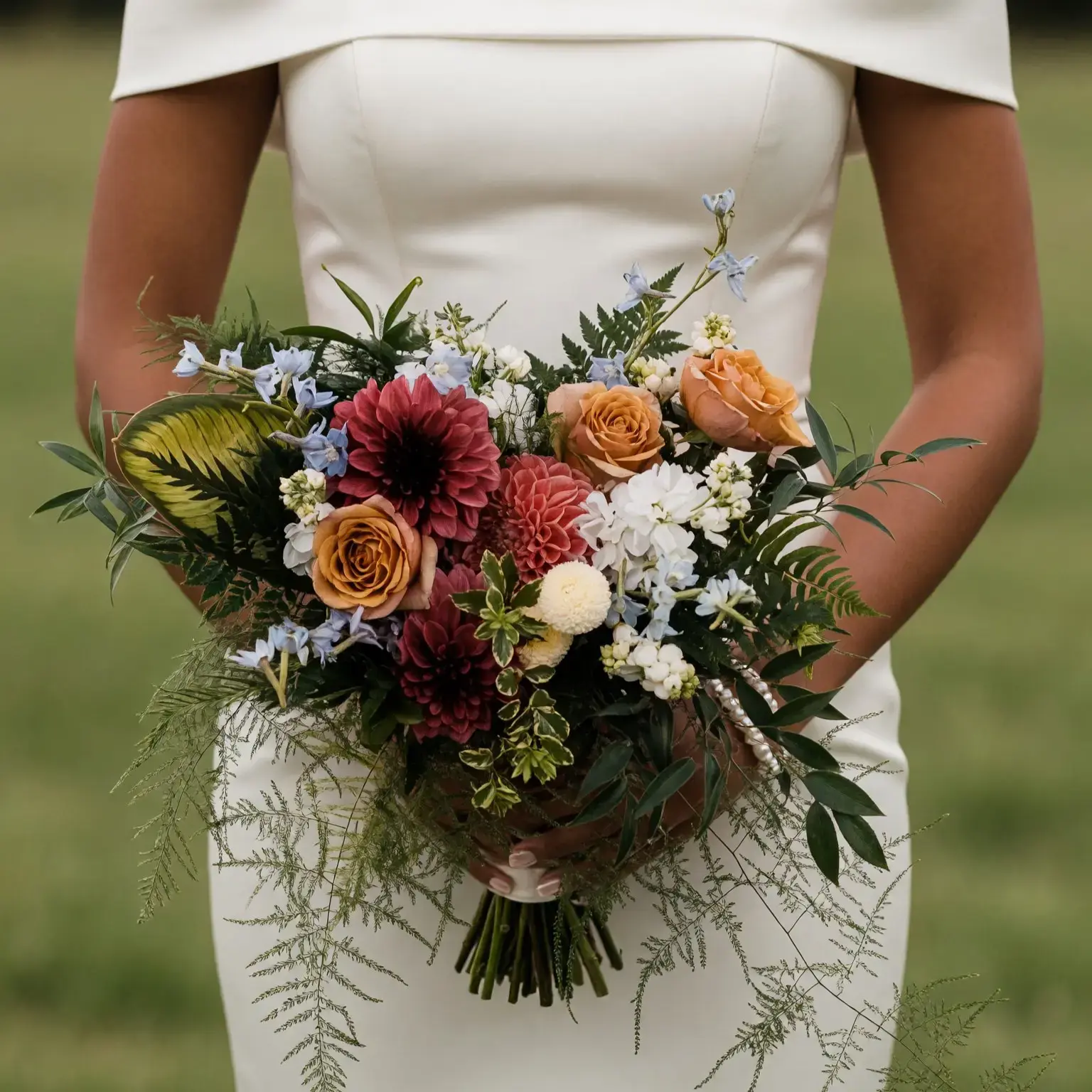
A romantic fall bridal bouquet featuring copper and caramel roses, burgundy and dusty rose flowers, pale blue accents, creamy blooms, and abundant garden greenery. Its loose organic shape makes it ideal for vineyard, countryside, garden, woodland, rustic, or elegant autumn weddings.

-
Free standard delivery on orders of $50 or more in the Greater Vancouver Area
Wedding bouquets prices can reflect copper roses, burgundy dahlias, pale blue flowers, soft greenery, and detailed seasonal artistry.
This romantic fall bridal bouquet combines rich autumn color with fresh garden texture for an arrangement that feels elegant, expressive, and naturally sophisticated. Copper and caramel roses create warmth throughout the design, while burgundy and dusty rose dahlias add depth. Delicate pale blue flowers provide an unexpected cool contrast, and creamy white blooms brighten the center. Abundant greenery, fern inspired foliage, and soft trailing textures complete the bouquet with movement and an organic garden gathered shape.
The warm roses are among the most inviting elements in the design. Their caramel, honey, and muted copper tones immediately create a connection with autumn, recalling changing leaves and warm seasonal light. Unlike very bright orange flowers, these softer shades feel refined and versatile, allowing the bouquet to complement both traditional and modern bridal styles.
Burgundy and dusty rose flowers provide beautiful contrast. Their deeper shades bring dimension to the arrangement and make the lighter flowers stand out more clearly. These rich blooms also add unmistakable fall personality, especially when paired with copper roses and dark green foliage. Brides who prefer autumn colors without an overly rustic look may appreciate this sophisticated balance.
Pale blue flowers introduce an especially charming detail. Their cool coloring contrasts with the copper and burgundy tones, giving the bouquet greater visual complexity. The blue accents also help create a lighter garden atmosphere and prevent the warm palette from feeling too dense. In photographs, these delicate flowers can add subtle points of color around the larger focal blooms.
Cream and white flowers bring traditional bridal softness into the design. Their lighter coloring creates a graceful visual connection with an ivory or white wedding gown. Positioned between darker dahlias and warm roses, these flowers help balance the bouquet and keep the overall appearance romantic rather than overly dramatic.
For couples researching wedding bouquets prices, this design demonstrates how flower variety, bouquet size, foliage, seasonal availability, and florist labor can influence the final quote. A mixed bouquet with several focal flowers, smaller supporting blooms, specialty foliage, and delicate textural stems may require more detailed preparation than a simple arrangement made from one flower variety.
Wedding bouquets prices can also vary depending on the exact wedding date and region. Certain roses, dahlias, blue flowers, or specialty greens may be readily available during one part of autumn and more difficult to source during another. A professional florist can often preserve the overall color story by substituting varieties with similar shades, shapes, and textures.
The arrangement has a loose hand gathered silhouette that feels full without becoming rigid. Individual stems extend naturally beyond the central flower cluster, giving the bouquet movement and dimension. This organic shape is especially flattering for garden weddings, countryside ceremonies, vineyards, woodland venues, historic estates, and elegant outdoor receptions.
Fern inspired greenery adds much of the bouquet’s graceful texture. Fine leafy stems extend around the lower and outer sections, creating softness and natural movement. Broader foliage provides structure near the center, while the finer greenery prevents the arrangement from appearing too compact. The varied leaf shapes help every flower remain visually distinct.
A dramatic patterned leaf on the side adds another artistic botanical accent. Its strong shape and natural green coloring bring depth to the arrangement while reinforcing the garden inspired style. Unique foliage like this can make a bouquet feel more personalized and less conventional than a design built only from roses and filler flowers.
The bouquet pairs beautifully with minimalist satin or crepe gowns because the clean fabric creates a simple background for the varied colors and textures. Lace dresses can also complement the design, especially for brides who want a romantic garden look. Ivory, white, champagne, and warm cream gowns all coordinate naturally with the flowers.
Bridesmaid dresses in burgundy, terracotta, dusty rose, champagne, sage, olive, muted blue, caramel, or warm beige can coordinate beautifully with the palette. Smaller bridesmaid bouquets may feature copper roses, a few dusty rose blooms, pale blue accents, and greenery while allowing the bridal bouquet to remain fuller and more detailed.
The same floral palette can continue throughout the wedding ceremony. Copper roses and burgundy flowers can become focal blooms along the aisle, while white flowers and pale blue accents provide softness. Fern inspired greenery can be used around wedding arches, welcome signs, or altar arrangements to create a cohesive natural atmosphere.
Reception centerpieces can interpret the bouquet in different proportions. Some tables may emphasize copper and cream flowers, while others include more burgundy or pale blue accents. Repeating the same greenery throughout the room helps maintain consistency even when the flower combinations vary.
This bouquet also works beautifully as inspiration for sweetheart table flowers, cake accents, seating displays, bar arrangements, and fireplace decorations. Even a small cluster of copper roses with greenery and pale blue flowers can echo the bridal bouquet and visually connect different areas of the reception.
For couples comparing wedding bouquets prices, it can be helpful to decide which flowers or features matter most. If premium roses are a priority, supporting blooms may be selected more flexibly. If the loose garden shape is essential, the florist can focus on foliage and textural stems. Clear priorities can help shape a bouquet that reflects the desired style while fitting within the wider floral plan.
Because wedding flowers are natural products, small differences in shade, petal shape, and size should be expected. Copper roses may vary from caramel to peach, while burgundy blooms can range from wine to plum. These natural variations often make the finished bouquet feel richer and more authentic.
When discussing this arrangement with a florist, describe the desired look as romantic, autumnal, garden inspired, textural, softly gathered, and elegant. Mention copper roses, burgundy and dusty rose flowers, white blooms, pale blue accents, fern style greenery, and loose botanical movement. Sharing photographs of the gown and venue can help determine the ideal scale.
Proper care before the ceremony will help maintain the bouquet’s fresh appearance. Keep it in a cool shaded location away from direct sunlight, radiators, fireplaces, heating vents, and warm windows. Whenever the bouquet construction allows, exposed stems should remain hydrated in clean fresh water until shortly before photography or the ceremony.
Keep decorative ribbon or wrapping around the stems dry. Damp fabric can become uncomfortable to hold and may leave moisture marks on the wedding gown. If the florist provides specific care instructions for delicate blooms or specialty foliage, follow them carefully.
Handle the bouquet mainly by the wrapped stems rather than by touching the flowers. Rose petals and dahlias may bruise when repeatedly pressed, while fine blue flowers and delicate fern textures can shift if handled too often. The natural irregularity of the design is intentional and should remain relaxed.
During transportation, keep the arrangement upright in a secure container with enough room around the flowers. Garment bags, boxes, luggage, or other bouquets should not press against the foliage. Even in autumn, fresh flowers should not remain inside a parked vehicle exposed to direct sunlight.
For bridal portraits, hold the bouquet naturally around waist height. This position keeps the main flowers visible without covering important details of the dress. Slightly rotating the arrangement between photographs can reveal different roses, blue accents, burgundy blooms, and botanical textures.
After the ceremony, return the bouquet to a cool protected location whenever practical. Keep it away from candles, outdoor heaters, fireplaces, strong wind, and prolonged sunlight. Gentle handling throughout the day can help preserve the arrangement through the reception.
After the wedding, selected elements can become meaningful keepsakes. Rose petals and foliage can often be pressed, while larger flowers may be professionally preserved. Ribbon and dried botanical details can also be incorporated into a shadow box, framed floral display, or wedding memory album.
Choose this bouquet for a fall wedding filled with warm color, garden inspired texture, and sophisticated seasonal romance. Copper roses, burgundy dahlias, pale blue flowers, creamy blooms, and graceful greenery come together in a design that feels elegant, distinctive, and beautifully connected to autumn.
Only logged in customers who have purchased this product may leave a review.
Related Products
Recently Viewed Products


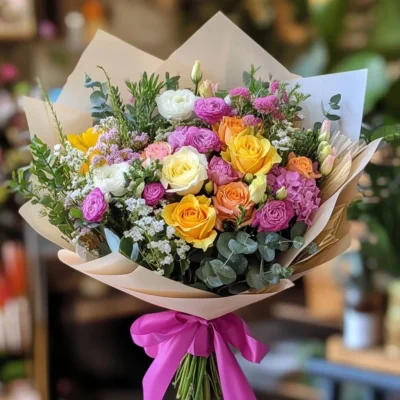

Birthday Bouquet Spring Notes: A Cheerful Celebration in Full Bloom
Price range: $99.00 through $229.00


Reviews
There are no reviews yet.