
Fall Wedding Bouquets Autumn Rose Garden Cascade
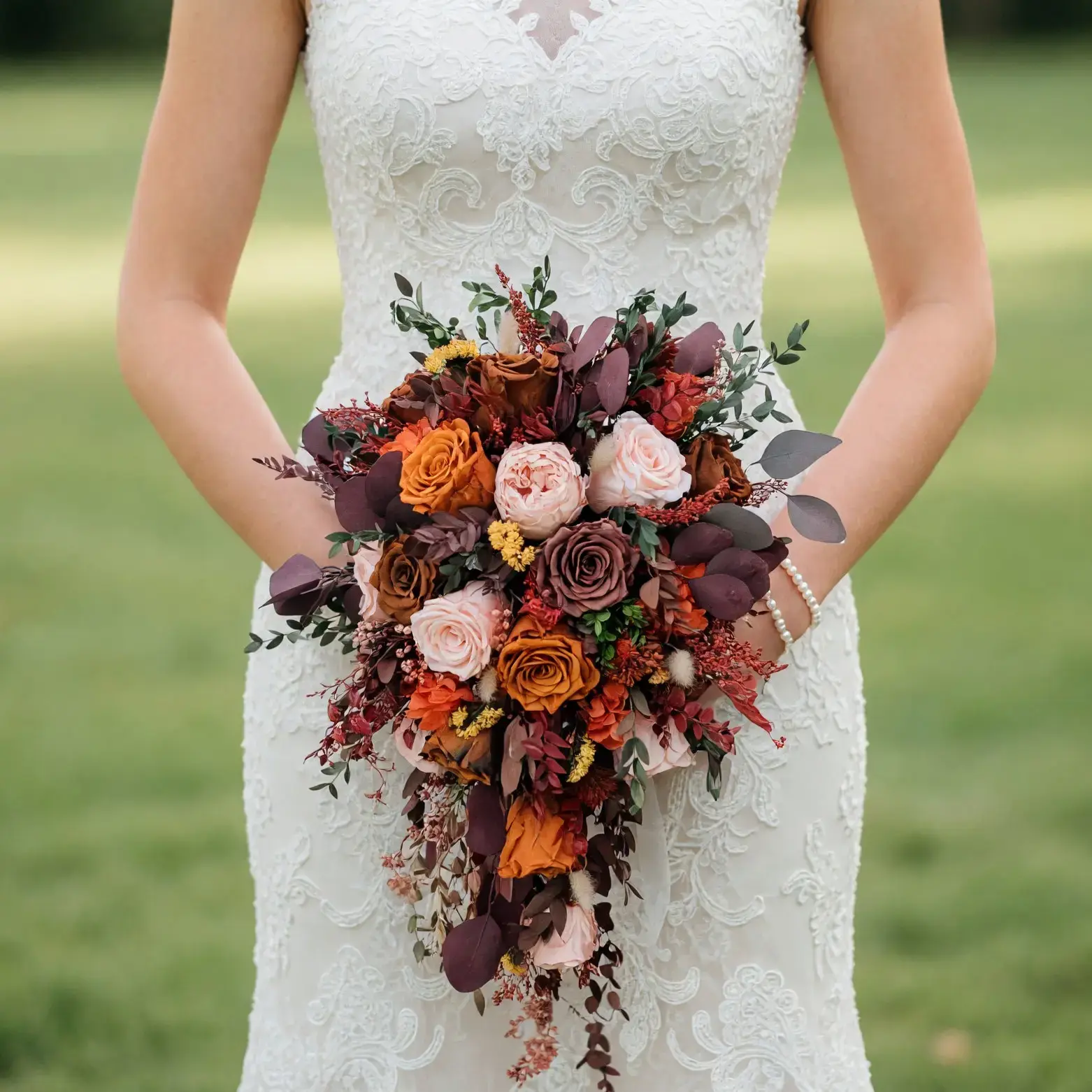
A romantic autumn bridal bouquet featuring caramel and blush roses, burgundy foliage, copper flowers, delicate seasonal accents, and softly cascading greenery. Its warm garden inspired palette is perfect for vineyard, countryside, historic, woodland, garden, or elegant fall weddings.

-
Free shipping on all orders over $30 in the Greater Vancouver Area
Bridal bouquet cost can reflect layered roses, burgundy foliage, copper blooms, and the artistry of a romantic autumn cascade.
This richly textured bridal bouquet celebrates autumn with an elegant combination of warm caramel roses, soft blush blooms, muted copper flowers, deep burgundy foliage, delicate greenery, and fine seasonal accents. Its softly cascading shape creates natural movement while maintaining a romantic bridal appearance. The bouquet feels warm and sophisticated rather than overly bright, making it an excellent choice for brides who want fall colors presented in a refined garden inspired style.
The roses are the main feature of the design. Warm caramel and cinnamon shades bring immediate autumn character, while pale blush and cream roses soften the overall palette. Their layered petals create a beautiful contrast with the darker leaves and smaller botanical accents surrounding them. The variation between light and deep tones also helps every flower remain visible in photographs.
Copper and burnt orange flowers add warmth between the roses. These shades recall autumn leaves, candlelight, terracotta decor, and late afternoon sunlight. Instead of dominating the arrangement, they appear in carefully placed clusters that connect the blush flowers with the darker burgundy elements.
Deep wine colored foliage gives the bouquet a sophisticated seasonal mood. Rounded burgundy leaves frame several of the roses and continue downward through the cascade. Their dark tone creates dramatic contrast against the bride’s white gown while giving the softer flowers greater visual impact.
Brides researching bridal bouquet cost may find a design like this useful for understanding what influences a florist quote. The final price can depend on the bouquet size, the flower varieties requested, seasonal availability, the amount of premium foliage, and the time required to create the cascading shape. A bouquet with many layered textures often requires more detailed floral construction than a simple hand tied arrangement.
The exact roses selected can also affect bridal bouquet cost. Garden style roses, specialty colors, imported varieties, or flowers requested outside their natural season may cost more than commonly available alternatives. A florist can often recommend substitutions that preserve the warm copper, blush, burgundy, and ivory palette while working within a preferred budget.
Soft pink roses introduce a romantic bridal quality that keeps the bouquet from feeling too dark. Their pale petals work beautifully beside caramel flowers and burgundy foliage. These lighter blooms also connect visually with ivory or white wedding gowns, creating harmony between the flowers and the bridal look.
Small yellow and golden accents appear throughout the arrangement. They add tiny points of brightness and reinforce the autumn color story without overwhelming the roses. These details help the bouquet feel naturally gathered, as though it combines cultivated garden flowers with delicate meadow inspired botanicals.
Fine burgundy and reddish branching stems create movement around the bouquet. Their delicate lines extend slightly beyond the main flowers, preventing the arrangement from becoming too compact. These stems are especially effective in a cascading design because they visually connect the full upper portion with the softer lower section.
Green foliage provides balance. Some leaves are deep and narrow, while others are small and rounded. This variation gives the bouquet a layered botanical appearance rather than relying on a single type of greenery. The green tones also provide a refreshing contrast to copper, burgundy, and caramel flowers.
The cascade is graceful rather than extremely long. Flowers remain concentrated around the bride’s hands, while foliage, small blooms, and botanical textures gradually extend downward. This creates a flattering vertical line that can work beautifully with fitted, sheath, trumpet, lace, satin, or crepe wedding dresses.
A detailed lace gown enhances the bouquet’s romantic character because the floral embroidery echoes the layered garden textures. A minimalist satin or crepe gown creates a different but equally elegant effect, allowing the autumn colors to become the main visual focus.
Bridesmaid dresses in burgundy, terracotta, copper, champagne, taupe, dusty rose, forest green, or warm beige can coordinate naturally with this arrangement. Smaller bridesmaid bouquets could feature blush roses, caramel flowers, and restrained burgundy foliage, allowing the bride’s cascade to remain the strongest floral statement.
The same palette can continue throughout the ceremony. Copper and burgundy flowers can create focal areas along the aisle, while blush and cream roses soften an altar arrangement or wedding arch. Fine greenery and burgundy foliage can extend beyond larger installations to recreate the relaxed garden character of the bouquet.
Reception flowers can interpret the same color story in different proportions. Some centerpieces might emphasize blush and cream for a lighter appearance, while others can feature more copper and wine colored flowers. Repeating several signature roses and foliage varieties will create cohesion without requiring every arrangement to look identical.
This bouquet would be especially appropriate for vineyard weddings, historic estates, countryside venues, garden ceremonies, elegant barns, woodland celebrations, and intimate autumn receptions. Its rich but muted palette works beautifully with natural wood, stone, brass, copper, amber glass, candlelight, and neutral linens.
The arrangement can also inspire sweetheart table flowers, welcome sign arrangements, cake decorations, seating displays, and bar flowers. Even a smaller cluster of caramel roses with burgundy foliage can echo the bridal bouquet and create a consistent visual story throughout the wedding.
When discussing bridal bouquet cost with a florist, it can be helpful to identify which flowers and colors are most important. If the warm caramel roses are essential, other supporting flowers may be chosen more flexibly. If the dramatic burgundy foliage and cascade are the priority, a florist may adjust the rose varieties while preserving the same overall appearance.
Seasonal availability can influence the finished arrangement. Exact flower varieties may change depending on the wedding date and local supply. A professional florist can usually preserve the same aesthetic by working with flowers in blush, copper, caramel, cream, and burgundy tones while using foliage with similar shape and texture.
When describing this bouquet to a florist, use words such as romantic, autumnal, garden inspired, softly cascading, textural, warm, and natural. Mention caramel roses, blush roses, burgundy foliage, copper flowers, delicate yellow accents, and loose greenery.
Proper care before the wedding will help maintain freshness. Keep the bouquet in a cool shaded location away from direct sunlight, radiators, heating vents, fireplaces, and warm windows. Whenever the construction allows, exposed stems should remain hydrated in clean fresh water until shortly before photography or the ceremony.
Keep decorative ribbon or wrapping around the stems dry while the bouquet is being hydrated. Damp fabric can become uncomfortable to hold and may transfer moisture onto the wedding gown. Follow any specific florist instructions if the arrangement contains preserved or dried botanical materials.
Handle the bouquet primarily by the wrapped stems rather than repeatedly touching the flowers. Rose petals can bruise with pressure, while fine foliage and delicate branching accents may shift if handled too often. The natural asymmetry of the bouquet is intentional and contributes to its garden inspired character.
During transportation, keep the bouquet upright inside a stable container with enough room around the flowers. Avoid allowing garment bags, boxes, luggage, or other arrangements to press against the cascade. Even during cooler fall weather, fresh flowers should not remain inside a parked vehicle exposed to direct sunlight.
For bridal portraits, hold the bouquet naturally around waist height and allow the lower flowers and foliage to fall freely. This position keeps the main roses visible while displaying the softly cascading shape. Slightly rotating the bouquet between photographs can reveal different blush, copper, burgundy, and botanical details.
After the ceremony, return the bouquet to a cool protected location whenever practical. Keep it away from candles, fireplaces, outdoor heaters, strong wind, and prolonged sunlight. Gentle handling and correct hydration can help preserve the arrangement through the reception.
After the wedding, selected roses and foliage can become meaningful keepsakes. Individual petals can be pressed, while larger flowers may be professionally preserved. Burgundy leaves, ribbon, and dried botanical details can also be incorporated into a shadow box, wedding album, or framed floral display.
Choose this bouquet for an autumn wedding filled with warm romance, layered botanical texture, and graceful movement. Caramel roses, blush flowers, burgundy foliage, copper accents, and cascading greenery create a bridal arrangement that feels elegant, artistic, and beautifully connected to the season.
Related Products
Recently Viewed Products
Birthday Bouquet Spring Notes: A Cheerful Celebration in Full Bloom
Price range: $99.00 through $229.00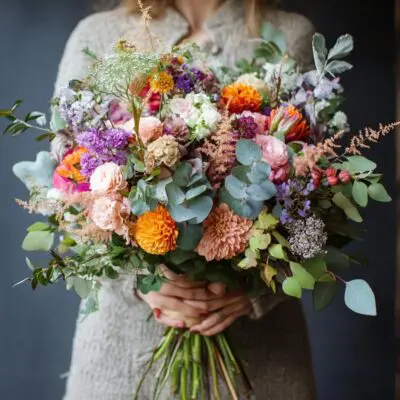

Reviews
There are no reviews yet.