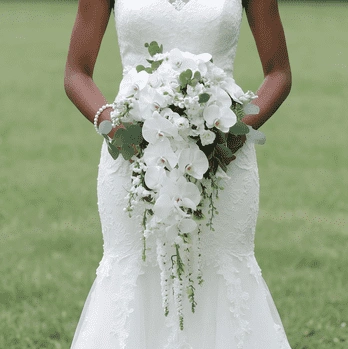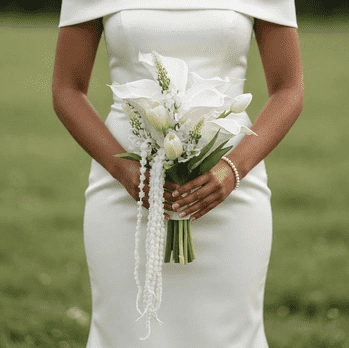

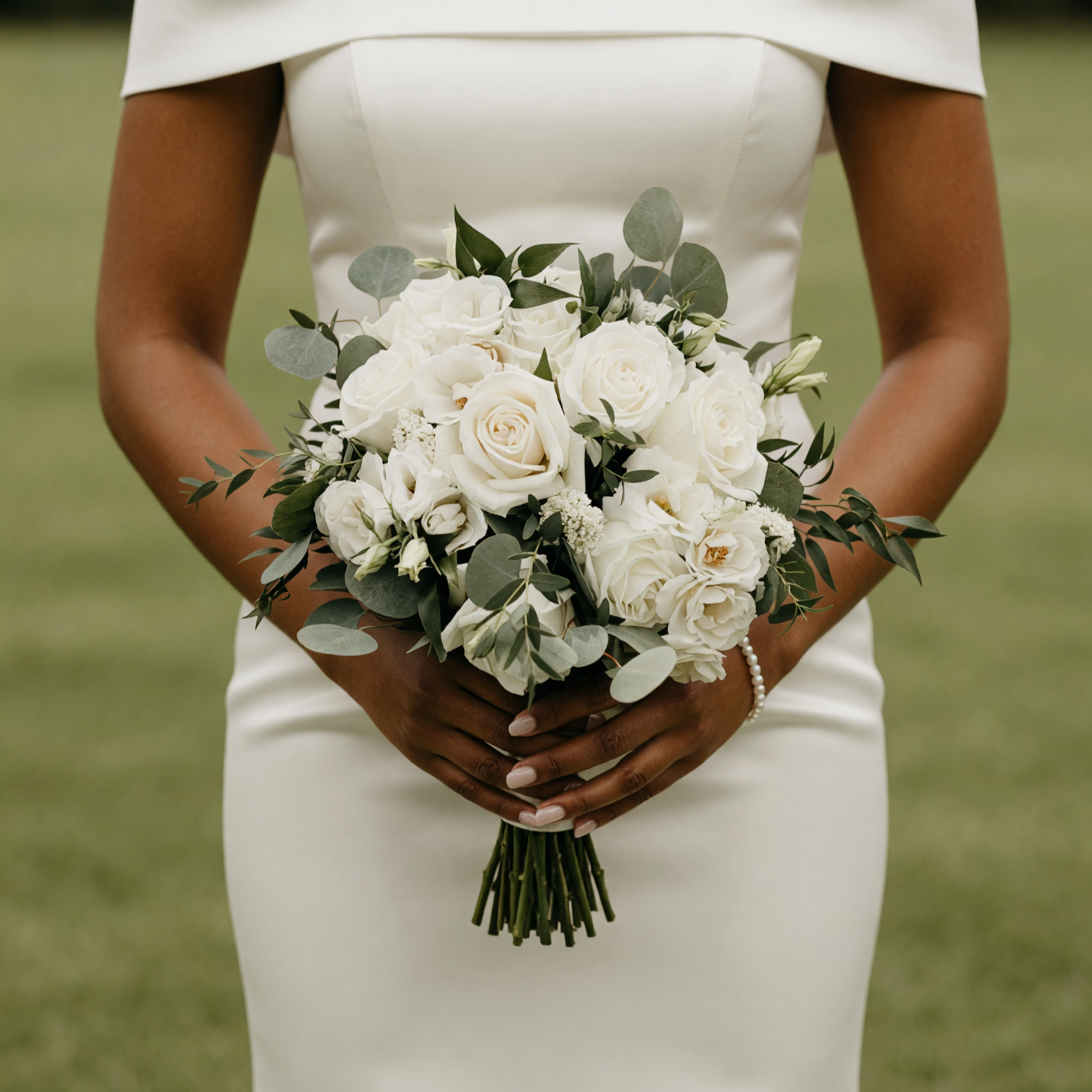
Beach Wedding Bouquets can be beautifully understated, using classic white flowers and silvery greenery to reflect the calm elegance of a coastal ceremony. This hand-tied arrangement combines ivory roses, white spray roses, delicate lisianthus-like blooms, fine white floral clusters, and layered eucalyptus foliage. Its clean white and muted green palette feels fresh, timeless, and effortlessly sophisticated, making it a graceful choice for a modern bride.
Large ivory roses form the central foundation of the bouquet. Their smooth, layered petals create elegant focal points throughout the arrangement and introduce a familiar sense of bridal romance. Several blooms face forward, allowing their spiral centres to be fully appreciated, while others turn slightly to the sides and add dimension.
The roses appear in soft creamy white rather than a cool, stark shade. This warmth gives the bouquet a natural and inviting character while allowing it to coordinate beautifully with white, ivory, champagne, or warm-neutral bridal gowns. The subtle color variation becomes especially noticeable in soft daylight, where the petal layers create gentle highlights and shadows.
Smaller white spray roses fill the spaces between the larger flowers. Their compact blooms and fresh buds bring intricate detail to the arrangement without disturbing its restrained palette. Several flowers appear together on individual stems, creating small natural clusters and giving the bouquet a freshly gathered garden quality.
The combination of large and miniature roses creates depth across the design. The larger blooms establish the main structure, while the smaller ones soften the transitions between flowers and foliage. This variation keeps the arrangement visually interesting even though it uses a limited color palette.
Delicate white lisianthus-like flowers add a looser petal form among the roses. Some blooms open fully and reveal warm golden centres, while others remain partially closed. Their soft, gently ruffled petals provide a light contrast to the more structured rose spirals and help the bouquet feel organic rather than tightly formal.
Elongated buds extend from several of the delicate flowering stems. These buds introduce subtle movement and give the arrangement a natural outline. Their pale green tips create a gentle connection between the white flowers and surrounding foliage, while their varied heights prevent the bouquet from appearing perfectly symmetrical.
Fine white floral clusters appear between the roses and around the outer edges. Their tiny blossoms create an airy texture and add small points of brightness. These accents soften the arrangement, fill narrow spaces, and bring a lace-like quality that would complement an embroidered or intricately detailed wedding gown.
The tiny flowers are used sparingly, allowing the roses to remain the main focal points. Their light branching structure prevents the bouquet from becoming overly dense and contributes to its calm, effortless character. In photographs, these details add depth without distracting from the larger blooms.
Eucalyptus foliage frames the flowers and gives the bouquet its distinctive coastal softness. Rounded leaves introduce a muted blue-grey tone that contrasts beautifully against the white petals. Their matte surface resembles foliage softened by salt air and diffused seaside light, creating a subtle connection to the shore.
Some eucalyptus leaves are broad and circular, while others are smaller and more elongated. This variety adds texture and keeps the greenery from appearing repetitive. The rounded leaves create soft shapes around the roses, while finer stems extend beyond the main arrangement and bring gentle movement.
Darker green foliage appears between the eucalyptus branches, adding depth and definition. Its narrow leaves create stronger lines and prevent the bouquet from blending completely into the bride’s white gown. The combination of deep and silvery green makes the arrangement feel natural, layered, and abundant without introducing unnecessary color.
A few leafy stems extend horizontally from the sides, widening the bouquet’s silhouette. Their placement gives the design an organic, slightly asymmetrical appearance while maintaining overall balance. These loose outer branches evoke vegetation moving gently in a coastal breeze and keep the bouquet from looking rigid.
The arrangement has a classic rounded hand-tied shape, but its varied foliage creates a relaxed garden-inspired outline. The flowers remain concentrated near the centre, while the leaves and fine accents soften the edges. This structure offers the polish of a traditional bridal bouquet and the natural ease of an outdoor celebration.
Exposed green stems complete the design with a simple, clean finish. They are gathered neatly beneath the flowers, reinforcing the bouquet’s freshly cut character. The compact handle appears comfortable to hold and allows the arrangement to sit naturally at the bride’s waist.
An ivory, white, or soft grey ribbon could be wrapped around the stems for a more formal finish. A flowing silk ribbon might add movement during an outdoor ceremony, while a neat satin wrap would preserve the bouquet’s modern simplicity. The restrained palette allows either choice to blend effortlessly into the design.
This arrangement pairs beautifully with a minimalist satin or crepe gown. Its layered petals and eucalyptus leaves add texture against smooth fabric, while the white flowers preserve a clean monochromatic bridal look. The rounded shape provides balance without overwhelming a streamlined silhouette.
The bouquet would also complement lace, tulle, chiffon, or embroidered fabric. The small white accents could echo intricate gown details, while the larger roses create clear focal points. Because the foliage adds natural contrast, the arrangement remains visible even against a heavily detailed white dress.
Pearl jewellery, silver accessories, white gold, or subtle crystal details would coordinate naturally with the bouquet’s cool neutral palette. Bridal makeup could remain luminous and understated, using soft neutral tones and a delicate rose lip. Hair might be styled in sleek waves, a low bun, or a gently textured updo.
The flowers can inspire a refined coastal wedding color scheme. Bridesmaid dresses in soft grey, pale sage, dusty blue, champagne, navy, or warm taupe would complement the bouquet beautifully. White linens, clear glassware, silver accents, and natural wooden details could continue the calm atmosphere throughout the reception.
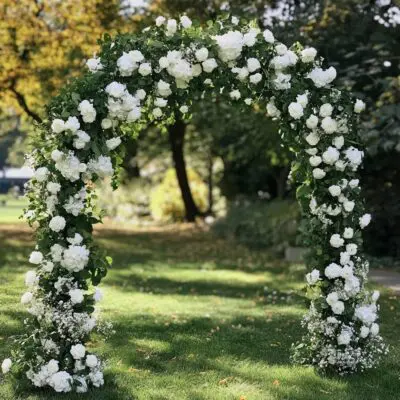
For the ceremony, an arch could combine ivory roses, eucalyptus, and loose white flower clusters. Asymmetrical placement would reflect the bouquet’s organic outline and allow some greenery to extend naturally. Flowing white or pale grey fabric could soften the structure and move gracefully in an ocean breeze.
Smaller arrangements might decorate aisle chairs, a welcome sign, or the ceremony table. White ceramic vessels, clear glass containers, or understated natural baskets would all support the fresh garden-inspired look. The neutral palette would appear elegant against sand, stone, greenery, or clean resort architecture.
Reception centrepieces could feature low arrangements of roses, lisianthus-like flowers, and eucalyptus. White candles and clear glass would maintain the luminous atmosphere, while silver or pale wood details could add definition. The restrained floral colors would allow the venue and surrounding coastal landscape to remain part of the visual experience.
Bridesmaid bouquets could use smaller collections of spray roses, delicate white flowers, and eucalyptus. Keeping their arrangements more compact would ensure that the bride’s bouquet remains distinctive. Boutonnieres might feature a miniature white rose or bud paired with a single eucalyptus leaf.
The bouquet’s classic palette makes it suitable throughout the year. It appears fresh in spring, cool and serene in summer, refined against warm autumn surroundings, and crisp during winter. Although especially appropriate for a beach or destination wedding, it could also complement a garden, estate, chapel, or modern indoor venue.
Natural daylight will reveal the subtle differences among the ivory roses, smaller white blooms, and silvery leaves. Morning light will make the design appear soft and peaceful, while golden-hour light will warm the creamy petals. The darker foliage will preserve definition and ensure that the individual flowers remain visible in photographs.
Close-up images can capture the rose spirals, tiny white clusters, unopened buds, and varied eucalyptus textures. Full-length portraits will show the bouquet’s balanced proportions against the bridal gown. Photographs taken while the bride walks can highlight the movement of the loose foliage and give the arrangement a fresh, effortless quality.
This design expresses coastal style through calm color, natural greenery, and an open organic outline. The ivory flowers evoke sea foam and pale shells, while the blue-grey eucalyptus recalls plants softened by salt air. These subtle references create a sophisticated beach atmosphere without depending on literal nautical decorations.
Timeless, fresh, and quietly luxurious, this bouquet is designed for a bride who appreciates classic white flowers and natural botanical texture. The roses bring romance, the smaller blooms add delicate detail, and the eucalyptus creates graceful movement. Together, they form an elegant arrangement filled with calm coastal beauty and understated sophistication.


Reviews
There are no reviews yet.