
Garden Style Wedding Bouquets Lavender Vine
Garden Style Wedding Bouquets Lavender Vine combines dusty mauve roses, ivory blossoms, delicate lavender flowers, and long wandering greenery in an airy cascading design. Its muted botanical palette is ideal for garden, estate, vineyard, countryside, spring, summer, and romantic outdoor weddings.

-
Free shipping on all orders over $30 in the Greater Vancouver Area
bridal blooms feel effortlessly romantic with antique roses, lavender flowers, ivory petals, and long wandering vines of fresh greenery.
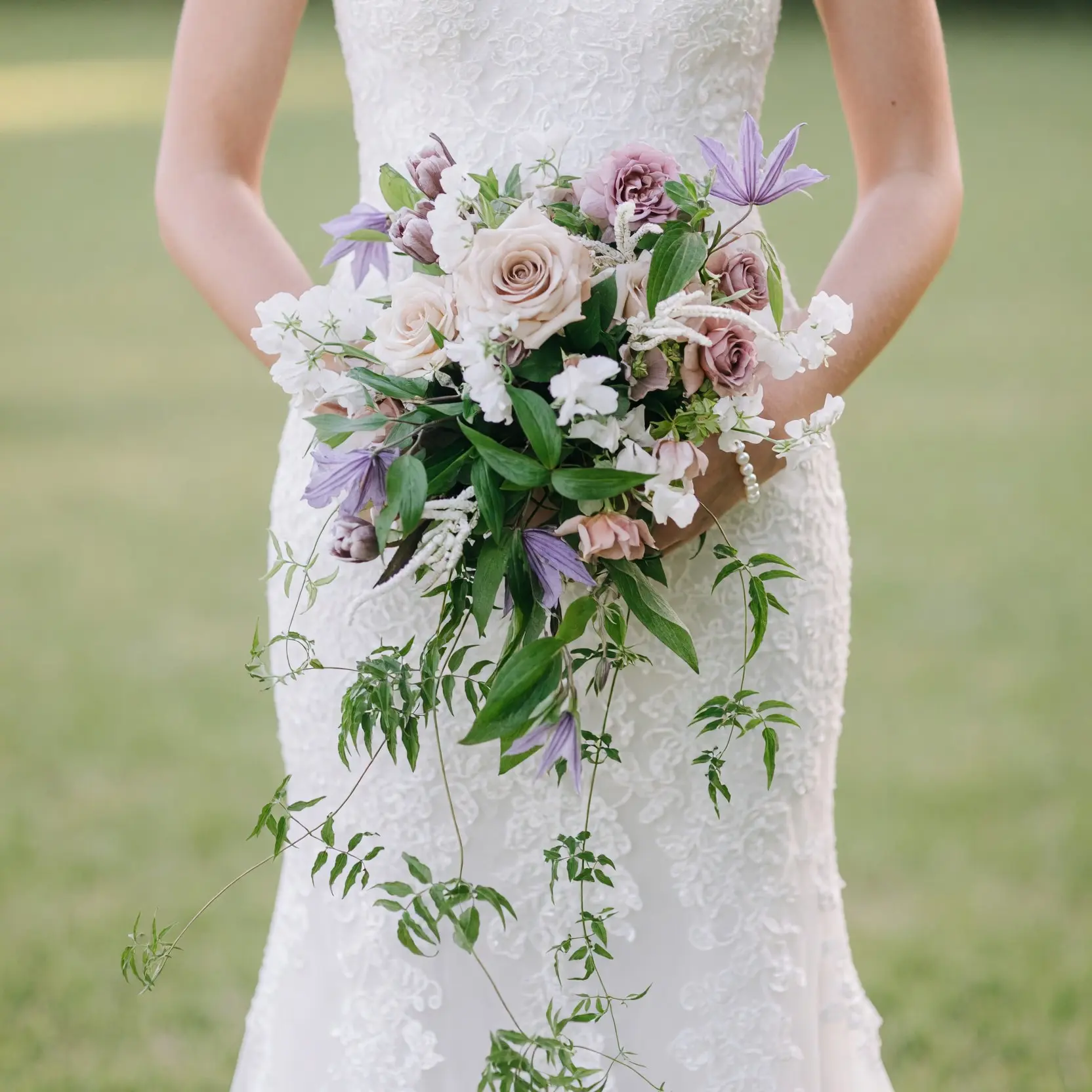
Garden Style Wedding Bouquets Lavender Vine feels as though it belongs in an old garden where climbing flowers have been allowed to grow exactly as they please. The arrangement is loose, directional, and beautifully imperfect, combining smoky mauve roses, creamy ivory blooms, pale lavender flowers, delicate white blossoms, and generous green foliage. Long vines stretch far beyond the central flowers, creating an airy cascade that looks natural rather than carefully confined.
The color palette is wonderfully quiet. Instead of bright pink or saturated purple, the bouquet relies on faded lavender, antique rose, soft taupe, ivory, and botanical green. These muted tones make the flowers feel sophisticated and slightly vintage while remaining fresh enough for a contemporary wedding. Against an ivory lace dress, the shades appear gentle and romantic; against a smooth minimalist gown, they become much more graphic.
The roses create the visual foundation. Their petals range from warm beige and dusty blush to cool mauve, producing subtle differences that reveal themselves gradually. No single rose looks exactly like the next, and that variation adds richness without introducing extra colors. The effect is almost watercolor-like, with neutral tones blending softly into lavender and cream.
Around those roses, narrow lavender flowers introduce graceful lines. Some open into star-shaped petals while others remain partially closed, creating the feeling of a plant still growing through the bouquet. Their shape is completely different from the rounded roses, which gives the arrangement a more botanical character. These flowers seem to float at the edges rather than being packed tightly into the center.
Ivory blossoms brighten the design. Small white flowers appear between the darker foliage and dusty roses, keeping the bouquet from becoming too muted. Their light petals also connect beautifully with a bridal gown, creating little flashes of white throughout the arrangement instead of one solid block of pale color.
The greenery is where Lavender Vine becomes truly distinctive. Long, narrow leaves form a lush central layer, while finer vines extend outward and downward. Some travel almost vertically; others curve away from the bouquet before returning toward the dress. This irregular growth pattern gives the arrangement movement even when the bride is standing still.
The cascade is intentionally open. There is plenty of negative space between the trailing stems, so the lower portion looks light rather than heavy. The foliage becomes increasingly delicate as it descends, allowing individual leaves and tiny branches to remain visible against the gown. It feels closer to naturally climbing garden vines than to a traditional formal cascade.
For brides attracted to bridal blooms with a relaxed, poetic character, Lavender Vine offers something different from a tightly rounded bouquet. It is romantic without appearing sugary, botanical without looking wild, and elegant without becoming rigid. That balance makes it well suited to garden estates, vineyards, countryside venues, historic houses, intimate outdoor ceremonies, and romantic destination weddings.
The bouquet is particularly striking with lace. Its vines seem to continue the botanical patterns already embroidered into the dress, while the roses provide larger focal shapes that prevent everything from blending together. With satin or crepe, the contrast is stronger: the smooth gown creates a clean backdrop for every leaf and flower.
Jewelry can remain understated. Pearls work beautifully with the soft ivory flowers, while antique gold or brushed silver can complement the muted mauve tones. A long veil adds another layer of movement, especially outdoors where the fabric and greenery can both respond naturally to the breeze.
Lavender Vine can inspire bridesmaid flowers without requiring exact replicas. Smaller bouquets might feature ivory roses, dusty mauve flowers, and a few sprigs of greenery. Keeping the longest vines and the most dramatic cascade exclusively for the bride creates a clear visual distinction while maintaining cohesion.
For the ceremony, imagine greenery doing most of the architectural work. Rather than covering an arch densely with flowers, loose vines could climb asymmetrically around the structure with clusters of ivory and mauve blooms placed only where they have the most impact. The result would feel romantic and atmospheric instead of heavily decorated.
Aisle flowers could be even simpler. A few trailing greens with white and lavender blooms attached to selected chairs would echo the bouquet without distracting from the walk toward the altar. After the ceremony, those arrangements could potentially be moved to the reception entrance or cocktail area.
At dinner, the floral story can become more intimate. Low arrangements in ceramic or clear glass vessels could mix antique roses, white blossoms, and loose greenery. Narrow bud vases containing individual lavender flowers would add height without blocking conversation. Soft candlelight would deepen the taupe and mauve tones beautifully.
The bouquet’s neutral nature also makes it easy to coordinate with wedding fashion. Bridesmaid dresses in sage, dusty lavender, champagne, taupe, soft gray, or muted rose would all work naturally. Couples could introduce darker plum or forest green for an autumn celebration without changing the bridal flowers themselves.
Season can influence the exact varieties used, and that flexibility suits this design. A florist does not need to reproduce every flower literally to preserve the mood. The essential ingredients are antique-toned roses, light ivory flowers, lavender botanical accents, and long delicate greenery arranged with plenty of breathing room.
When discussing bridal blooms with your florist, it can be useful to describe the desired movement as much as the color palette. Words such as loose, vine-like, asymmetrical, airy, trailing, botanical, and garden-grown communicate the structure more clearly than simply requesting a cascading bouquet.
Before the ceremony, store Lavender Vine somewhere cool and shaded. Fine vines and delicate petals can lose freshness quickly in direct sun or warm rooms. Keep the arrangement away from fireplaces, radiators, hot windows, and strong drafts.
If the stems are meant to remain hydrated, place them in fresh clean water while keeping ribbon and decorative wrapping dry. Because the trailing section is long, choose a container that allows the vines to hang freely instead of pressing them against the table.
Carry the bouquet by the wrapped handle and resist the temptation to rearrange the vines repeatedly. Their irregular placement is intentional. Pulling or twisting them can change the silhouette and may damage the finer stems.
During photographs, hold the bouquet slightly forward so the cascade can be seen against the dress. If it is pressed too tightly against the body, some of the long greenery may disappear into the fabric. A relaxed hold will show the bouquet’s shape more clearly and create a softer overall portrait.
When setting it down, use a tall vase rather than laying it flat. The flowers should stay supported while the trailing vines remain free. Avoid placing bags, jackets, or other objects on top of the greenery, and keep pale petals away from makeup or colored drinks.
For outdoor weddings in warm weather, return the bouquet to shade between longer photo sessions. If there is a significant gap before the reception, follow your florist’s specific hydration instructions rather than guessing. Different roses and delicate garden flowers may respond differently to prolonged exposure.
After the wedding, selected roses, lavender petals, and fine leaves can be pressed for preservation. The elongated greenery also works beautifully in botanical-style frames. Combining a few preserved pieces with stationery, ribbon, or a printed vow can create a subtle keepsake that reflects the bouquet’s natural character.
Garden Style Wedding Bouquets Lavender Vine is designed for a bride who appreciates movement, restraint, and botanical detail. Dusty roses create quiet romance, ivory flowers add light, lavender petals introduce personality, and the wandering greenery transforms the arrangement into something that feels alive.
Related Products
Recently Viewed Products
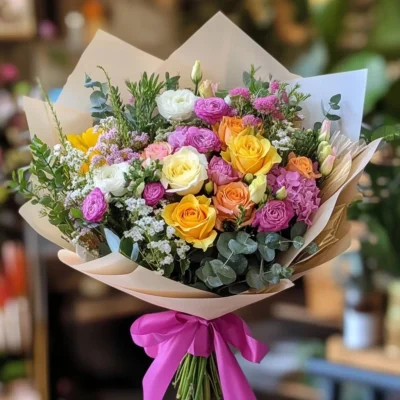
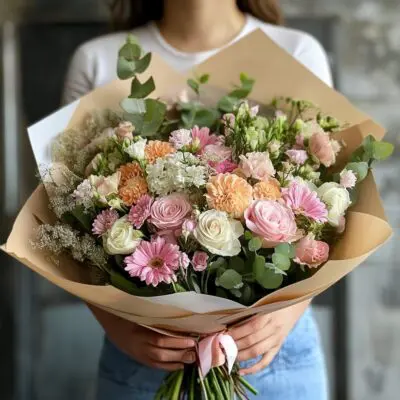
Birthday Bouquet Spring Notes: A Cheerful Celebration in Full Bloom
Price range: $99.00 through $229.00

Reviews
There are no reviews yet.