
Garden Style Wedding Bouquets Rose Vine
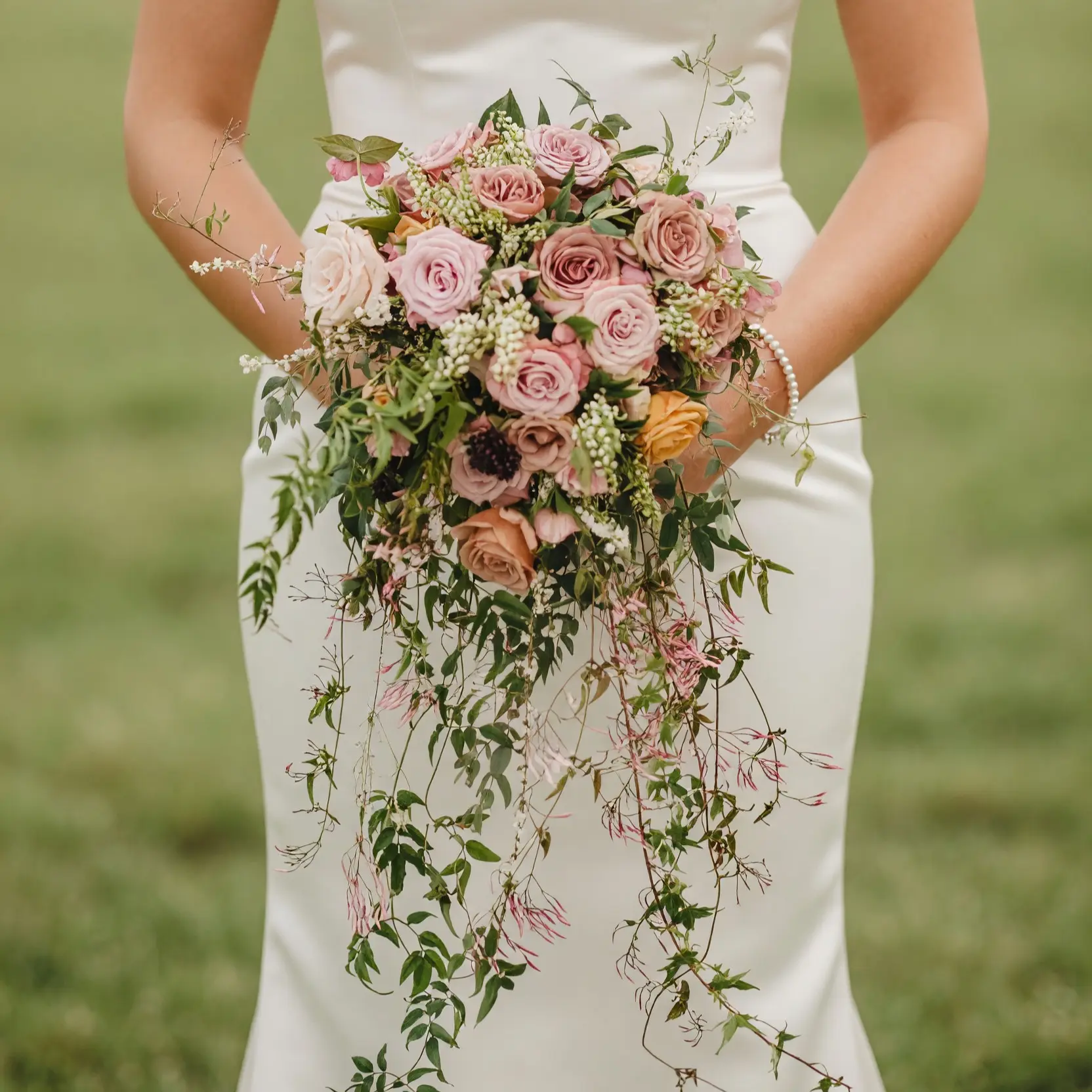
Garden Style Wedding Bouquets Rose Vine combines dusty pink and champagne roses, delicate cream buds, fine flowering accents, and exceptionally long trailing greenery. Its airy botanical cascade is ideal for garden, estate, vineyard, countryside, summer, and elegant romantic weddings.

-
Free shipping on all orders over $30 in the Greater Vancouver Area
bridal blooms drift into a romantic cascade of dusty roses, cream berries, fine pink blossoms, and long wandering vines.
Garden Style Wedding Bouquets Rose Vine is designed around movement. Its upper section feels abundant and floral, filled with roses in dusty pink, antique blush, muted mauve, champagne, and soft caramel tones. From that generous floral crown, the arrangement gradually loosens into slender greenery and delicate pink-flowering vines that fall freely toward the floor. The contrast between the polished roses and almost untamed lower cascade gives this bouquet its distinctive garden personality.
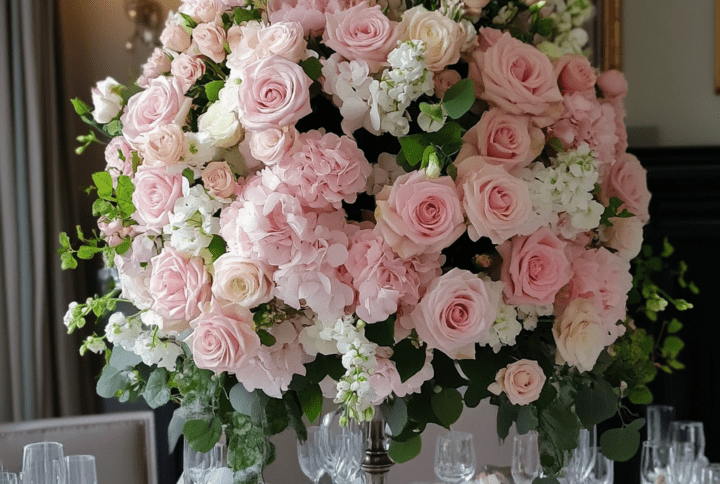
The roses are intentionally varied rather than perfectly matched. Some have cool lavender-pink undertones, while others lean toward warm beige, faded peach, or vintage rose. This subtle variation makes the bouquet feel collected over time instead of assembled from one uniform flower variety. Large open roses create generous focal points, while smaller blooms fill the spaces between them and keep the surface richly layered.
Creamy clusters of tiny buds introduce a lighter texture among the roses. Their pale color creates visual pauses between the warmer petals and keeps the center from becoming too dense. These delicate clusters also make the bouquet appear more intricate when photographed closely, especially beside rings, bridal jewelry, invitation details, or lace fabric.
A few deeper floral accents appear toward the center, adding shadow and dimension. These darker elements are used sparingly, so they never dominate the soft palette. Instead, they make the blush and champagne roses look more luminous and help the bouquet retain definition in both indoor and outdoor photography.
The upper silhouette is softly rounded but deliberately irregular. A few stems extend beyond the main flower line, suggesting the freedom of a garden rather than the precision of a tightly wired arrangement. This small amount of asymmetry is enough to keep the bouquet visually relaxed before the more dramatic trailing section begins.
Below the flowers, Rose Vine becomes almost weightless.
Long green stems descend in several separate lines instead of forming one thick waterfall. Some carry narrow leaves, others tiny pale blossoms, and several feature fine pink flowers that appear to float along the vine. The spacing between these stems is important. The bridal gown remains visible behind them, so the cascade feels transparent, airy, and graceful rather than heavy.
This kind of elongated movement works especially well with clean bridal silhouettes. A smooth satin, silk, or crepe gown creates a quiet background that lets each vine remain visible. Against lace, the effect becomes softer and more romantic because the tiny flowers and greenery seem to continue the botanical motifs already present in the fabric.
The palette also makes Rose Vine remarkably versatile. Dusty rose and muted mauve create romance, champagne flowers keep the arrangement warm, and deep natural greenery provides enough contrast to prevent the bouquet from becoming overly pastel. It can suit a garden estate, vineyard, historic house, countryside venue, conservatory, outdoor ceremony, or intimate destination celebration.
For a modern wedding, pair the bouquet with simple architecture, sculptural candles, and understated tableware. In a more traditional setting, combine it with lace, pearls, warm candlelight, and champagne-toned details. Rose Vine adapts easily because its romance comes from texture and movement rather than from one highly specific theme.
Bridesmaids do not need smaller copies of the cascade. A cleaner approach would be compact arrangements using dusty roses, cream buds, and short greenery. Keeping the long flowering vines exclusively for the bride will create a clear distinction without changing the overall floral palette.
Another beautiful option is to vary the bridesmaid bouquets slightly. One can feature more mauve, another more champagne, and another more blush, while the same foliage appears throughout. This creates an intentionally gathered look that feels particularly appropriate for a garden-inspired wedding party.
The ceremony design could continue the bouquet’s sense of direction. Instead of covering an entire arch evenly, let greenery travel along one side and across the top, with clusters of dusty roses and cream flowers placed at selected points. Fine pink-flowering stems could extend beyond the larger floral groups, giving the installation the same delicate movement as the bouquet.
For aisle flowers, less can be more. Small groupings of antique roses and loose vines attached to occasional chairs would create a subtle connection without making the aisle feel overly decorated. The lighter approach also ensures that Rose Vine remains the most detailed arrangement when the bride enters.
Reception flowers can become more intimate. Low arrangements in ceramic bowls, antique-style compotes, or clear glass vessels would showcase the rose palette beautifully. Individual flowering vines could be allowed to spill gently over the sides, while bud vases with single dusty roses add smaller floral moments between candles.
Long dinner tables are especially suitable for this style. Instead of one large centerpiece, use several loose floral clusters with greenery linking them visually. Champagne candles, dusty pink napkins, warm ivory linens, and aged brass details would complement the bouquet without copying its colors too literally.
For brides attracted to bridal blooms that feel romantic but not overly sweet, Rose Vine offers a beautiful balance. The pink palette is softened by taupe, cream, and natural green, while the dramatic length is countered by the delicacy of the trailing stems. It feels expressive without becoming theatrical.
The bouquet can also transition beautifully between seasons. In late spring and summer, emphasize the pale pink flowers and fresh green vines. For early autumn, the same design can lean more heavily into antique rose, caramel, mauve, and deeper foliage while preserving the airy cascading structure.
Flower availability will naturally vary, and Rose Vine is well suited to thoughtful substitutions. The exact rose varieties are less important than preserving the tonal blend of blush, dusty mauve, champagne, and soft brown-pink. Similarly, delicate seasonal berries, buds, or filler flowers can replace the pale clusters if they maintain the fine texture.
When discussing this design with your florist, focus on the silhouette. Ask for an abundant rose-focused upper bouquet that transitions into a very open, long cascade of fine vines. Mention that the lower section should feel separated and airy rather than densely flowered. That distinction is what gives Rose Vine its character.
The bouquet should be stored somewhere cool before the ceremony. Roses and small flowering stems can react to heat, so avoid direct sunlight, heaters, warm windows, and parked vehicles. If the arrangement is delivered in water, keep it hydrated until shortly before photographs begin.
Make sure decorative stem wrapping stays dry. A tall vessel is preferable because the long vines need room to hang naturally. If they are folded against a short vase or tabletop for too long, they may lose the elegant direction created by the florist.
Carry Rose Vine by the wrapped handle. Avoid lifting the arrangement by its lower greenery or rearranging the trailing stems with your fingers. Their seemingly casual placement is carefully balanced, and repeated adjustment may bend or tangle the finer vines.
During portraits, hold the bouquet a little forward from the body. This allows the open cascade to remain visible against the gown and shows its full length. A slightly lower hand position can also prevent the upper flowers from hiding important details of the bodice.
If the bouquet needs to rest, return it to a stable tall vase rather than laying it flat. Check that the longest vines are hanging freely and are not trapped between the vase and a wall. Keep the pale roses away from makeup, food, colored beverages, or surfaces that may stain the petals.
During an outdoor wedding, move the bouquet into shade during longer pauses. If there is a substantial break between the ceremony and reception, ask the florist whether the stems should return to water. Professional care instructions should always take priority because flower varieties may differ.
After the celebration, selected roses and small blossoms can be pressed or dried. The slender vines can also be preserved as part of botanical artwork. A framed composition using one dusty rose, several tiny pink flowers, a vine, and a piece of wedding stationery can capture the bouquet’s character without preserving the entire arrangement.
Garden Style Wedding Bouquets Rose Vine is romantic because it refuses to feel overly controlled. Antique roses create richness, cream buds add lightness, muted greenery softens the palette, and long flowering vines transform the bouquet into a graceful botanical cascade with unmistakable movement.
Related Products
Recently Viewed Products
Birthday Bouquet Spring Notes: A Cheerful Celebration in Full Bloom
Price range: $99.00 through $229.00

Reviews
There are no reviews yet.