
Tropical Wedding Bouquets Ruby Garden
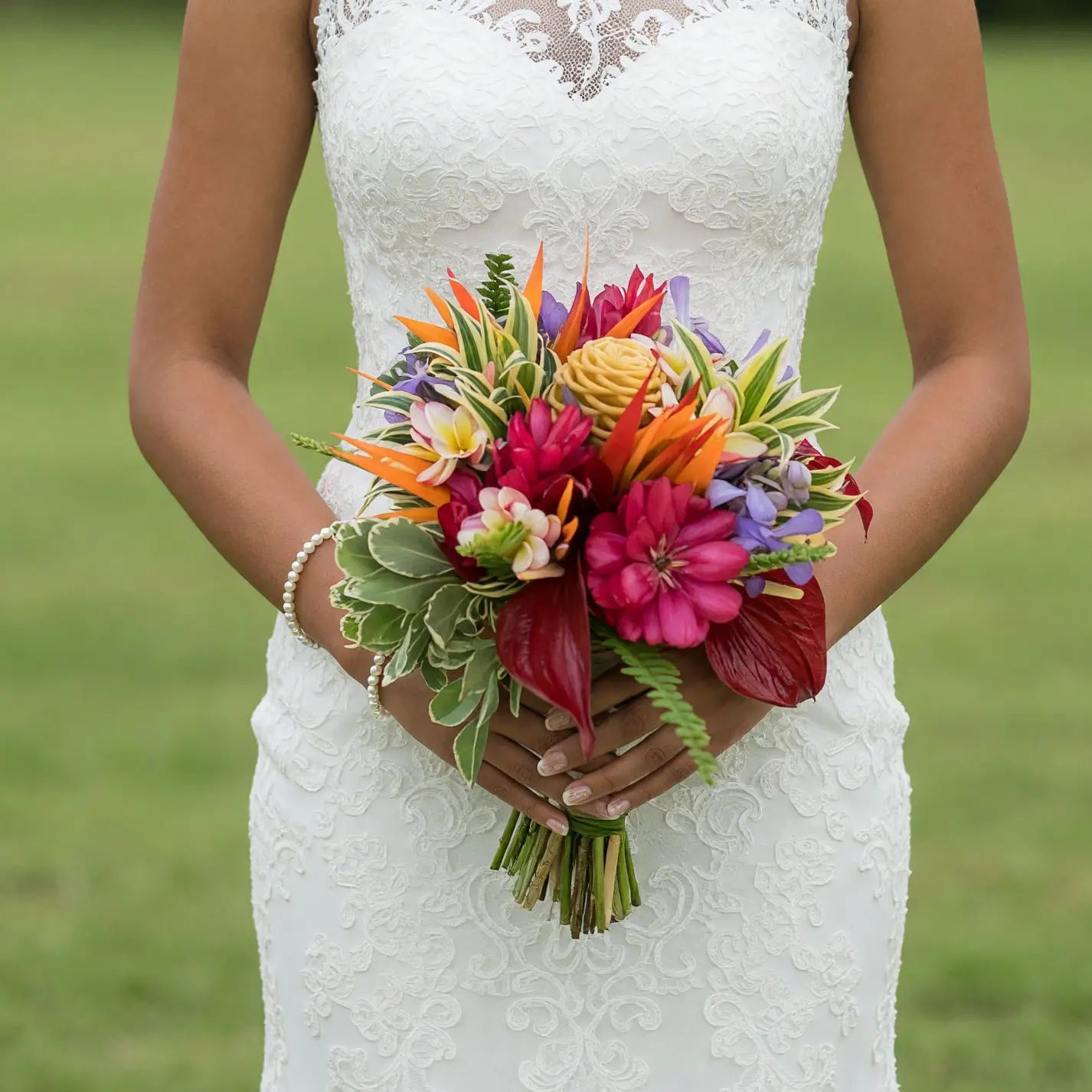
Tropical Wedding Bouquets Ruby Garden combines ruby anthuriums, vivid pink tropical blooms, orange accents, pale island flowers, purple details, variegated foliage, and fern in a colorful hand-tied arrangement. Ideal for destination, botanical garden, resort, greenhouse, beach, summer, and vibrant tropical weddings.

-
Free shipping on all orders over $30 in the Greater Vancouver Area
bridal blooms glow with ruby anthuriums, vivid tropical flowers, orange accents, soft plumeria, purple blossoms, and fresh greenery.
Tropical Wedding Bouquets Ruby Garden is a joyful tropical arrangement designed around saturated jewel tones, warm island color, and compact bridal elegance. Deep ruby anthuriums create a glossy sculptural foundation, while vivid pink tropical flowers bring energy through the center. Orange bird-of-paradise-style accents add movement, pale plumeria-like blooms soften the palette, and touches of lavender and purple provide a cool contrast. Variegated greenery, fern, and narrow tropical leaves frame the flowers and give the bouquet a fresh botanical finish.
The rich red anthuriums immediately establish Ruby Garden as a tropical bouquet. Their smooth heart-shaped surfaces create bold areas of color at the lower edge, where they contrast beautifully with the softer layered flowers above. Their glossy texture catches light naturally, making them particularly effective in close bridal portraits.
Hot pink flowers fill the central section with a lively raspberry tone. Their layered petals feel romantic despite the bouquet’s strong tropical personality. This combination of sculptural and softer flowers allows the arrangement to look exotic without becoming too severe.
Orange tropical petals rise through the bouquet in narrow pointed shapes. These fiery accents create movement and height, breaking up the rounded floral center and adding an unmistakable destination-wedding character.
The orange elements also connect beautifully with the small creamy flowers that contain yellow centers. These softer blossoms introduce a sunny transition between the stronger reds and the cooler purple accents.
Pale plumeria-like flowers add a relaxed island mood. Their creamy petals and warm golden centers provide visual breathing room among the more saturated colors. Positioned around the upper and side sections, they help brighten the bouquet without making it appear predominantly white.
Soft violet flowers appear between the tropical reds and oranges, creating an unexpected but attractive color contrast. Lavender and purple cool down the composition and make the magenta blooms look even richer.
A sculptural golden focal flower near the top adds another layer of texture. Its curled, architectural form stands apart from the softer petals surrounding it and gives the bouquet an artistic, handcrafted quality.
Variegated greenery is one of Ruby Garden’s most distinctive features. Cream-edged tropical leaves weave through the flowers and introduce lighter green tones that prevent the foliage from becoming too dark.
These striped leaves also provide fine visual detail. Their elongated shapes echo the pointed orange petals while creating a more relaxed botanical background.
Broader green leaves sit lower in the arrangement, adding depth and structure. They help frame the ruby anthuriums and keep the bright flowers visually separated from the bride’s white gown.
Fern provides an airy finish near the edges. Its delicate repeating leaflets soften the heavier tropical forms and make the overall bouquet feel fresh rather than overly compact.
Ruby Garden has a relatively rounded hand-tied silhouette, but its extending foliage and pointed tropical flowers keep the shape from feeling rigid. The result is balanced, comfortable to carry, and highly photogenic.
Among bridal blooms, Ruby Garden is a strong choice for brides who love vivid color but still want a bouquet that feels polished and wedding-ready. The composition is bold, yet the flowers remain carefully balanced around a clear central shape.
A lace bridal gown pairs especially well with this bouquet. The intricate white embroidery provides a romantic background, while the saturated tropical flowers introduce color and personality.
Satin, crepe, silk, and mikado dresses also work beautifully. Against smooth fabric, the bouquet’s varied petals and patterned foliage become even more noticeable.
Pearl accessories are an excellent choice because they soften the vivid palette and connect naturally with the bridal setting. Yellow gold enhances the orange and warm yellow accents, while rose gold complements the magenta and ruby tones.
Bridesmaid bouquets can be simplified using hot pink flowers, pale plumeria-like blooms, and variegated greenery. This maintains the tropical palette without repeating the full bridal arrangement.
Another option is to reserve the large ruby anthuriums for the bride. Bridesmaids can carry compact bouquets of pink, orange, and ivory flowers with green foliage, creating a cohesive but clearly differentiated wedding party.
Ruby Garden is ideal for tropical resorts, botanical gardens, greenhouse ceremonies, colorful outdoor weddings, elegant beach celebrations, and destination venues.
It can also bring warmth to a more traditional indoor wedding. Against white walls, pale stone, or neutral linens, the bouquet becomes a concentrated burst of tropical color.
For ceremony styling, use the bouquet as inspiration for loose floral clusters containing ruby anthuriums, bright pink flowers, orange accents, and variegated leaves.
A wedding arch can combine large tropical greenery with smaller islands of intense color. Leaving sections of visible foliage will keep the installation contemporary and prevent it from looking overly dense.
Orange flowers can be positioned near the upper sections of an arch to create upward movement, while anthuriums work particularly well lower down where their broad surfaces remain visible.
For aisle flowers, use small clusters of one pink bloom, one pale flower, and a narrow tropical leaf. This creates continuity without repeating the entire bridal bouquet.
Reception centerpieces can reinterpret Ruby Garden in low ceramic bowls or glass vessels. Ruby anthuriums, pink tropical flowers, pale island blooms, violet accents, and variegated greenery will create a rich but balanced table design.
Long tables can use individual tropical stems in slim vessels. Alternating red anthuriums, orange flowers, and softer ivory or purple blooms will create rhythm while keeping the tables visually light.
The palette coordinates naturally with ruby, raspberry, magenta, coral, orange, lavender, cream, emerald green, and warm gold.
For a bright daytime reception, combine these colors with white linen, clear glass, pale wood, and natural woven details. The flowers will provide enough visual drama without additional bold decor.
For an evening reception, introduce burgundy candles, plum napkins, dark green textiles, amber glassware, and gold accents. The jewel-toned flowers will appear richer under warm lighting.
Wedding stationery can reference the bouquet through small touches such as raspberry ribbon, orange wax seals, lavender envelopes, dark green typography, or botanical illustrations.
When discussing bridal blooms with your florist, describe Ruby Garden as tropical, jewel-toned, compact, colorful, textural, and foliage-rich. Mention that the ruby anthuriums should remain visible near the lower front of the bouquet.
Ask for the orange tropical flowers to extend slightly beyond the main floral cluster. Their pointed shapes are important for maintaining movement and tropical character.
The pale plumeria-like blooms should be distributed throughout the bouquet rather than grouped in one place. This will keep the composition bright and balanced.
Purple flowers can be used sparingly as cool accents. Their role is to create contrast rather than dominate the overall palette.
Variegated leaves should remain visible around the edges and between the flowers. Their striped pattern adds important texture and prevents the bouquet from appearing too monochromatic.
Exact flower varieties may change with seasonal and regional availability. Similar anthuriums, orchids, tropical ginger, plumeria-style blooms, tropical foliage, or vivid garden flowers can be substituted while maintaining the ruby, orange, cream, purple, and green palette.
A simple handle wrap works best. Ivory, champagne, soft green, raspberry, or natural ribbon can complement the bouquet without competing with its strong colors.
Before the ceremony, keep Ruby Garden in a shaded indoor space with a stable temperature. Avoid direct sunlight, warm vehicles, heating vents, and prolonged dry airflow.
If your florist recommends hydration, place the cut stems in clean fresh water while keeping the handle wrap completely dry. Use a container wide enough that the anthuriums and outer foliage are not compressed.
Carry the bouquet from the wrapped handle rather than touching the anthurium faces or softer petals. Repeated handling can leave marks or bruise delicate flowers.
When resting the bouquet, place it upright in a supportive vase instead of laying it flat. This helps preserve the tropical foliage and protects the broad anthuriums.
During outdoor photography, return the bouquet to shade during longer pauses. If several hours separate the ceremony and reception, follow your florist’s specific hydration and storage instructions.
After the wedding, selected foliage, flower petals, ribbon, or sturdy tropical elements may be professionally preserved. Pressed botanical details combined with invitations or vows can create a colorful keepsake.
Tropical Wedding Bouquets Ruby Garden combines bold island color with a refined bridal silhouette. Ruby anthuriums add sculpture, hot pink flowers create romance, orange accents provide energy, pale blooms soften the palette, and variegated greenery completes a bouquet that feels joyful, elegant, and unmistakably tropical.
Related Products
Recently Viewed Products
Birthday Bouquet Spring Notes: A Cheerful Celebration in Full Bloom
Price range: $99.00 through $229.00

Reviews
There are no reviews yet.