
Tropical Wedding Bouquets Amber Orchid
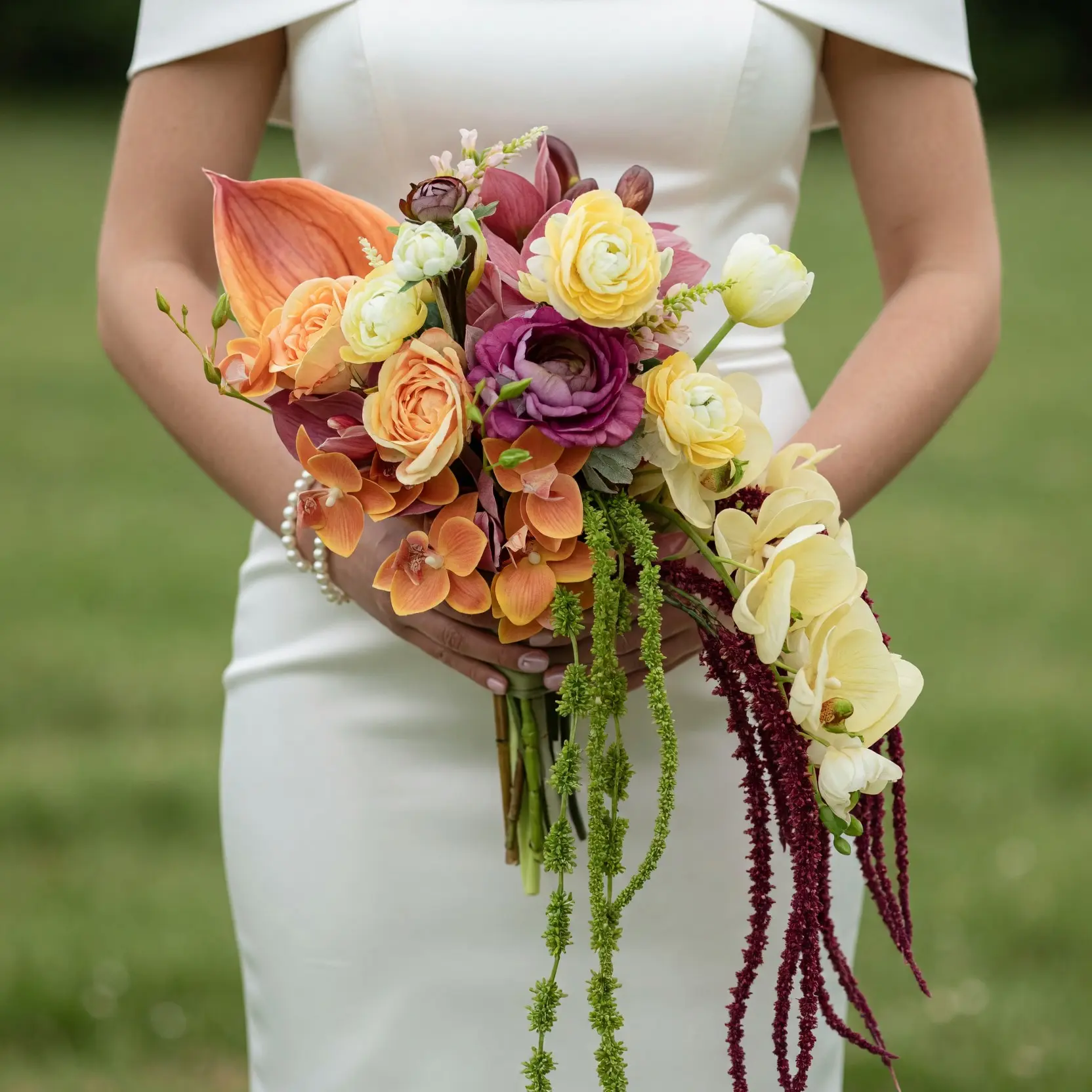
Tropical Wedding Bouquets Amber Orchid combines apricot and cream orchids, yellow and plum ranunculus, sculptural tropical blooms, and dramatic green and burgundy amaranthus. Its warm asymmetric cascade is ideal for destination, botanical garden, greenhouse, resort, summer, and early-autumn weddings.

-
Free shipping on all orders over $30 in the Greater Vancouver Area
bridal flowers bouquets glow in amber, plum, and ivory with orchids, ranunculus, anthurium, and dramatic trailing amaranthus.
Tropical Wedding Bouquets Amber Orchid is built around warm, unusual color rather than the predictable pink-and-white palette. Apricot and caramel orchids mingle with creamy yellow phalaenopsis, plum ranunculus, peach garden-style blooms, sculptural tropical petals, and long strands of green and burgundy amaranthus. The arrangement begins as a generous hand-tied bouquet and then breaks away into a relaxed cascade, creating movement that feels artistic instead of perfectly symmetrical.
The first impression is warmth. Golden apricot flowers sit beside soft buttercream blooms, creating a palette reminiscent of late-afternoon sunlight. These tones are especially flattering against ivory wedding dresses because they provide contrast without looking harsh.
Orange orchids add the most obvious tropical note. Their open petals bring movement throughout the left and central sections, and their warm color changes subtly between apricot, copper, and soft terracotta. Rather than being clustered in one area, they appear between larger flowers, allowing the tropical character to travel through the bouquet.
Creamy phalaenopsis orchids create the opposite effect on the lower right. Their broad petals are calm and luminous, giving the cascading section a light, graceful finish. The pale yellow undertone keeps them from looking stark white and helps them blend naturally with the warmer flowers above.
Deep plum ranunculus introduces an entirely different mood. Its tightly layered petals create a rich shadow point among the lighter blooms. This darker flower is important because it keeps the bouquet from becoming overly sweet or monochromatic. A few additional mauve and wine-colored accents repeat the depth without dominating the arrangement.
Soft yellow ranunculus bring gentle volume near the upper and right portions. Their many delicate petals soften the stronger orchid shapes and give the bouquet a romantic garden quality. They also create a beautiful bridge between tropical flowers and more familiar bridal varieties.
A broad peach-toned tropical bloom on the upper left contributes sculptural drama. Its smooth surface contrasts with the layered ranunculus and intricate orchids, making the bouquet feel carefully collected rather than simply flower-heavy.
Muted burgundy tropical flowers behind the central blooms deepen the color story further. Their wine tones visually connect the plum ranunculus with the long burgundy amaranthus strands below.
The cascade is what gives Amber Orchid its strongest personality. Instead of relying only on flowers to create length, the design uses trailing botanical textures that fall naturally from the central bouquet.
Fresh green amaranthus creates several soft vertical lines. Its unusual seed-like texture adds movement and introduces a bright botanical color that feels lively against the cream gown.
Burgundy amaranthus creates a more dramatic counterpoint. Long wine-colored strands descend beside the pale orchids, forming a luxurious contrast between light and dark. Because the strands move freely, they can create beautiful motion in walking photographs and outdoor portraits.
This combination makes Amber Orchid a particularly interesting choice for brides who want a cascade but prefer something less traditional than a waterfall of roses and ivy. The shape is romantic, yet the materials feel modern and unexpected.
The bouquet works beautifully with sleek satin or crepe dresses. Smooth fabric allows every orchid, ranunculus, and trailing texture to remain visually distinct. Against a minimalist gown, Amber Orchid becomes the primary decorative statement.
It can also complement lace, especially when the gown has a clean silhouette. The bouquet’s broad petals and dramatic trailing lines create contrast against detailed embroidery, preventing the overall look from becoming overly delicate.
Pearls pair naturally with this color palette. Their soft ivory sheen reflects the creamy orchids while providing classic bridal polish. Champagne gold, antique gold, and bronze jewelry can bring out the bouquet’s amber and copper shades.
For a softer styling direction, choose neutral bridal shoes, warm nude makeup, and subtle gold accessories. For something more editorial, plum lipstick, deep berry bridesmaid dresses, or bronze metallic details can echo the bouquet’s richer tones.
Amber Orchid is especially suitable for destination weddings, botanical gardens, luxury resorts, greenhouse ceremonies, modern outdoor estates, elegant summer weddings, and early-autumn celebrations.
Its colors also work beautifully in transitional seasons. The cream and yellow flowers keep the design fresh enough for spring or summer, while copper, plum, and burgundy make it equally convincing for late summer or fall.
Bridesmaid bouquets do not need to reproduce the full cascade. Smaller hand-tied arrangements using apricot orchids, pale ranunculus, and one burgundy accent can coordinate beautifully while keeping the bridal bouquet more elaborate.
Another approach is to give bridesmaids monochromatic bouquets in cream and apricot, reserving the plum ranunculus and burgundy amaranthus exclusively for the bride.
For ceremony flowers, Amber Orchid can inspire asymmetric arrangements with orchids concentrated in visible clusters. Warm apricot flowers can be combined with creamy blooms and small amounts of plum for depth.
Wedding arches can use long amaranthus strands to create downward movement. Instead of covering the entire structure, let the trailing elements fall from selected floral clusters so the installation feels airy and intentional.
Reception centerpieces can translate the bouquet into lower arrangements. Apricot orchids, buttercream ranunculus, wine-colored flowers, and sculptural tropical blooms arranged in warm ceramic vessels would create a refined table setting.
On long tables, individual stems can be separated into bud vases. One vase might hold an orchid, another a ranunculus, and another a burgundy accent. This creates a relaxed collected look while repeating the bouquet’s palette throughout the reception.
Amber Orchid works especially well with champagne, terracotta, plum, burgundy, ivory, caramel, moss green, and antique gold. These tones can appear in candles, linens, stationery, glassware, or bridesmaid dresses.
Because the bouquet already contains several strong colors, reception decor does not need to be complicated. Neutral tablecloths and warm candlelight will allow the flowers to provide most of the visual interest.
Couples who prefer richer styling can use dark berry napkins, amber glass, brass candleholders, and warm wood details. The bouquet’s golden flowers will appear especially luminous against these deeper surroundings.
When ordering bridal flowers bouquets inspired by Amber Orchid, describe the desired arrangement as tropical-garden, warm-toned, cascading, asymmetrical, and textural. Mention that the cascade should combine orchids with trailing botanical materials rather than becoming one solid floral tail.
Ask the florist to preserve the contrast between creamy flowers and plum accents. The darker shades should appear strategically rather than taking over the bouquet.
Flower availability may vary, particularly with specialty orchids and tropical varieties. Similar orchids, ranunculus, calla-style blooms, anthuriums, or textural tropical flowers can be substituted while preserving the same amber, cream, plum, and burgundy palette.
The bouquet handle should remain simple because the flowers already provide considerable detail. Ivory, champagne, taupe, or muted bronze ribbon would all complement the arrangement.
For wedding-day care, keep Amber Orchid in a cool, shaded room until it is needed. Avoid direct sunlight and hot windows, especially during summer weddings.
If your florist advises placing the stems in water, use a clean container and keep the wrapped handle above the waterline. The cascading flowers and amaranthus should hang freely rather than being pressed against the vessel.
Orchid petals can mark or bruise when touched repeatedly, so carry the bouquet from the wrapped stem section. Avoid adjusting individual flowers once the florist has positioned them.
Ranunculus can also be delicate. Protect the bouquet from strong wind, crowded transportation, and anything that may press against the flower heads.
When resting the bouquet between photographs, keep it upright in a supportive vase. Never place the cascading side underneath the arrangement, since the amaranthus and orchid stems may bend or become flattened.
During an outdoor ceremony, move the bouquet back into shade whenever there is a long break. This is especially helpful for delicate orchids and ranunculus on warm days.
If photographs continue after the ceremony, give the bouquet a short hydration break when recommended by the florist. Proper handling can help the flowers maintain their shape and freshness into the reception.
After the wedding, individual orchids, ranunculus petals, and sections of amaranthus may be suitable for professional preservation. Selected flowers can be pressed, dried, or incorporated into framed botanical artwork with ribbon or wedding stationery.
Tropical Wedding Bouquets Amber Orchid combines tropical sophistication with a warm romantic palette. Apricot orchids bring glowing color, cream phalaenopsis create elegance, plum ranunculus adds depth, and cascading green and burgundy amaranthus gives the bouquet unforgettable movement.
Related Products
Recently Viewed Products

Birthday Bouquet Spring Notes: A Cheerful Celebration in Full Bloom
Price range: $99.00 through $229.00

Reviews
There are no reviews yet.