
Garden Style Wedding Bouquets Mauve Honey
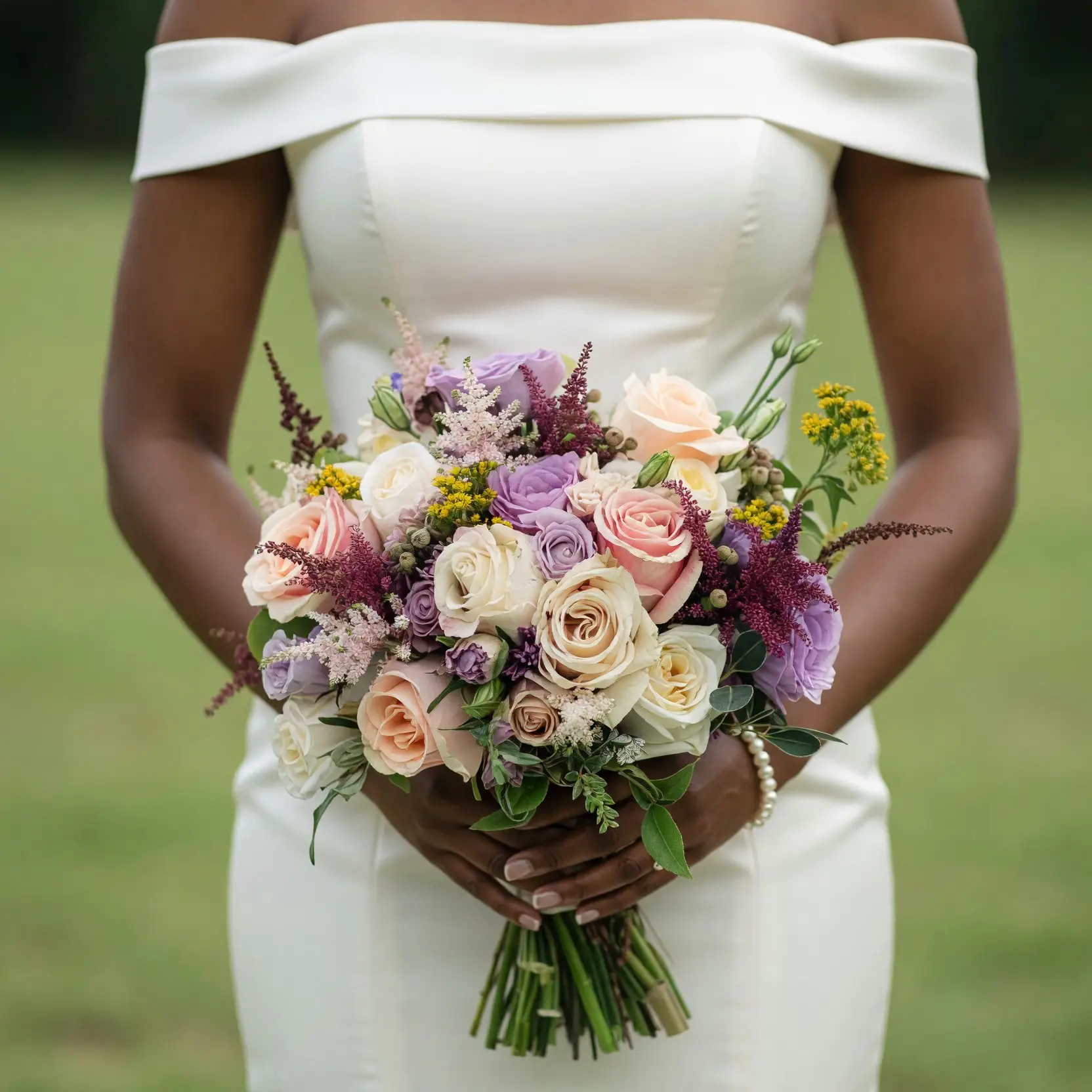
Garden Style Wedding Bouquets Mauve Honey combines ivory, peach, and blush roses with lavender blooms, berry-toned astilbe, subtle golden flowers, eucalyptus, and fresh greenery. Its softly layered palette is ideal for garden, estate, vineyard, spring, summer, and early-autumn weddings.

-
Free shipping on all orders over $30 in the Greater Vancouver Area
bridal flowers bouquets feel romantic with mauve roses, blush petals, ivory blooms, berry astilbe, golden accents, and greenery.
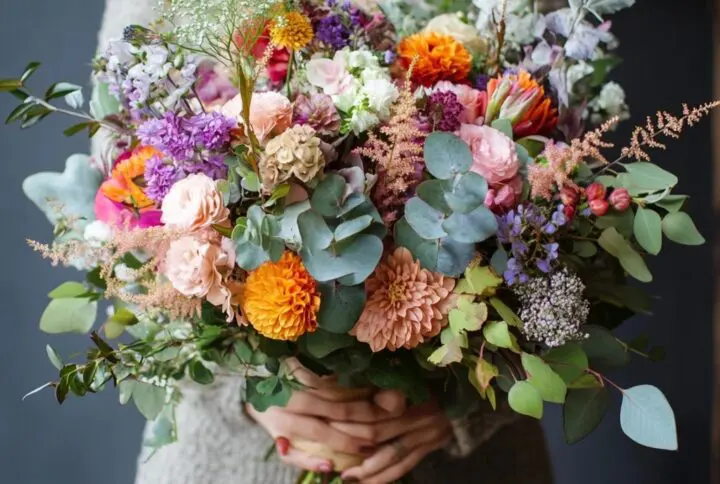
Garden Style Wedding Bouquets Mauve Honey blends muted romance with small flashes of warm color. Instead of relying on a single dominant shade, this bouquet layers lavender, dusty mauve, blush peach, creamy ivory, soft champagne, berry burgundy, and touches of golden yellow. Roses form the heart of the arrangement, but textured flower spikes, tiny buds, delicate filler flowers, and loose greenery keep the design interesting from every angle.
The ivory roses create a calm foundation. Their creamy petals sit naturally beside the white bridal gown and give the bouquet the familiar elegance associated with wedding flowers. Some appear almost pure cream, while others carry a faint champagne tone that becomes warmer toward the center. This variation helps the bouquet avoid looking flat or overly monochromatic.
Blush and peach roses introduce warmth without making the arrangement feel strongly pink. Their petals move from pale shell tones to soft apricot, creating a gentle bridge between ivory blooms and cooler lavender flowers. These warmer roses are distributed throughout the bouquet rather than gathered in one place, allowing the eye to move naturally across the design.
Mauve flowers give Mauve Honey its distinctive personality. Soft lavender roses and violet-toned blossoms appear among the lighter flowers, cooling the overall palette and adding a romantic vintage quality. Their muted color works beautifully against green foliage and prevents the peach roses from becoming too sweet.
The deeper berry-colored astilbe-like flowers bring a completely different texture. Their narrow feathery stems extend between the rounded roses and create movement through the arrangement. Burgundy and wine tones add depth, particularly around the sides, where they form small dramatic accents without overpowering the softer center.
Golden yellow flowers appear sparingly near the upper and outer areas. These tiny clusters behave almost like points of sunlight. They make the lavender shades feel cooler and the blush roses appear warmer, adding contrast while preserving the bouquet’s sophisticated mood.
Small rounded seedpod-like details give the arrangement another layer of botanical interest. Their muted natural tones sit comfortably between the roses and textured flowers, making the bouquet feel collected from a garden rather than assembled entirely from formal focal blooms.
The greenery is varied but restrained. Darker leaves provide depth beneath the flowers, while small rounded eucalyptus-style leaves add a cooler gray-green note. Fine stems extend slightly beyond the floral body, producing an irregular outline that feels relaxed rather than perfectly sculpted.
Mauve Honey has a generous hand-tied silhouette. It is fuller than a minimalist bouquet, but the flowers do not form a strict sphere. Some stems rise higher, others lean gently outward, and the textured burgundy elements extend beyond the central roses. This subtle asymmetry is what gives the bouquet its garden character.
For brides comparing bridal flowers bouquets, Mauve Honey offers a refined alternative to all-white arrangements. It remains unmistakably bridal because ivory and champagne roses dominate the design, yet lavender, berry, peach, and golden details give it a memorable personality.
The bouquet pairs particularly well with smooth satin, crepe, and silk gowns. Against simple white fabric, every shade remains visible, from pale lavender petals to tiny yellow flowers. The contrast allows the bouquet to become an important part of the bridal look without needing an oversized shape.
With lace, the effect becomes softer and more romantic. The smaller filler flowers and feathery astilbe echo embroidered botanical motifs, while the larger roses provide enough visual weight to stand apart from the detailed fabric.
Pearls are a natural accessory choice because they repeat the soft cream tones of the ivory flowers. Delicate gold jewelry can highlight the peach and yellow elements, while silver or white gold brings attention to the cooler lavender shades. The bouquet is balanced enough to work with either warm or cool accessories.
Bridesmaid bouquets can use a simplified version of the palette. Smaller arrangements of ivory roses, lavender blooms, and greenery would coordinate beautifully while leaving the deepest berry tones and golden details for the bride.
Another approach is to divide the bouquet’s color story between attendants. One bridesmaid might carry mostly blush and ivory, another lavender and cream, and another peach with greenery. Repeating similar foliage throughout would connect the arrangements without making every bouquet identical.
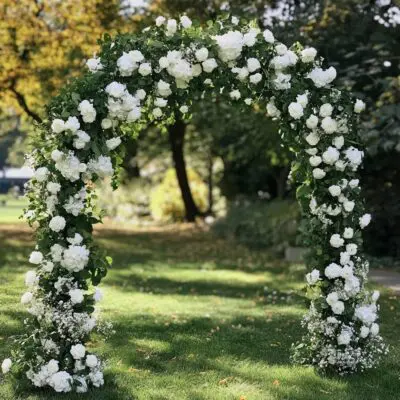
For the ceremony, Mauve Honey can inspire an asymmetrical floral arch. Ivory and blush roses could create the main areas of volume, while lavender flowers and burgundy textures extend beyond the larger clusters. Small golden accents could be added only in selected places, keeping the installation elegant rather than overly colorful.
Aisle flowers can remain lighter. Small gatherings of ivory roses, mauve accents, and greenery placed every few rows would provide continuity without competing with the bridal bouquet. This restrained approach works especially well for outdoor ceremonies where natural surroundings already provide plenty of green.
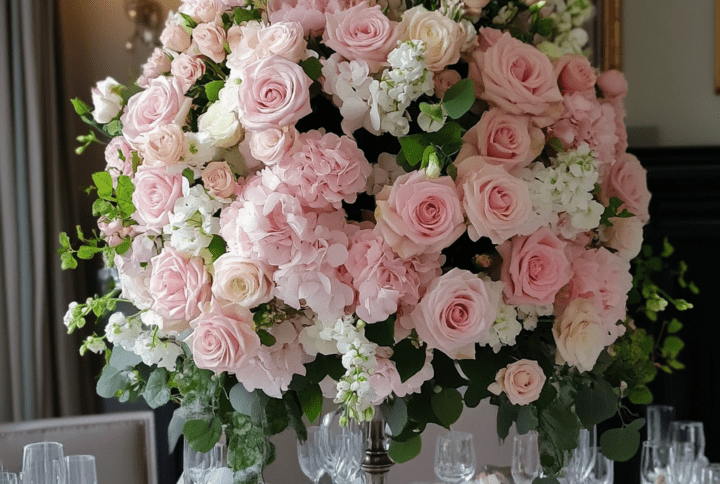
Reception flowers can interpret the bouquet in a looser way. Low garden arrangements in ceramic or glass vessels could combine ivory roses, lavender flowers, and berry textures with plenty of open space. Golden accents can appear selectively between candles for a warm evening glow.
Bud vases are another beautiful option. A single mauve rose in one vase, an ivory bloom in another, and a berry-colored stem in a third can create a sophisticated collected look across long tables. This also allows each flower variety to be appreciated individually.
The bouquet’s palette coordinates naturally with dusty lavender, blush, champagne, sage, ivory, muted burgundy, pale peach, and warm gold. Bridesmaid dresses in mauve, sage, champagne, soft gray, or dusty rose would all complement the flowers without needing to match them exactly.
Mauve Honey works across several seasons. In spring, the design can lean toward fresh greens, blush, and pale lavender. Summer versions can emphasize peach and golden accents. For early autumn, deeper mauve and berry tones can become more prominent while preserving the same overall structure.
Seasonal availability may change the exact flowers used, and that flexibility suits the bouquet. Its identity comes from the balance between ivory roses, blush and peach flowers, cool mauve tones, darker textured accents, and subtle golden details rather than one particular variety.
When ordering this design, describe the desired style as romantic, garden inspired, hand tied, layered, and softly asymmetric. Ask for a mixture of warm and cool pastel shades with visible texture between the roses. Keeping the burgundy and yellow accents limited will help maintain the bouquet’s refined appearance.
Before the ceremony, store Mauve Honey in a cool indoor location away from direct sunlight, radiators, fireplaces, and warm windows. Roses and delicate filler flowers can lose moisture quickly in heat, so careful storage is particularly important before photographs begin.
If your florist recommends hydration, place the stems in clean fresh water while keeping ribbon and decorative wrapping above the water line. Use a vase wide enough to avoid squeezing the outside flowers inward.
Carry the bouquet by the wrapped stems instead of supporting it by the flower heads. Repeated contact with rose petals may cause bruising, while feathery filler stems can bend easily. The slightly irregular outline is intentional and should not be constantly adjusted.
When the bouquet is resting, place it upright in a supportive vase rather than laying it on a chair or table. This helps preserve the rounded flowers and keeps the fine outer stems from being compressed.
During outdoor portraits, move the bouquet into shade during longer breaks whenever possible. Never leave fresh wedding flowers inside a parked vehicle. If the ceremony and reception are separated by several hours, follow the florist’s recommendations about returning the stems to water.
After the wedding, individual roses, lavender petals, and selected textured stems can be pressed or professionally preserved. The mix of ivory, mauve, blush, and burgundy can create especially attractive framed botanical artwork when paired with invitation paper, ribbon, or handwritten vows.
Garden Style Wedding Bouquets Mauve Honey combines gentle bridal romance with a richer garden palette. Ivory roses provide elegance, peach petals add warmth, lavender flowers introduce softness, berry textures create depth, and golden accents give the bouquet its final sunlit detail.
Related Products
Recently Viewed Products
Birthday Bouquet Spring Notes: A Cheerful Celebration in Full Bloom
Price range: $99.00 through $229.00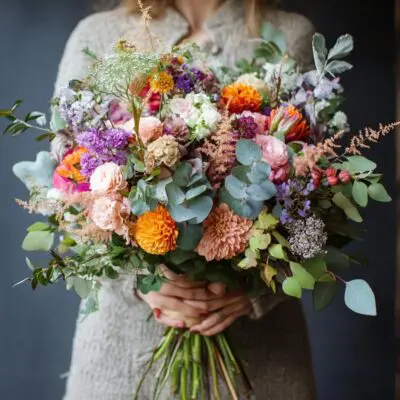

Reviews
There are no reviews yet.