


Fall Wedding Bouquets Apricot Frost
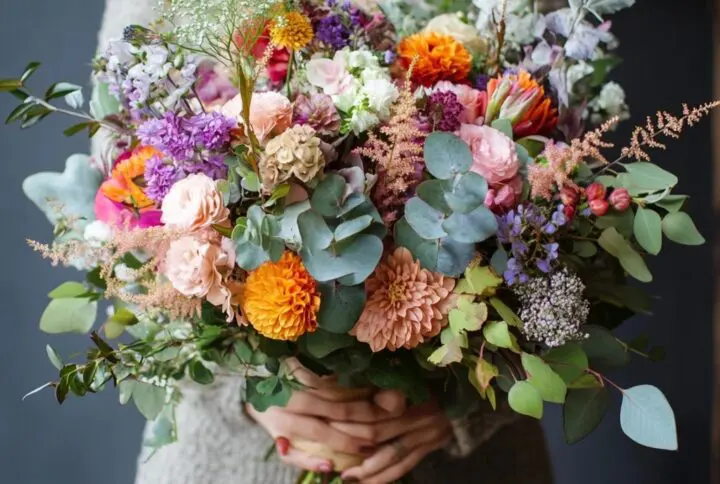
An airy autumn bridal bouquet featuring apricot dahlias, creamy ivory and white blooms, cool blue globe thistle, delicate greenery, and cascading bronze amaranthus. A refined choice for garden, vineyard, estate, countryside, or modern fall weddings.

-
Free shipping on all orders over $30 in the Greater Vancouver Area
Wedding bouquet cost can reflect seasonal flower choices, and this airy apricot, ivory, blue, and bronze design brings elegant fall texture.
Fall Wedding Bouquets Apricot Frost is a fresh interpretation of autumn florals for a bride who prefers luminous colors over the traditional deep burgundy palette. Soft apricot dahlias, creamy white blooms, delicate ivory flowers, cool blue globe thistle, pale botanical accents, and flowing bronze amaranthus create a bouquet with both lightness and seasonal warmth. Its asymmetrical garden-inspired silhouette feels contemporary, romantic, and effortlessly refined against a simple ivory wedding gown.
Apricot dahlias form the warm heart of this bouquet. Their intricate petals create beautiful texture while introducing shades of peach, champagne, muted orange, and soft terracotta. The color is unmistakably autumnal, yet much softer than vivid pumpkin orange, making it especially attractive for sophisticated fall celebrations.
The larger apricot flowers are distributed throughout the arrangement rather than concentrated in one place. This creates a gentle rhythm across the bouquet and gives the design a naturally gathered appearance. Their round forms also contrast beautifully with the taller white stems and the spiky blue accents.
White and ivory flowers brighten the composition. These pale blooms help preserve the bouquet’s bridal character and prevent the warm autumn shades from becoming too dominant. Against an off-white or ivory gown, they create a seamless transition from dress to flowers while allowing the apricot and blue details to stand out.
Small white blossoms add a meadow-inspired quality. Their informal shape makes the bouquet feel fresh and relaxed rather than tightly structured. These delicate flowers are particularly effective in outdoor wedding photography because they catch natural light and create airy highlights around the larger blooms.
Blue globe thistle provides one of the most distinctive color contrasts. Its muted steel-blue tone feels cool and sophisticated beside apricot, ivory, and bronze. The rounded, spiky flower heads also introduce an unexpected texture that gives the bouquet a modern botanical personality.
For brides comparing wedding bouquet cost, seasonal ingredients and flower availability can influence the final price. A design like Apricot Frost can often be adapted by using locally available dahlias, chrysanthemums, asters, thistle, seasonal greenery, or other textural flowers while preserving the same overall palette and silhouette.
The bouquet’s bronze trailing amaranthus adds dramatic movement. Its long tassel-like strands fall from the lower section in warm caramel and rust tones, giving the arrangement a soft cascade. This detail brings depth and makes the bouquet feel unmistakably suited to autumn.
Unlike a traditional dense waterfall bouquet, Apricot Frost uses the hanging amaranthus selectively. The result is lighter, more modern, and easier to pair with a clean fitted dress. The cascade gives the bouquet visual length without overwhelming the bride.
Fine green stems and pale foliage fill the spaces between flowers. Their delicate structure keeps the arrangement airy and allows each bloom to remain visible. Rather than surrounding the flowers with a heavy border of leaves, the greenery appears naturally woven through the bouquet.
The asymmetrical shape adds character. Several flower stems rise above the central cluster, while others extend slightly outward or downward. This gives the bouquet movement and makes it look beautiful from different angles during the ceremony, portraits, and reception.
Apricot Frost pairs especially well with minimalist wedding gowns. Satin, crepe, silk, mikado, or structured off-the-shoulder dresses provide a clean backdrop for the bouquet’s detailed petals, blue accents, and flowing bronze textures.
It can also complement lace beautifully. The intricate floral pattern of lace echoes the detailed dahlias and small blossoms, while the bouquet’s softer colors avoid competing with the dress.
Bridesmaid dresses in champagne, dusty blue, terracotta, apricot, taupe, pale sage, warm beige, cinnamon, or muted copper can coordinate naturally with this arrangement. Smaller bridesmaid bouquets could feature ivory flowers, apricot dahlias, and limited blue thistle while reserving the cascading amaranthus for the bride.
The same palette can continue through ceremony flowers. Apricot blooms, white flowers, blue thistle, and bronze amaranthus can decorate a wedding arch or ceremony backdrop. Using the amaranthus in selected areas can create graceful vertical movement without making the installation feel heavy.
Aisle arrangements can be simpler. White flowers, soft apricot blooms, and a few blue accents can create visual continuity while allowing the bridal bouquet to remain the most detailed arrangement.
Reception centerpieces can reinterpret the bouquet in low garden-style compositions. Apricot dahlias, white flowers, blue thistle, bronze textures, and airy greenery would look beautiful in cream ceramic bowls, antique brass vessels, smoked glass, stone compotes, or warm neutral pottery.
Warm candlelight is especially flattering to this color combination. Apricot flowers become richer, ivory blooms glow, blue thistle provides cool contrast, and bronze amaranthus takes on a deeper golden tone. Champagne linens, amber glassware, antique gold candleholders, and soft taupe accents can complete the reception styling.
This bouquet is a strong choice for vineyard weddings, country estates, garden ceremonies, boutique hotels, elegant barns, and intimate outdoor receptions. Its palette feels seasonal without relying on dark dramatic flowers, making it ideal for brides who want an airy and polished autumn look.
When discussing the bouquet with a florist, describe it as autumnal, asymmetrical, airy, textural, romantic, lightly cascading, and garden-inspired. Mention apricot dahlias, ivory flowers, white meadow blooms, blue globe thistle, delicate greenery, and bronze hanging amaranthus.
If wedding bouquet cost is a priority, ask the florist which flowers are naturally abundant during your wedding week. Substituting similar seasonal blooms can maintain the color story while helping control expenses. The overall shape and palette often matter more than using one exact variety.
The bouquet can also be customized. Adding more ivory flowers will make it lighter and more traditionally bridal. Increasing apricot flowers creates a warmer look, while adding more blue thistle gives the arrangement a cooler editorial character.
A shorter cascade can make the bouquet more compact, while additional amaranthus creates stronger drama. Brides who prefer an even softer look can replace some bronze elements with champagne, blush, or pale beige textures.
Proper care helps preserve the bouquet before the ceremony. Keep it in a cool, shaded location away from direct sunlight, heaters, fireplaces, radiators, and warm windows. Dahlias and other soft flowers can lose moisture quickly when exposed to heat.
Whenever construction allows, keep only the exposed fresh stem ends in clean water. Keep flower heads, ribbons, wrapping, thistle, and trailing amaranthus above the water line unless your florist provides different instructions.
Handle the bouquet mainly by the wrapped stems. Avoid repeatedly touching dahlias because their petals can bruise or shift. Blue thistle and dried-looking textures are sturdier, but the fine white flowers may still be delicate.
During transportation, keep the bouquet upright in a secure container with enough room around the taller flowers and hanging amaranthus. Garment bags, boxes, luggage, or other arrangements should not press against the bouquet.
For bridal portraits, hold Apricot Frost naturally around waist height. Allow the bronze amaranthus to fall freely rather than gathering it against the gown. This displays the full asymmetrical shape and creates graceful movement in photographs.
When the bouquet is not being carried, place it in a supportive vase or bouquet stand rather than laying it flat on a table, chair, or grass. This helps preserve the cascade and protects delicate flowers.
After the ceremony, return the arrangement to a cool protected area whenever possible. Rehydrate appropriate stems and keep the bouquet away from candles, direct heat, strong wind, and prolonged sunlight.
Some thistle, amaranthus, and botanical elements may dry attractively after the wedding. Selected flowers can also be professionally pressed or preserved to create framed floral art, a shadow box, or another meaningful wedding keepsake.
Choose Fall Wedding Bouquets Apricot Frost for an autumn wedding filled with warmth, softness, movement, and unexpected color. Apricot dahlias, ivory flowers, cool blue thistle, and bronze trailing textures create a bridal bouquet that feels seasonal, graceful, and beautifully modern.
Related Products
Recently Viewed Products
Birthday Bouquet Spring Notes: A Cheerful Celebration in Full Bloom
Price range: $99.00 through $229.00

Reviews
There are no reviews yet.