
Fall Wedding Bouquets Burgundy Woodland Cascade
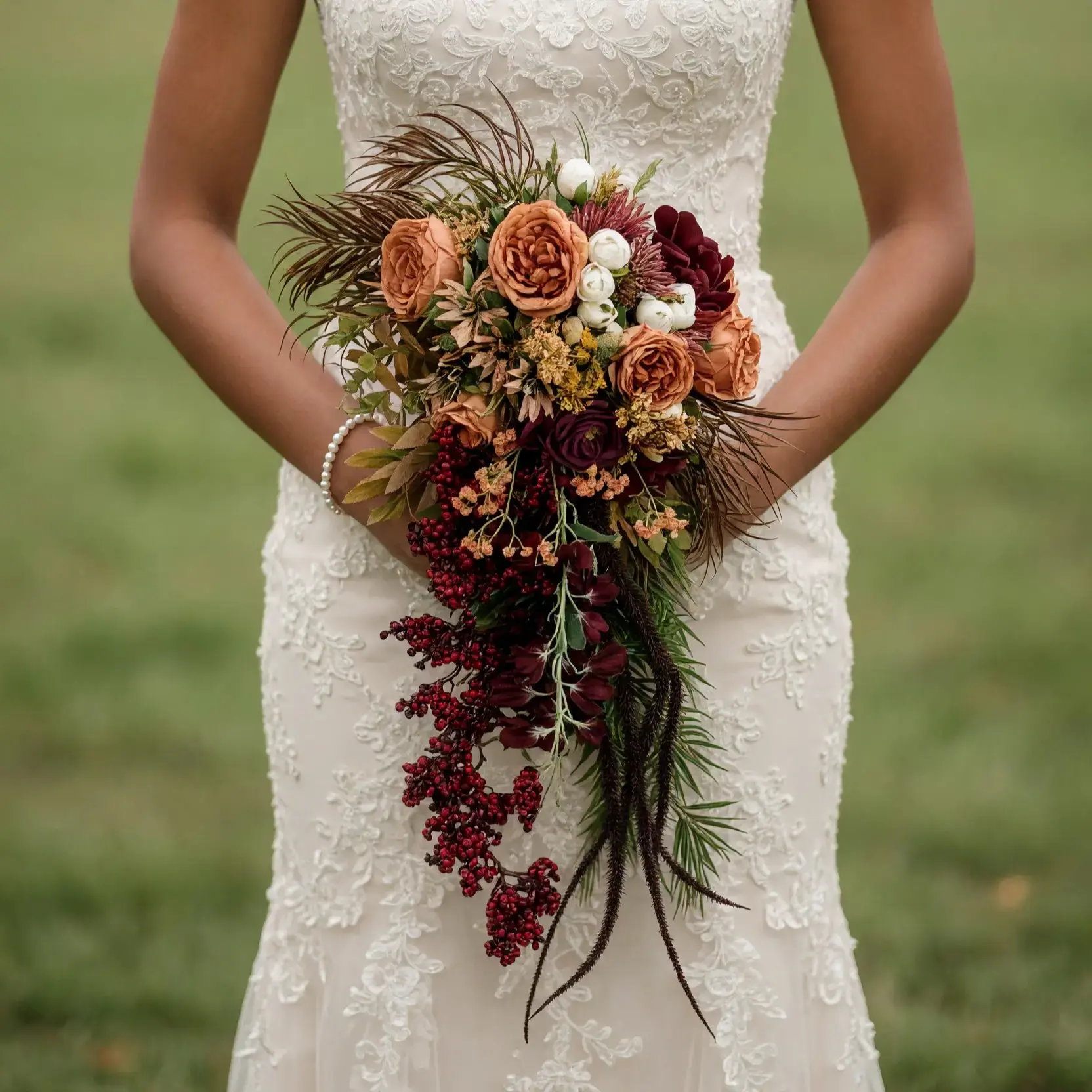
A rich cascading fall bridal bouquet featuring caramel roses, burgundy flowers, dark berry clusters, ivory accents, and textured seasonal greenery. Its dramatic woodland inspired shape and warm autumn palette make it perfect for romantic vineyard, rustic, garden, or elegant countryside weddings.

-
Free shipping on all orders over $30 in the Greater Vancouver Area
Bridal bouquet cost can reflect the flowers, texture, size, and artistry behind a rich autumn cascade filled with roses, berries, and foliage.
This dramatic fall wedding bouquet is designed for a bride who loves deep seasonal color, graceful movement, and a naturally luxurious floral style. Warm caramel roses form the heart of the arrangement, while burgundy flowers, dark red berries, ivory accents, muted greenery, and feathery botanical details create depth around them. The cascading shape gives the bouquet a romantic sense of movement and makes it especially memorable against a classic white or ivory bridal gown.
The color palette is unmistakably autumnal. Caramel and copper tones bring warmth, while wine, plum, burgundy, and deep berry shades introduce richness and contrast. Small ivory blooms brighten the composition and prevent the darker elements from becoming too heavy. Green and brown foliage adds an earthy quality that helps the bouquet feel inspired by the season rather than simply decorated with fall colors.
One of the most beautiful features of this design is its elongated cascading form. Instead of ending at a compact rounded edge, the bouquet flows downward through clusters of berries, dark botanical stems, and trailing greenery. This creates a graceful vertical line that can visually complement fitted, lace, sheath, trumpet, or classic bridal dresses. The cascading shape also photographs beautifully because it creates movement and draws attention toward the details of the gown.
For brides researching bridal bouquet cost, it is helpful to remember that designs like this often involve more than the number of flowers alone. The overall price of a wedding bouquet can be influenced by flower varieties, seasonal availability, bouquet size, specialty foliage, berries, construction techniques, labor, and the complexity of a cascading shape. A professionally created arrangement requires careful placement so that every flower and trailing element remains balanced while still looking natural.
The warm roses are particularly important to the visual character of this bouquet. Their muted caramel tone feels sophisticated and less traditional than bright orange, while still fitting beautifully into an autumn wedding palette. Burgundy flowers provide a dramatic counterpoint, and clusters of dark berries add texture that feels distinctly seasonal. The smaller ivory blooms serve as subtle highlights throughout the arrangement.
This bouquet can work beautifully for woodland weddings, rustic estates, vineyards, country venues, barn celebrations, garden ceremonies, and elegant indoor receptions. Its rich palette is versatile enough to complement both highly decorative autumn settings and simple neutral spaces. Against greenery, stone, wood, or warm candlelight, the bouquet takes on an especially romantic appearance.
Bridesmaids can carry smaller arrangements featuring caramel roses, burgundy flowers, and restrained greenery. This creates a coordinated floral story without competing with the bridal bouquet. The same palette can also be used in ceremony installations, aisle flowers, reception centerpieces, sweetheart table arrangements, and floral details around signs or seating displays.
The bouquet is also a strong choice for couples who want wedding flowers with natural texture. Rather than relying only on roses, the design includes berries, leafy stems, feathery accents, and small filler flowers. These details create visual richness and allow the bouquet to feel organic from every angle. They also give the arrangement a sense of abundance without requiring an overly formal structure.
Seasonal availability can affect both the final floral selection and bridal bouquet cost. Certain roses, berries, or specialty stems may be easier to source during particular parts of the year. A florist can usually maintain the overall look by choosing similar alternatives in compatible colors and textures. Remaining flexible about exact varieties can help preserve the design concept while allowing the florist to select flowers in the best available condition.
When consulting with a florist, it is useful to discuss the desired overall shape, color palette, size, and degree of movement. For this arrangement, words such as cascading, woodland inspired, romantic, textural, burgundy, caramel, and autumnal communicate the design clearly. Sharing photographs of the wedding dress and venue can also help determine the most flattering scale for the bouquet.
Care before the ceremony is essential for maintaining the fresh appearance of the flowers. Store the bouquet in a cool location away from direct sunlight, heating vents, fireplaces, and warm windows. When the construction allows, keep exposed stems hydrated in clean water until shortly before the bouquet is needed. Decorative ribbon and fabric wrapping should remain dry.
The berries and trailing botanical elements should be handled carefully because they can be more delicate than the central roses. Avoid pulling, bending, or repeatedly repositioning the cascading stems. When lifting the bouquet, support it from the handle and allow the lower portion to hang naturally instead of resting it against a table or chair.
Transportation should be planned with the shape of the bouquet in mind. A cascading arrangement needs enough space so the lower flowers and foliage are not crushed. Keep it upright and secure in a suitable container, with the trailing section protected from surrounding objects. Even on a cool fall day, avoid leaving flowers inside a parked vehicle for an extended period.
During photography, hold the bouquet around waist level so the cascading shape remains visible without covering too much of the dress. A gentle natural grip usually looks better than holding the stems tightly. Because the arrangement has an asymmetrical and flowing form, small changes in angle can reveal new layers of roses, berries, and foliage in different photographs.
If the bouquet begins to look slightly tired during a long wedding day, returning it to a cool area can help preserve its appearance between major events. Avoid placing it near candles, outdoor heaters, direct afternoon sun, or strong drafts. Keeping the flowers protected whenever they are not being photographed or carried can make a noticeable difference.
After the wedding, selected elements may be preserved as keepsakes. Roses can often be dried or professionally preserved, while smaller leaves and flowers may be suitable for pressing. Decorative ribbon can be saved separately, and some couples preserve individual berries or botanical pieces as part of a shadow box or wedding memory display.
For brides comparing bridal bouquet cost with visual impact, this design offers a strong statement through shape, texture, and seasonal color. The flowers are not arranged as a simple compact cluster; instead, every element contributes to the overall movement of the bouquet. That complexity gives the arrangement a distinctive presence that can become an important part of the bridal look.
Choose this bouquet for an autumn wedding that embraces deep color and natural drama. The combination of caramel roses, dark burgundy blooms, ivory highlights, rich berries, and cascading foliage creates a floral design that feels romantic, earthy, and sophisticated. It is ideal for a bride who wants her wedding flowers to reflect the richness and atmosphere of the fall season.
Related Products
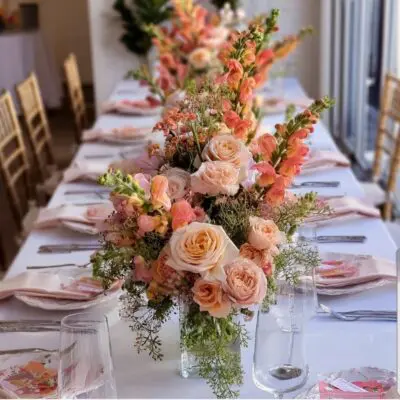
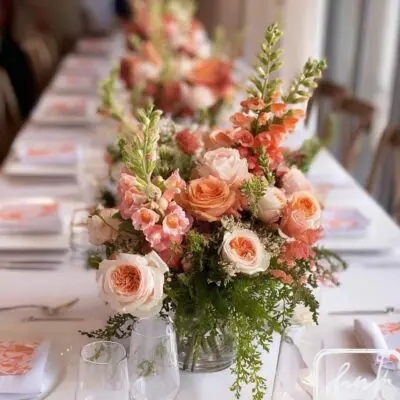
Peach Petals flower centrepiece for Wedding table
Price range: $79.00 through $149.00Recently Viewed Products
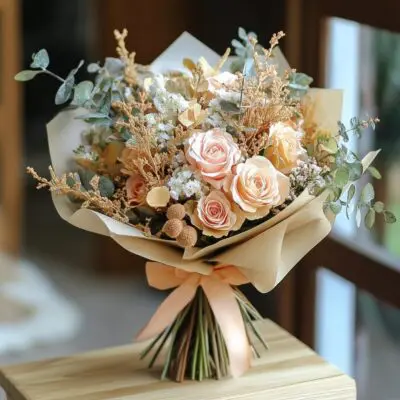
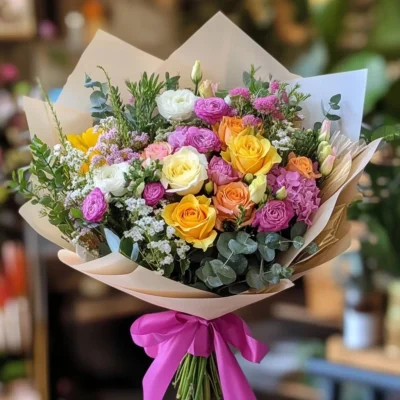
Birthday Bouquet Spring Notes: A Cheerful Celebration in Full Bloom
Price range: $99.00 through $229.00

Reviews
There are no reviews yet.