
Fall Wedding Bouquets Golden Orchid Ember
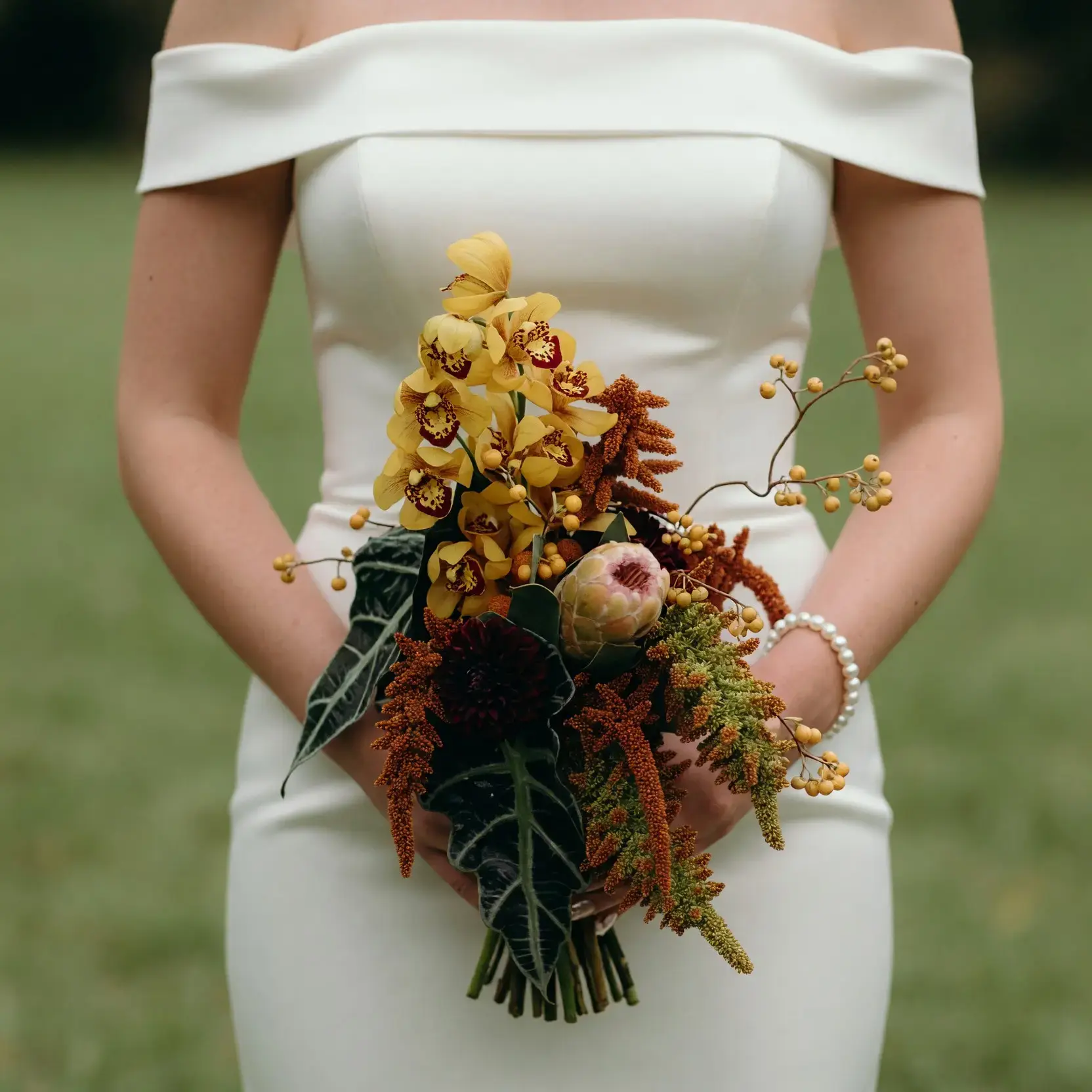
A modern autumn bridal bouquet featuring golden orchids, sculptural protea, burgundy blooms, amber berries, rust-colored botanical textures, and dramatic dark foliage. Ideal for vineyard, garden, estate, countryside, artistic, or elegant fall weddings.

-
Free shipping on all orders over $30 in the Greater Vancouver Area
Bridal flowers bouquets feel artistic in fall with golden orchids, protea, amber berries, dark foliage, and warm rust textures.
This distinctive autumn bridal bouquet celebrates rich seasonal color through golden yellow orchids, sculptural protea, deep burgundy blooms, amber berry branches, rust-colored textures, and dramatic dark foliage. The design feels modern and botanical rather than traditionally romantic, making it an excellent choice for brides who want their flowers to become a memorable part of the wedding look. Warm mustard, copper, burgundy, olive, cream, and deep green shades create an earthy palette that looks especially beautiful against a clean white or ivory wedding gown.
The golden orchids immediately become the bouquet’s focal feature. Their arching shape naturally brings height to the arrangement, while their warm yellow petals create a luminous contrast against the darker foliage. Burgundy markings inside the blooms add detail and connect the orchids visually with the richer wine-colored flowers lower in the bouquet.
Orchids also give the arrangement an elegant, slightly exotic character. Instead of relying on a large quantity of traditional roses, this bouquet uses distinctive shapes and textures to create visual interest. For brides searching for bridal flowers bouquets with personality, this approach can feel fresh, sophisticated, and highly individual.
A large protea-inspired focal bloom adds sculptural drama near the center. Its rounded shape, muted cream exterior, and deeper blush center create a beautiful transition between the yellow orchids and the darker autumn flowers. Protea works especially well in modern wedding arrangements because it adds structure without looking overly formal.
Deep burgundy flowers provide strong contrast beneath the brighter orchid stems. Their dark velvety coloring introduces a moody fall note and prevents the golden palette from becoming too light. Burgundy is particularly effective in autumn weddings because it coordinates beautifully with rust, mustard, plum, chocolate, forest green, and copper.
Rust-colored botanical textures surround the focal flowers and create movement through the lower portion of the bouquet. Their warm burnt-orange tone feels seasonal without relying heavily on traditional orange roses. These fine branching textures also provide an organic transition between the flowers, berries, and foliage.
Golden berry branches extend beyond the central arrangement and create one of the bouquet’s most playful details. Their small round fruits appear on slender arching stems, adding lightness around the stronger floral shapes. The berries reinforce the harvest-inspired palette and make the arrangement feel naturally gathered.
Dark glossy foliage creates striking visual contrast. Large elongated leaves with pale veins provide a dramatic frame around the flowers and introduce an almost tropical botanical character. These bold leaves give the bouquet structure while helping the yellow orchids and lighter central flower stand out clearly.
Smaller olive-green leaves and botanical accents soften the design. Their muted tones prevent the larger dark foliage from feeling too heavy and help connect the arrangement with outdoor autumn scenery. This combination of leaf shapes makes the bouquet especially interesting from different viewing angles.
The overall shape is asymmetrical and softly vertical rather than perfectly round. The orchids rise above the arrangement, while rust textures and berry branches extend outward. The lower section remains compact enough to carry comfortably, creating a bouquet that feels artistic without becoming difficult to manage.
Bridal flowers bouquets with this kind of structure work particularly well with minimalist wedding dresses. A smooth satin, silk, crepe, or mikado gown creates a clean backdrop for the bold botanical details. The contrast between a simple gown and expressive flowers can produce especially memorable wedding photographs.
The design can also pair beautifully with lace. Floral lace introduces a softer romantic texture, while the orchids, protea, and dark foliage add modern contrast. This combination suits brides who want a wedding look that blends classic femininity with contemporary floral styling.
Bridesmaid dresses in mustard, burgundy, rust, forest green, olive, champagne, terracotta, bronze, or dark plum can coordinate naturally with this bouquet. Smaller bridesmaid bouquets could use golden flowers, burgundy accents, and simple greenery without repeating the large protea or dramatic dark leaves.
The same floral palette can continue into ceremony arrangements. Golden orchids can be used selectively as statement flowers on a wedding arch, while rust textures and greenery create volume around them. Burgundy flowers can anchor the installation and provide visual depth.
Aisle arrangements can be kept simpler with greenery, berries, and a few warm yellow flowers. This allows the more dramatic bouquet and ceremony focal arrangements to remain special while still creating a cohesive floral story.
Reception centerpieces can reinterpret these bridal flowers bouquets using lower arrangements. Mustard orchids, burgundy flowers, rust botanicals, amber berries, and dark foliage would look beautiful in matte ceramic vessels, antique brass containers, smoked glass, or textured stone compotes.
The sweetheart table could feature a looser version of the bouquet’s palette. Allowing berry branches and rust textures to extend naturally across the table edge would echo the bridal arrangement without duplicating it exactly.
This floral style is particularly suitable for vineyard weddings, historic estates, artful garden venues, countryside properties, elegant barns, modern outdoor celebrations, or intimate autumn receptions. Its unusual combination of flowers makes it equally appropriate for creative and sophisticated wedding themes.
Warm decorative materials complement the bouquet beautifully. Brass candleholders, amber glass, copper accents, dark wood, linen, stone, and velvet can all reinforce the autumn palette. Black or charcoal details can also highlight the dramatic foliage.
When discussing this bouquet with a florist, describe the style as modern, autumnal, sculptural, botanical, textural, asymmetrical, and sophisticated. Mention golden orchids, protea, burgundy flowers, rust branching textures, amber berries, and dramatic dark green foliage.
Flower varieties may vary according to local and seasonal availability. A professional florist can recreate the overall appearance by selecting flowers with similar colors and shapes. Maintaining the golden orchid focal point, sculptural central bloom, dark foliage, warm berries, and rust texture will preserve the bouquet’s character.
The palette is also easy to customize. More cream flowers can create a softer bridal appearance, while additional burgundy blooms can make the design moodier. Increasing mustard and amber tones creates a warmer harvest feeling, while more greenery can emphasize the botanical character.
Brides who prefer a larger arrangement can add additional orchid stems and foliage. A more compact version can reduce the arching berry branches while keeping the central protea and orchid cluster. This flexibility makes the design suitable for different body proportions and gown silhouettes.
Proper care is important for orchids and sculptural flowers. Keep the bouquet in a cool shaded location away from direct sunlight, fireplaces, radiators, heating vents, and warm windows. Avoid unnecessary temperature changes before the ceremony.
Whenever the bouquet construction permits, keep the exposed stem ends in clean fresh water. Do not submerge decorative wrapping, berries, or leaves unless your florist specifically recommends it.
The handle should remain dry so it is comfortable to carry and does not transfer moisture onto the wedding gown. If the bouquet is wrapped with ribbon, keep the ribbon above the water line at all times.
Handle the arrangement by the stems rather than touching the orchid petals or protea repeatedly. Orchid petals can mark or bruise, while berry stems may bend if pressed. The outward-reaching branches are part of the intended design and should remain loose.
During transportation, keep the bouquet upright in a secure container. Make sure garment bags, boxes, luggage, or other flowers do not press against the orchid stem or berry branches.
For bridal portraits, hold the bouquet naturally at waist height and angle it slightly so the orchid spray remains visible. Small changes in position can reveal the protea, berries, dark foliage, and burgundy flowers from different sides.
If the bouquet is not being carried, place it in a supportive vase or bouquet holder rather than laying it flat. This helps protect the orchid petals and prevents the longer branches from bending.
After the ceremony, return the bouquet to a cool protected area whenever practical. Rehydrate appropriate fresh stems and keep the arrangement away from strong sunlight, heaters, or candles.
After the wedding, selected foliage, berries, and botanical textures may be suitable for drying or preservation. Orchids and protea can also be professionally preserved to create a meaningful floral keepsake.
Choose this design for an autumn wedding filled with sculptural beauty, sophisticated color, and unexpected botanical details. Golden orchids, protea, burgundy blooms, amber berries, rust textures, and dark foliage create bridal flowers bouquets with distinctive personality and memorable seasonal style.
Related Products
Recently Viewed Products
Birthday Bouquet Spring Notes: A Cheerful Celebration in Full Bloom
Price range: $99.00 through $229.00

Reviews
There are no reviews yet.