

Garden Style Wedding Bouquets Apricot Orchard
Garden Style Wedding Bouquets Apricot Orchard combines apricot and champagne roses, ivory blooms, peach berry accents, dusty blush astilbe, and natural greenery. Its warm hand-tied design is ideal for garden, estate, vineyard, countryside, summer, and early-autumn weddings.

-
Free shipping on all orders over $30 in the Greater Vancouver Area
florist styles feel warm and romantic with apricot roses, ivory blooms, peach berries, blush astilbe, and fresh garden foliage.
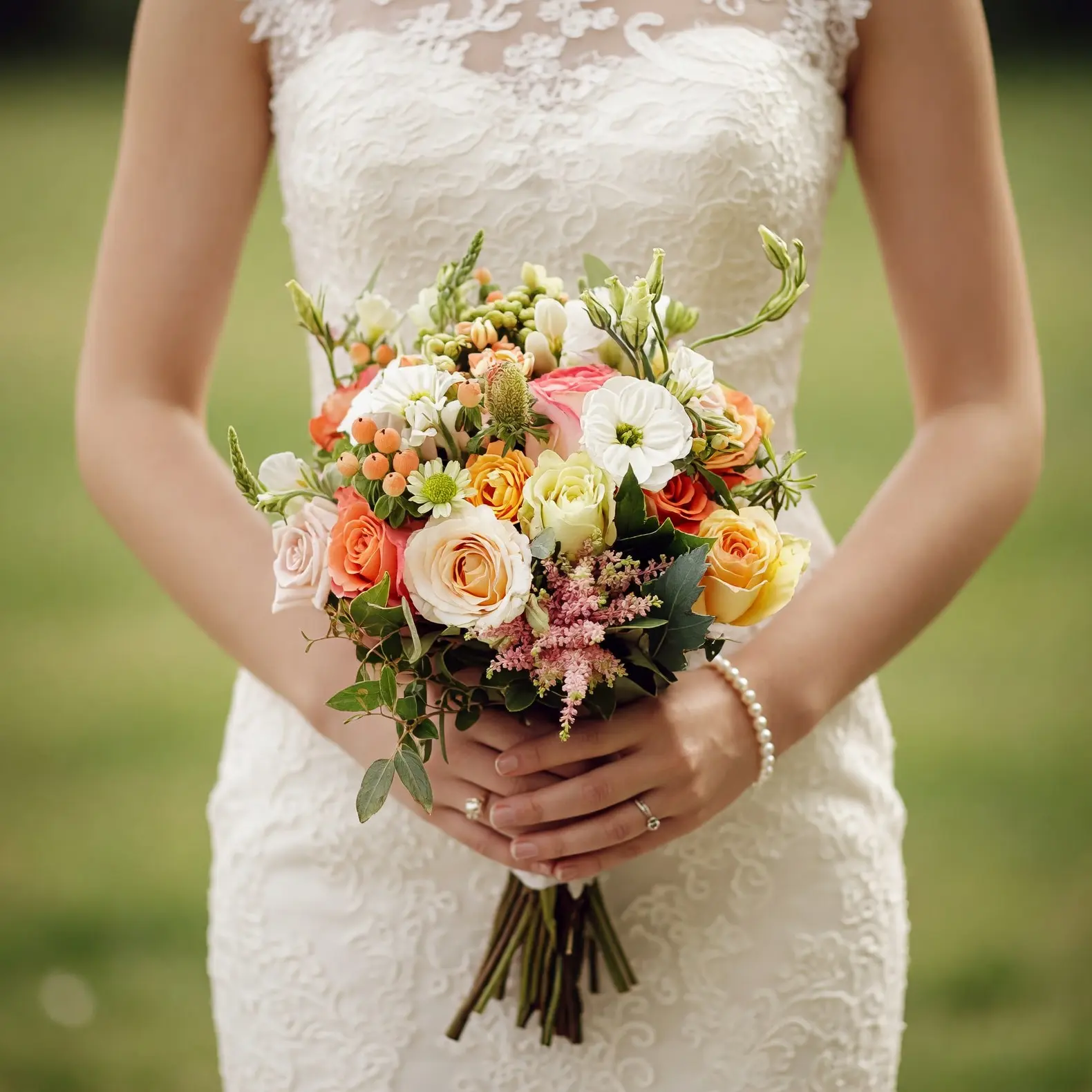
Garden Style Wedding Bouquets Apricot Orchard has the warmth of late-afternoon sunshine captured in flowers. Cream, apricot, peach, soft coral, pale yellow, and dusty blush come together in a compact hand-tied bouquet that feels generous without appearing oversized. Instead of using one dramatic statement bloom, the design layers roses, delicate white flowers, clustered berries, petite garden blossoms, textured pink stems, and fresh greenery into a composition that rewards a closer look.
The roses create the bouquet’s softest foundation. Large ivory blooms sit beside peach, champagne, and warm apricot roses, creating an almost ombré effect across the arrangement. Some petals are barely tinted, while others carry stronger orange and coral undertones. This gradual transition gives the bouquet depth while keeping the palette cohesive and easy to pair with an ivory wedding dress.
A brighter coral rose introduces a spark of color near the center. It does not dominate the bouquet, but it prevents the cream and apricot palette from becoming too quiet. Surrounding it with pale roses allows the stronger shade to act like a warm focal point rather than a separate color story.
Clusters of peach-colored berries are one of the most distinctive details. Their rounded shape provides a playful contrast to the layered rose petals and adds an orchard-inspired quality to the design. These small accents also make the bouquet feel slightly seasonal without pushing it into an obvious autumn theme.
Ivory and white flowers lighten the arrangement throughout. Some are open and delicate, while others remain in bud form, introducing fresh green tips between the warmer petals. Their irregular placement gives the bouquet a natural garden rhythm instead of the uniform surface often associated with traditional rounded arrangements.
Dusty pink astilbe adds softness near the lower portion. Its feathery texture looks almost weightless beside the roses and berries, bringing a romantic haze to the arrangement. Because it extends just beyond the heavier flowers, it also breaks up the compact outline and gives the bouquet a more relaxed finish.
Small daisy-like flowers with green centers provide another unexpected botanical detail. Their simple shape contrasts beautifully with the densely layered roses. They make the bouquet feel less formal and subtly reinforce its fresh garden character.
The foliage is intentionally understated. Darker leaves create depth behind the flowers, while a few loose branches extend beyond the central arrangement. These outward-reaching stems keep Apricot Orchard from becoming too circular and give the design the feeling of being freshly gathered rather than tightly constructed.
Among different florist styles, this bouquet sits between classic bridal and natural garden design. Its roses provide recognizable wedding elegance, while berries, textured filler, buds, and irregular greenery introduce a more contemporary organic quality. This balance makes it particularly versatile for couples who appreciate traditional flowers but want the final arrangement to feel personal and relaxed.
Apricot Orchard works beautifully with lace gowns because its small details echo floral embroidery. The ivory and cream flowers blend softly with the dress, while coral and apricot roses remain visible enough to define the bouquet. Against satin or crepe, the bouquet appears cleaner and more colorful, with every flower shape standing out sharply against the smooth fabric.
Pearl jewelry is a natural match, especially with the creamy roses and soft bridal palette. Warm gold accessories can also work beautifully because they reflect the peach and apricot tones. Brides who prefer minimal styling can keep jewelry almost invisible and allow the floral color to carry the look.
This arrangement would suit an estate wedding, garden ceremony, countryside venue, intimate vineyard celebration, summer reception, or early-autumn event. Its palette is warm enough to feel romantic in golden-hour photography yet light enough for spring and summer settings.
Bridesmaid bouquets can use the same floral language without copying the bride’s arrangement. Smaller bouquets might feature ivory roses, peach flowers, and greenery while leaving the berries, pink astilbe, and most varied rose tones for the bridal bouquet.
Another option is to give attendants more monochromatic flowers. Champagne and cream bouquets would make the bride’s apricot and coral accents feel more prominent. Sage, champagne, dusty peach, warm beige, or blush dresses would all coordinate naturally.
For the ceremony, Apricot Orchard could inspire asymmetrical floral groupings around an arch. Use ivory roses and greenery as the base, then introduce apricot blooms and berry-like accents in smaller clusters. This keeps the installation connected to the bridal bouquet without turning it into an oversized duplicate.
Aisle flowers can remain simpler. Small bunches of cream blooms, peach roses, and greenery placed every few rows would provide enough color to establish the palette. If the ceremony is outdoors, leaving some of the surrounding natural greenery visible will enhance the garden effect.
Reception styling can shift toward a more intimate orchard mood. Low ceramic vessels filled with peach roses, cream flowers, and textured greenery would look beautiful on round tables. For long tables, bud vases with individual roses, small white flowers, and berry stems can create a relaxed collected appearance.
The bouquet’s colors also pair well with candlelight. Ivory candles, amber glass, champagne linens, peach napkins, or brushed gold details can bring out the warmer tones without overpowering the flowers. Couples who prefer a cleaner tablescape can use white linen and greenery, allowing the apricot blooms to provide nearly all the color.
Apricot Orchard can transition easily through the wedding season. In late spring, the florist might use fresher greens and paler peach flowers. In midsummer, stronger coral roses can create more brightness. For early autumn, richer apricot, caramel, and berry tones can deepen the same concept while keeping its bridal softness.
Seasonal availability may change the exact flowers used. This bouquet is flexible enough to accommodate substitutions because its identity comes from the balance of ivory roses, warm apricot flowers, peach accents, small textural blooms, and natural foliage. A florist can preserve the mood without needing every exact variety shown.
When discussing florist styles for this arrangement, ask for a compact but loose hand-tied bouquet with warm peach and cream tones, layered roses, small botanical accents, and a slightly irregular garden edge. Mention that you prefer visible textural details rather than an arrangement made entirely from large focal flowers.
Before the wedding ceremony, keep the bouquet in a cool indoor location away from direct sunlight. Pale rose petals can bruise or dehydrate in excessive heat, and the smaller textural flowers benefit from being protected until the bouquet is needed.
If your florist recommends hydration, place the stems in fresh clean water while keeping ribbon or decorative wrapping above the water line. Use a container wide enough that the outside flowers are not pressed inward.
Carry the bouquet from the wrapped stems rather than supporting it by the blossoms. Avoid repeatedly touching the roses or berry clusters. Even sturdy-looking flowers can shift when handled frequently, changing the balance of the arrangement.
When the bouquet is not being carried, return it to an upright vase rather than placing it flat. This will help prevent the lower flowers and astilbe from becoming compressed. Keep the bouquet away from makeup, food, drinks, and surfaces that could mark the pale petals.
During outdoor photography, move the bouquet back into shade during longer pauses. Never leave fresh flowers inside a parked vehicle. If the schedule includes a substantial break before the reception, follow your florist’s specific instructions regarding rehydration.
After the wedding, selected roses can be pressed or dried, while small flowers and berry-like elements may work beautifully in botanical artwork. A framed collection of preserved petals, invitation paper, ribbon, and a wedding photograph can become a meaningful keepsake.
Garden Style Wedding Bouquets Apricot Orchard is warm without becoming overly autumnal, classic without feeling predictable, and colorful without becoming loud. Apricot roses create softness, peach berries add charm, ivory flowers bring bridal elegance, and dusty pink texture gives the bouquet a delicate garden finish.
Related Products
Recently Viewed Products
Birthday Bouquet Spring Notes: A Cheerful Celebration in Full Bloom
Price range: $99.00 through $229.00

Reviews
There are no reviews yet.