

Blue Rose Wedding Bouquets Midnight Garden Harmony
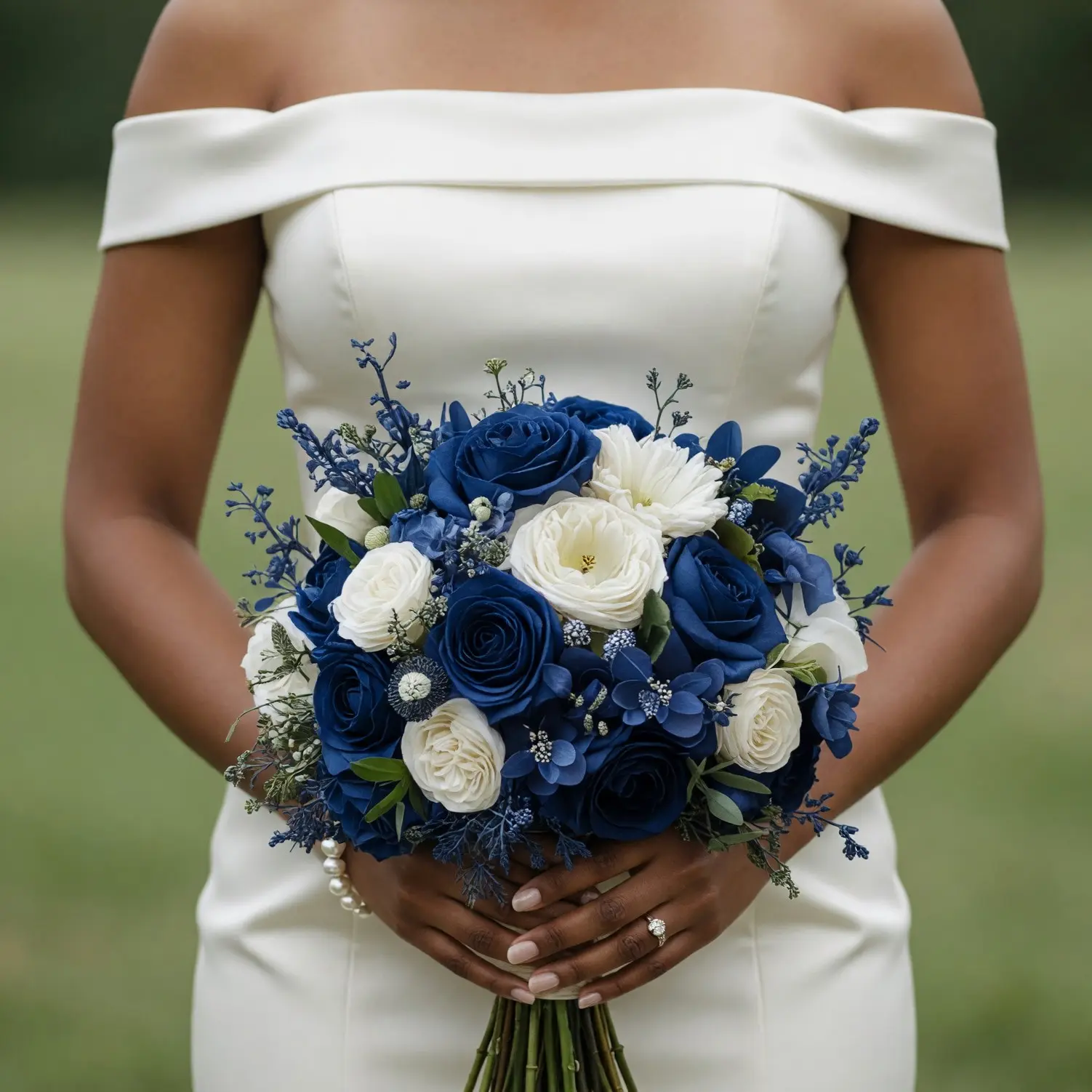
A romantic blue and white wedding bouquet featuring deep midnight-toned rose-like blooms, creamy flowers, delicate accents, and fresh greenery. Its rounded hand-tied shape and elegant color contrast make it an appealing choice for brides seeking a refined and distinctive floral style.

-
Free shipping on all orders over $30 in the Greater Vancouver Area
Popular wedding bouquets inspire this romantic design with deep blue flowers, creamy white blooms, delicate accents, and graceful greenery.
This elegant wedding bouquet brings together a rich combination of deep midnight blue, soft ivory-white, and subtle botanical green. The arrangement has a full, rounded shape with layered flowers that create depth from every angle. Large rose-like blooms in saturated blue tones form a dramatic foundation, while creamy white flowers brighten the center and edges of the bouquet. Smaller blossoms, textured accents, and delicate stems soften the overall appearance and give the design a natural garden-inspired character.
The color palette is one of the bouquet’s most memorable features. Deep blue flowers provide richness and contrast against the bride’s light dress, while the white blooms introduce a classic bridal feeling. The combination feels refined and romantic without relying on a completely traditional all-white arrangement. Small blue accents continue the color story throughout the bouquet, creating a balanced composition where the darker and lighter elements work together naturally.
The bouquet appears generously filled while still maintaining an elegant sense of movement. Some flowers sit closely together to create a lush focal area, while finer stems and delicate accents extend beyond the main silhouette. This gives the arrangement a softer and more organic outline. The result is suitable for a bride who appreciates a polished wedding style but also wants her flowers to feel expressive and individual.
Popular wedding bouquets often combine timeless floral forms with colors that reflect the personality of the celebration, and this arrangement follows that idea beautifully. The rose-like blooms bring a familiar romantic quality, while the deep blue palette introduces a distinctive modern touch. The white flowers help preserve a light bridal mood, allowing the darker shades to feel luxurious rather than overwhelming.
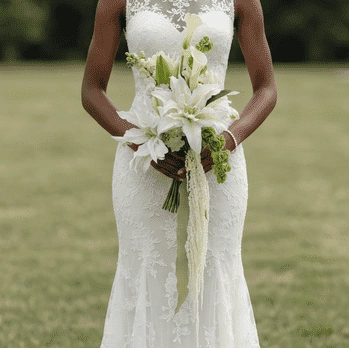
This bouquet could complement many types of wedding dresses. Against a smooth satin gown, the layered flowers can provide texture and visual contrast. With a lace dress, the rounded petals and delicate accents can echo the softness and detail of the fabric. The design may also work beautifully with minimalist bridal fashion, where the bouquet becomes one of the main decorative elements of the overall look. Pearl jewelry, silver-toned accessories, and subtle blue details could all coordinate naturally with this color palette.
For an outdoor wedding, the bouquet’s dark blue and creamy tones can stand out beautifully against a green landscape. Garden ceremonies, countryside celebrations, elegant estate weddings, and intimate outdoor gatherings could all provide a fitting setting. The greenery within the arrangement helps connect the flowers with their surroundings, while the deep blue blooms create a clear focal point in photographs.
The bouquet could also inspire a wider floral theme for the celebration. Bridesmaids might carry smaller arrangements featuring white flowers, muted blue accents, and fresh greenery. Ceremony flowers could repeat the palette through soft white arrangements with touches of deeper blue. Reception centerpieces could use the same colors in varying proportions to create continuity without making every floral design look identical. Small matching floral accents could also be used for boutonnieres, welcome tables, or other decorative details.
One reason a bride may choose this bouquet is its versatility. The overall design feels romantic enough for a traditional ceremony while the blue flowers introduce a more contemporary personality. It can suit formal, garden-inspired, modern, or softly rustic wedding settings depending on the surrounding décor. The rounded hand-tied appearance also gives the bouquet a timeless quality that can remain appealing in wedding photographs for years to come.
Photography is another important consideration when choosing wedding flowers. The contrast between the deep blue and creamy white blooms helps define the bouquet against a light bridal dress. Larger flowers create recognizable focal points in wider portraits, while the smaller botanical details provide texture for close-up images. The bouquet can be held naturally at the waist, slightly forward for portraits, or gently angled to reveal different layers of flowers.
The arrangement should be handled carefully throughout the wedding day to preserve its shape and freshness. Before the ceremony, keep the bouquet in a cool location away from direct sunlight, heating sources, and warm enclosed spaces. High temperatures can cause delicate petals and foliage to lose moisture more quickly, so a shaded and comfortable environment is ideal whenever possible.
Follow the florist’s instructions regarding hydration. If the bouquet is designed to rest in water before use, place the stems in a clean container with fresh water while keeping decorative wrapping or ribbons dry. Avoid leaving the flowers in water longer than recommended if the arrangement contains materials that could be affected by moisture. The stems should remain supported and the blooms should not be pressed against the sides of a container.
During transportation, carry the bouquet carefully and avoid placing heavy objects near the flowers. Delicate outer petals and fine accent stems can be easily disturbed if the arrangement is compressed. When moving between the ceremony, photography locations, and reception, it can be helpful to assign a trusted member of the wedding party to look after the bouquet whenever the bride needs both hands free.
Between important moments, place the bouquet in an appropriate vase or supportive container if recommended by the florist. This can reduce unnecessary handling and help maintain the natural shape of the arrangement. Avoid repeatedly touching or rearranging individual flowers, since frequent adjustments may affect the carefully balanced composition.
If the wedding takes place outdoors, protect the bouquet from prolonged exposure to intense sun or heat. Short periods outside for portraits are part of the celebration, but resting the flowers in a shaded area between photographs can help preserve their appearance. Gentle handling, proper hydration, and protection from excessive temperatures can all contribute to keeping the bouquet fresh throughout the day.
After the wedding, the bouquet may continue to hold sentimental value. Some brides choose to display the flowers at home while they remain fresh, while others arrange for professional preservation. Planning ahead is useful if preservation is important, since some methods work best when flowers are treated soon after the celebration.
This blue and white floral design offers romance, contrast, and a distinctive sense of style. The deep blue blooms create a luxurious focal point, while the creamy flowers add softness and classic bridal charm. Delicate accents and greenery bring texture and movement to the arrangement, completing a bouquet that feels both elegant and personal.
For a bride looking for a floral accessory that combines timeless beauty with expressive color, this arrangement offers a memorable option. Its balanced composition can complement a variety of wedding themes, dresses, and decorative styles. With proper care throughout the celebration, it can remain a beautiful part of the ceremony, portraits, and unforgettable moments of the wedding day.
Related Products
Recently Viewed Products


Birthday Bouquet Spring Notes: A Cheerful Celebration in Full Bloom
Price range: $99.00 through $229.00

Reviews
There are no reviews yet.