

Garden Style Wedding Bouquets Coral Palm
Garden Style Wedding Bouquets Lavender Vine combines dusty mauve roses, ivory blossoms, delicate lavender flowers, and long wandering greenery in an airy cascading design. Its muted botanical palette is ideal for garden, estate, vineyard, countryside, spring, summer, and romantic outdoor weddings.

-
Free shipping on all orders over $30 in the Greater Vancouver Area
popular wedding bouquets gain tropical softness with blush ranunculus, coral anthurium, creamy petals, peach textures, and palm greenery.
Garden Style Wedding Bouquets Coral Palm brings tropical floristry into a softer, more romantic world. Rather than relying on intensely saturated reds and yellows, this arrangement explores peach, shell pink, warm ivory, coral, muted orange, and deep botanical green. The result feels sunlit and luxurious, combining the generosity of garden flowers with the architectural beauty of tropical leaves and statement blooms.
The bouquet is immediately recognizable for its generous floral center. Large pale peach and ivory flowers create cloud-like volume, while tightly layered ranunculus-style blooms introduce precise circular detail. These softer flowers prevent the tropical composition from feeling too sharp or dramatic. They make Coral Palm approachable, bridal, and particularly beautiful beside cream, ivory, or warm white fabrics.
A striped pink ranunculus-style bloom near the upper center adds one of the bouquet’s most charming details. Its delicate concentric petals look almost hand-painted, with deeper rose color appearing toward the center and lighter tones along the edges. Surrounded by ivory and blush flowers, it creates a small but memorable focal point that rewards close-up photography.
Coral anthurium gives the arrangement a completely different visual language. Its smooth, heart-shaped surface contrasts with the layered petals surrounding it, adding a polished tropical accent without overwhelming the bouquet. Warm coral and blush tones allow the anthurium to blend naturally with the garden flowers instead of appearing like a separate exotic element.
Soft pink and peach floral clusters add another layer of texture. Some flowers appear sculptural and tightly formed, while others open in loose ruffled petals. The bouquet therefore shifts constantly between refinement and abundance. That contrast is what makes the composition feel collected rather than formulaic.
The orange spiral-shaped bloom near the top introduces warmth and a slightly unexpected architectural detail. Its form is compact and orderly, almost geometric compared with the softer flowers around it. Used as a single statement rather than repeated throughout the bouquet, it brings curiosity and keeps the arrangement from becoming predictable.
Greenery gives Coral Palm its boldest silhouette. Long palm fronds sweep downward and outward, creating movement far beyond the flowers. Broad tropical leaves sit deeper inside the composition, forming a dark green backdrop that makes the pale petals appear brighter. Fine feathery foliage then softens the edges, balancing the stronger leaf shapes with something airy and delicate.
This contrast between broad leaves and fragile stems is especially effective in bridal photography. The flowers create a romantic focal area close to the body, while the palm fronds extend the composition and add movement. Seen from a distance, the bouquet feels dramatic; seen up close, it reveals delicate petals, miniature buds, subtle color changes, and intricate textures.
Among popular wedding bouquets, Coral Palm offers a refreshing alternative to both classic rose arrangements and intensely tropical designs. It carries the romance expected from bridal flowers but introduces enough botanical personality to feel individual. It would be particularly appropriate for destination weddings, botanical gardens, modern estates, coastal celebrations, greenhouse venues, summer receptions, or warm-weather garden ceremonies.
The bouquet works beautifully with simple bridal fashion. A sleek silk, satin, or crepe gown allows the large foliage and tropical forms to become the main decorative element. The warm peach and ivory flowers soften minimalist tailoring, while the dark greenery creates definition against pale fabric.
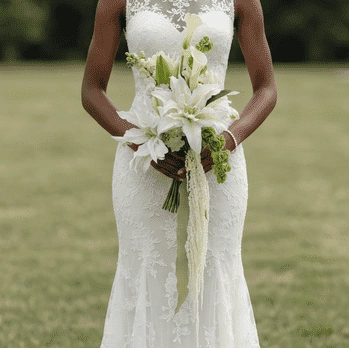
With lace, the effect changes. Large leaves create a striking contrast against intricate embroidery, while the smaller flowers echo the texture of the gown. This can work especially well when the dress has a relatively clean silhouette and the lace is concentrated through the bodice or skirt rather than everywhere at once.
Accessories can remain deliberately restrained. Pearl earrings or a delicate bracelet bring traditional bridal polish, while soft gold jewelry enhances the peach and coral palette. Hair can be sleek and modern or softly gathered depending on whether the overall wedding mood leans editorial or garden-romantic.
Coral Palm can also provide a flexible starting point for bridesmaid styling. Smaller bouquets could focus on peach garden flowers and greenery without repeating the large anthurium and palm leaves. Alternatively, bridesmaids might carry compact arrangements with only ivory, blush, and muted green, allowing the bride’s tropical bouquet to provide the stronger color and shape.
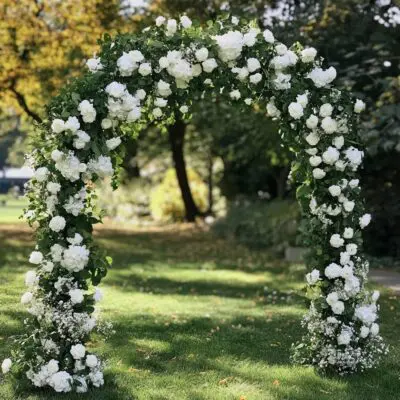
For a ceremony installation, the bouquet’s botanical language can be expanded vertically. Palm foliage and broad leaves could create the framework of an asymmetrical arch, while coral, peach, and ivory flowers appear in concentrated pockets. This would feel more natural than covering the entire structure uniformly with flowers.
Aisle arrangements could become considerably simpler. A few tropical leaves with pale flowers attached to selected chairs would be enough to connect the ceremony space to the bouquet. Afterward, these arrangements could be moved to the reception entrance, bar, or welcome table.
At dinner, Coral Palm invites a more modern floral treatment. Instead of recreating the bridal bouquet in miniature, reception tables could feature low ceramic vessels with peach flowers and a few tropical leaves. Individual anthurium stems in smaller bud vases would create sculptural moments without making the tables feel crowded.
The palette can also travel beyond flowers. Coral napkins, apricot candles, warm beige linens, blush menus, amber glassware, or natural wood details would all work beautifully. Couples who prefer a more understated reception could keep the tables mostly neutral and allow the flowers to provide the color.
Seasonal flexibility is important with this design. Some exact tropical and garden flower varieties may vary throughout the year, but the arrangement does not depend on one species alone. A florist can preserve the overall character by maintaining the balance of blush and peach petals, architectural tropical flowers, dark green leaves, and a loose oversized silhouette.
When ordering a bouquet inspired by Coral Palm, describe the contrast you want as clearly as the colors. Words such as tropical romantic, sculptural, warm pastel, palm foliage, garden texture, asymmetrical, and editorial can help the florist understand why the bouquet works. That is often more useful than insisting on exact duplication.
Before the ceremony, keep the bouquet in a cool indoor location away from direct sunlight. Large tropical leaves may be resilient, but delicate ranunculus-style flowers and soft ivory petals can react quickly to heat. Avoid placing the arrangement near warm windows, radiators, fireplaces, or inside a parked car.
If your florist recommends hydration, keep the stems in clean water until shortly before use. The handle wrapping should remain dry. Because this bouquet contains broad foliage, choose a container wide enough that the leaves are not crushed against the rim.
Carry Coral Palm by the wrapped stems rather than supporting it from underneath the flowers. Repeatedly touching the anthurium or delicate petals can leave marks, and squeezing the arrangement may disturb the carefully layered foliage.
When setting it down, use a stable vase or stand that gives the palm fronds enough room to fall naturally. Do not flatten the bouquet against a tabletop, especially if the leaves extend below the flower line. The asymmetrical outline is an important part of the design.
During warm outdoor portraits, use the bouquet freely but return it to shade during longer breaks. If the ceremony and reception are separated by several hours, follow your florist’s specific recommendations about rehydrating the stems.
After the wedding, several elements may be suitable for preservation. Individual petals can be pressed, selected greenery may dry attractively, and some tropical leaves can be incorporated into framed botanical artwork. A preserved flower paired with a small section of ribbon or stationery can create a meaningful keepsake without needing to save the entire arrangement.
Garden Style Wedding Bouquets Coral Palm is confident without being loud. Soft garden flowers bring romance, coral anthurium introduces modern polish, warm tropical textures add character, and sweeping palm foliage gives the bouquet a dramatic botanical finish. It is a joyful meeting point between destination style and garden elegance.
Related Products
Recently Viewed Products
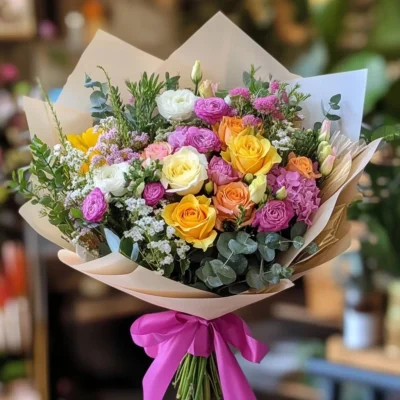
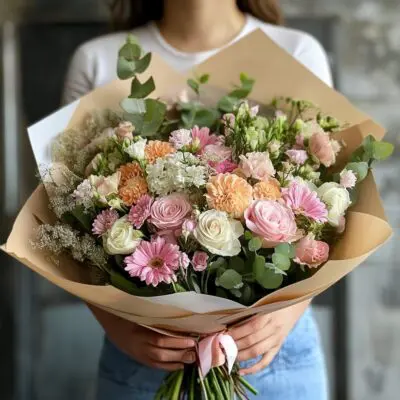
Birthday Bouquet Spring Notes: A Cheerful Celebration in Full Bloom
Price range: $99.00 through $229.00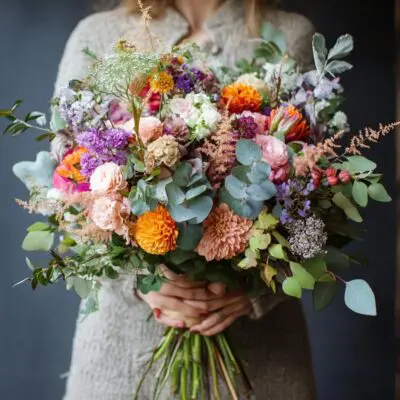

Reviews
There are no reviews yet.