

Tropical Wedding Bouquets Blush Protea
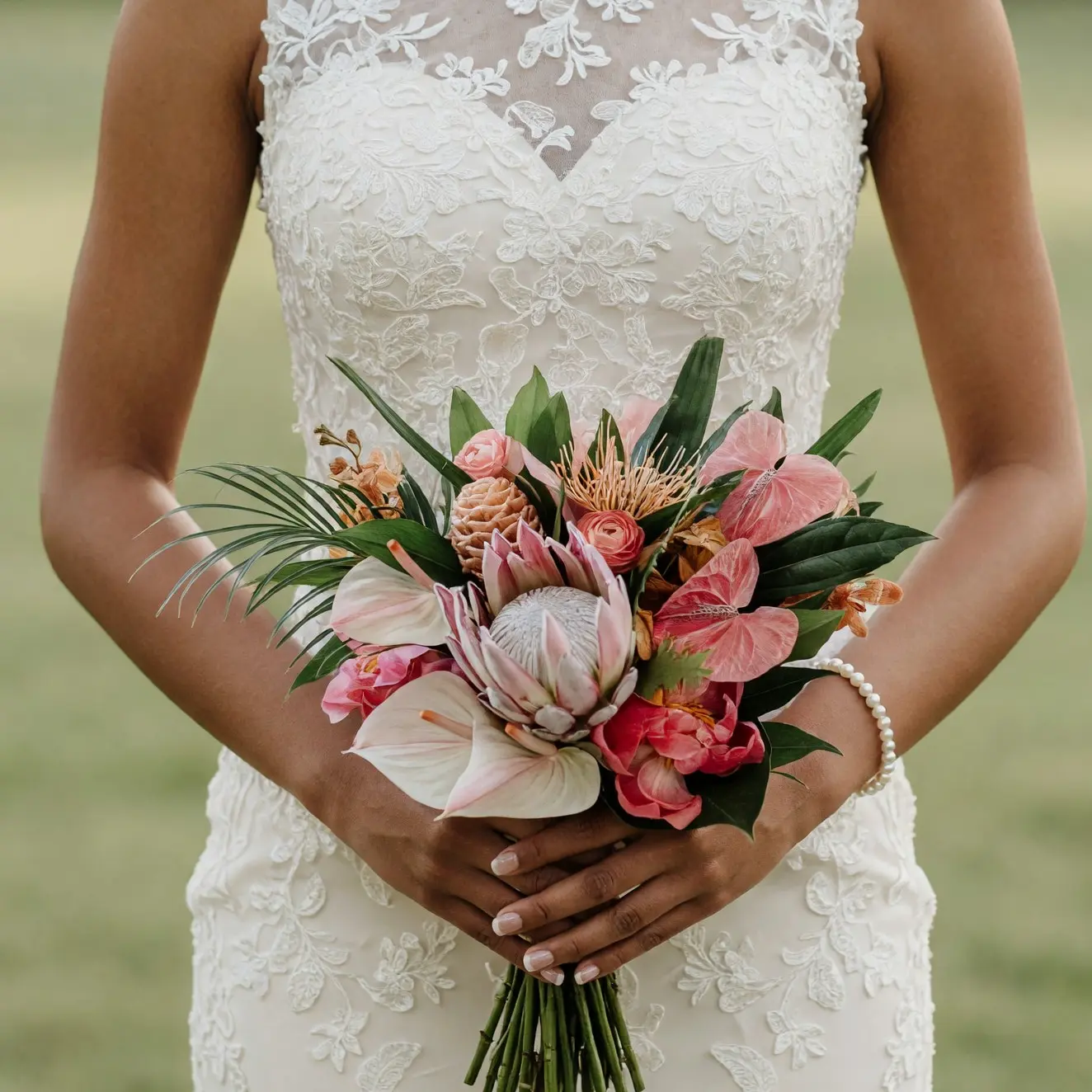
Tropical Wedding Bouquets Blush Protea combines a dramatic king protea with pink anthuriums, coral roses, peach orchids, pincushion textures, palm foliage, and rich tropical greenery. Its romantic exotic palette is ideal for destination, botanical garden, greenhouse, resort, beach, summer, and elegant outdoor weddings.

-
Free shipping on all orders over $30 in the Greater Vancouver Area
popular wedding bouquets take a tropical turn with blush protea, pink anthurium, coral blooms, orchids, palms, and rich greenery.
Tropical Wedding Bouquets Blush Protea is a softer interpretation of exotic bridal florals, combining sculptural tropical flowers with romantic dusty-pink and peach tones. The bouquet feels lush and botanical without becoming overly bright, making it a beautiful choice for brides who love tropical styling but prefer an elegant muted palette. A dramatic king protea anchors the center, while blush anthuriums, coral tropical blooms, delicate orchids, pincushion textures, roses, palms, and glossy foliage build layers around it.
The central king protea is the undisputed focal flower. Its large silvery center is surrounded by pointed blush and cream petals, creating a striking contrast between softness and structure. Unlike a conventional rose or peony, protea has a naturally architectural presence that immediately gives the bouquet a tropical identity.
Its muted coloring is particularly bridal. Pale ivory, dusty pink, and subtle mauve tones allow the protea to stand out without overpowering the rest of the design. Against a white lace gown, it creates a sophisticated focal point that feels exotic yet refined.
Pink anthuriums bring another distinctive texture. Their smooth heart-shaped surfaces contrast beautifully with the protea’s layered petals and textured tropical flowers. Shades range from pale blush to raspberry pink, giving the arrangement dimension while remaining within a cohesive romantic palette.
Some anthuriums sit higher in the bouquet, while others appear closer to the edges. This uneven placement keeps the arrangement from looking too symmetrical and helps create a natural tropical-garden silhouette.
Small coral and pink roses provide familiar bridal softness between the more unusual tropical varieties. Their spiral petals offer a gentle visual transition from the large protea to the delicate orchids and textural blooms around it.
These roses are used sparingly rather than forming the main body of the bouquet. This allows the tropical flowers to remain the star while still giving the arrangement a romantic wedding character.
Warm peach and caramel-colored orchids appear at the sides, introducing subtle golden notes into the pink palette. Their small delicate petals add elegance without creating excessive volume. They also help connect the blush flowers with the darker green foliage.
A pale blush pincushion-style flower rises near the upper center. Its long radiating petals produce an airy texture that feels almost sunburst-like. The muted peach coloring gives it a gentle tropical warmth rather than a bright yellow or orange appearance.
Additional ginger-style blooms add compact layered shapes through the center and lower sections. Their dusty coral and raspberry coloring deepens the palette and prevents Blush Protea from becoming overly pale.
Palm foliage creates graceful movement around the left side of the bouquet. Long slender leaves curve outward naturally, forming a soft fan that balances the heavier floral concentration in the middle.
Broad tropical leaves appear on the right and behind the flowers. Their deep green color gives the bouquet visual weight and helps the pale pink flowers remain clearly defined against the bride’s gown.
This combination of large and small foliage gives Blush Protea a dimensional botanical feel. Rather than using greenery as filler, the leaves are intentionally visible and contribute directly to the shape of the arrangement.
For brides considering popular wedding bouquets but wanting something less traditional than roses and peonies alone, Blush Protea offers a memorable alternative. Its palette remains romantic enough for a classic wedding while its tropical forms bring individuality and contemporary style.
The bouquet pairs especially well with lace dresses. The protea and anthurium create strong shapes against intricate embroidery, while softer roses and orchids echo the romantic character of the gown.
With satin, crepe, or mikado, the bouquet feels cleaner and more editorial. Smooth fabric allows every flower form to stand out distinctly, making the arrangement ideal for minimalist gowns and modern silhouettes.
Blush Protea works beautifully with pearl jewelry, champagne accessories, rose gold, or soft yellow gold. Pearls echo the creamy tones of the bouquet, while warm metals highlight the peach orchids and muted coral flowers.
The arrangement is particularly suitable for destination weddings, botanical gardens, greenhouse ceremonies, tropical resorts, beach celebrations, modern estates, and elegant outdoor receptions. Its muted palette also allows it to work in indoor venues without feeling overly themed.
Bridesmaid bouquets can be simplified by using blush roses, one anthurium, and tropical greenery. This creates a clear visual connection while keeping the bridal bouquet richer and more detailed.
Another option is to give bridesmaids mostly foliage with a single dusty-pink tropical flower. This approach looks especially sophisticated with champagne, sage, blush, terracotta, mauve, or deep green dresses.
Ceremony flowers can continue the same refined tropical aesthetic. Protea, anthurium, orchids, and palms can be arranged asymmetrically on an arch, leaving visible sections of greenery between floral clusters.
This open structure keeps the ceremony design from becoming too heavy and allows each exotic flower shape to remain visible.
For aisle decor, small arrangements of palm foliage and blush anthurium can provide a subtle tropical reference. A single protea at the ceremony entrance could create a beautiful focal point without repeating the entire bouquet.
Reception centerpieces can reinterpret Blush Protea through low botanical arrangements. Ceramic bowls filled with protea, blush anthurium, dusty pink roses, orchids, and dark greenery would create elegant tropical tables without blocking conversation.
For long tables, individual tropical blooms can be displayed in narrow vessels. One vase might hold a protea stem, another an orchid, and another a blush anthurium, with palm foliage connecting the composition.
The palette coordinates beautifully with dusty rose, blush, ivory, mauve, coral, sage, deep green, champagne, and muted gold. These tones can appear in stationery, candles, table linens, bridesmaid dresses, or ceremony textiles without creating an overly matched look.
Blush Protea can transition well between seasons. Spring weddings can emphasize pale pink and cream, summer celebrations can add stronger coral tones, and early-autumn versions can include deeper raspberry, burgundy, or bronze details.
Seasonal flower availability may influence the exact protea, orchids, or anthurium used. A skilled florist can substitute similar tropical flowers while preserving the bouquet’s key characteristics: a large focal protea, blush sculptural blooms, softer roses, delicate orchids, and layered greenery.
When discussing popular wedding bouquets with your florist, describe Blush Protea as tropical, romantic, textural, softly asymmetric, and botanical. Mention that you want the king protea clearly visible and not buried beneath smaller flowers.
Ask for a balance between unusual tropical varieties and softer bridal flowers. Too many oversized leaves can make the arrangement feel heavy, while too many roses may reduce its distinctive exotic character.
Before the ceremony, keep the bouquet in a cool shaded indoor area away from direct sunlight, heaters, or strong dry airflow. Tropical flowers can be resilient, but orchids and roses still benefit from careful handling.
If your florist recommends hydration, place the stems in fresh clean water while keeping ribbon and decorative wrapping dry. Choose a vase wide enough to support the bouquet without bending the palm leaves.
Carry Blush Protea by the wrapped stems instead of gripping the flower heads. Anthuriums can show pressure marks, orchids may bruise, and delicate petals can become damaged through repeated touching.
When resting the bouquet, keep it upright in a stable container. Avoid laying it flat, as this can crush the orchids, crease tropical foliage, or flatten the protea petals.
During outdoor photography, return the bouquet to shade during longer breaks. If the ceremony and reception are separated by several hours, follow your florist’s recommendations regarding hydration and temperature.
After the wedding, protea and selected foliage may be suitable for drying or professional preservation. A preserved protea petal, orchid, ribbon, or small leaf combined with wedding stationery can create a distinctive botanical keepsake.
Tropical Wedding Bouquets Blush Protea combines exotic structure with soft bridal romance. King protea creates drama, blush anthurium adds sculpture, orchids provide delicacy, roses bring familiarity, and tropical foliage gives the bouquet a rich botanical finish.
Related Products
Recently Viewed Products


Birthday Bouquet Spring Notes: A Cheerful Celebration in Full Bloom
Price range: $99.00 through $229.00

Reviews
There are no reviews yet.