
Tropical Wedding Bouquets Ember Palms
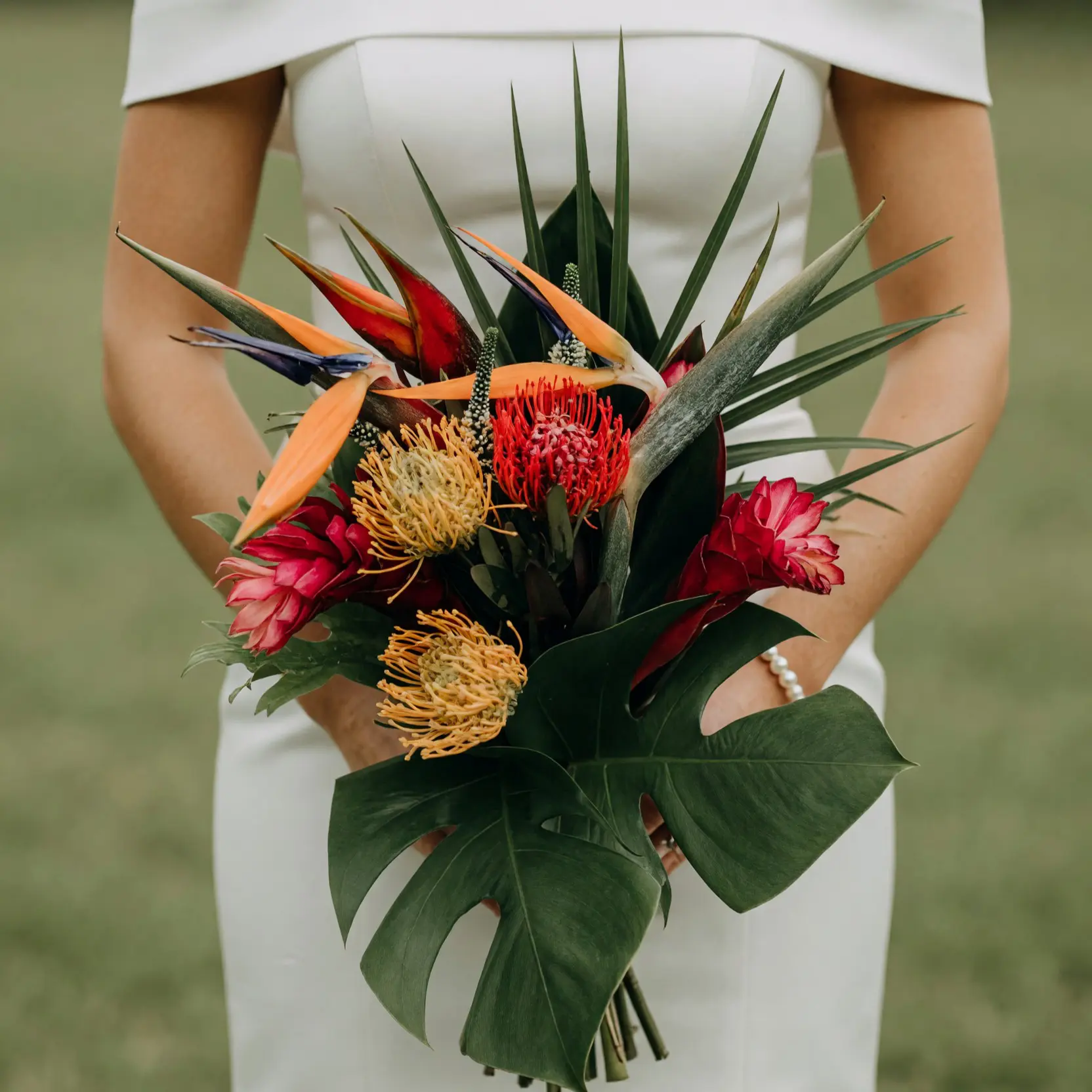
Tropical Wedding Bouquets Ember Palms combines orange bird of paradise, golden and red pincushion protea, deep red tropical blooms, monstera leaves, and dramatic dark greenery. Its sculptural modern style is ideal for destination, beach, greenhouse, botanical garden, resort, summer, and contemporary weddings.

-
Free shipping on all orders over $30 in the Greater Vancouver Area
popular wedding bouquets turn boldly tropical with bird of paradise, pincushion protea, red ginger, dark foliage, and sculptural palms.
Tropical Wedding Bouquets Ember Palms is created for a bride who wants her flowers to feel architectural, confident, and unmistakably exotic. Instead of relying on soft pastel roses or traditional rounded forms, this bouquet celebrates dramatic tropical shapes. Orange bird of paradise flowers stretch outward like flames, golden and scarlet pincushion blooms create textured focal points, deep red tropical flowers add richness, and oversized monstera leaves provide a dark green foundation. The result is expressive, modern, and full of personality.
The bird of paradise flowers immediately establish the bouquet’s tropical identity. Their long orange petals and pointed blue details create movement in several directions, giving the arrangement an energetic silhouette. Rather than keeping every stem close to the center, these flowers reach outward and upward, creating dramatic lines against a simple white wedding gown.
Golden pincushion protea-style blooms bring a completely different texture. Their fine radiating petals resemble tiny bursts of sunlight and create visual contrast against the smooth, structured leaves. Warm yellow and orange tones connect naturally with the bird of paradise, while the unusual shape adds depth without requiring a large number of flowers.
A vivid red pincushion bloom intensifies the palette near the center. Its fiery color gives Ember Palms its name and works beautifully with the burgundy and crimson flowers placed throughout the bouquet. These darker tropical accents prevent the orange and yellow tones from feeling too light and create a sophisticated balance between bright and moody shades.
Deep pink and red ginger-like flowers add weight around the lower sides. Their waxy layered petals look almost sculptural, offering a rich visual counterpoint to the narrow orange flowers above. They also introduce a jewel-like quality that makes the bouquet feel luxurious even though its shape remains natural and botanical.
The foliage is equally important. Large monstera leaves anchor the lower section and provide a dramatic backdrop for the flowers. Their distinctive split shape creates instantly recognizable tropical character, while their deep green tone makes the warmer flowers appear even brighter.
Long spear-like leaves rise behind the bouquet, producing height and structure. They make Ember Palms feel less like a traditional floral arrangement and more like a piece of botanical design. The leaves frame the bride’s torso beautifully and create strong vertical lines that photograph especially well against smooth satin, silk, or crepe gowns.
Dark glossy foliage is layered through the center to create depth. These leaves prevent the bouquet from appearing hollow between the more unusual flowers and allow every bloom to remain clearly defined. Their almost black-green color also introduces sophistication, helping the tropical palette feel elegant rather than playful.
For brides exploring popular wedding bouquets but wanting something distinctly different from romantic rose arrangements, Ember Palms offers a memorable direction. It has enough structure to feel polished for a formal ceremony, yet the tropical flowers give it the freedom and individuality associated with destination and modern outdoor weddings.
The arrangement works especially well with minimalist bridal fashion. A clean off-the-shoulder gown creates an ideal backdrop because there are no competing embellishments around the bouquet. The flowers become the primary decorative statement, and the strong green leaves stand out beautifully against white fabric.
With lace, the effect becomes more eclectic. The structured tropical foliage contrasts with delicate embroidery, creating a mix of romantic and contemporary styling. Brides who want this contrast can keep jewelry simple and let the bouquet provide most of the visual drama.
Gold jewelry complements the warm orange, yellow, and red flowers particularly well. Pearls can create a softer contrast and connect the tropical arrangement back to classic bridal styling. Sleek hair, a low bun, or clean waves will keep the overall look sophisticated.
Ember Palms is perfect for beach weddings, botanical gardens, greenhouse venues, modern resorts, destination ceremonies, tropical estates, summer celebrations, and contemporary city weddings that need a bold floral focal point. It can also work beautifully in industrial spaces where organic foliage softens architectural surroundings.
Bridesmaid bouquets can take a simpler interpretation. Smaller arrangements might feature one bird of paradise flower, a red ginger bloom, and several tropical leaves. Another option is to give bridesmaids mostly greenery with a single orange or red accent, allowing the bride’s bouquet to remain the most elaborate.
The ceremony installation can continue the same sculptural language. Instead of covering an arch with traditional flowers, use monstera leaves, palms, and dark greenery as the primary structure. Bird of paradise flowers and pincushion protea can then be placed asymmetrically to create concentrated areas of color.
For an aisle, individual tropical leaves or small groupings of red and orange flowers can be used sparingly. This type of bouquet works best when surrounding decor gives each botanical element enough room to be appreciated rather than repeating every flower everywhere.
Reception centerpieces can become low and architectural. Wide vessels with monstera leaves, protea, ginger, and dark greenery would echo Ember Palms while keeping sightlines open. On long tables, individual tropical flowers placed in narrow vases can create a modern gallery-like effect.
The palette pairs naturally with forest green, burgundy, burnt orange, gold, terracotta, warm ivory, black, and deep plum. For a lighter destination aesthetic, combine the flowers with white linen, natural wood, and woven textures. For a more dramatic evening look, use dark tableware, amber candles, and metallic gold details.
Seasonal and regional availability may influence the exact tropical flowers used. A florist can substitute related protea, ginger, heliconia, or specialty foliage while maintaining the same visual character. The essential ingredients are strong orange and red color, sculptural flower forms, dark greenery, and large tropical leaves.
When discussing popular wedding bouquets with your florist, describe Ember Palms as bold, tropical, asymmetric, architectural, and foliage-driven. Mention that you want flower shapes to remain clearly visible rather than being packed into a traditional round bouquet. Ask for a strong contrast between fiery blooms and dark green leaves.
Tropical flowers can be surprisingly durable, but they still benefit from proper care. Before the ceremony, keep the bouquet in a cool, shaded indoor location away from direct sun and strong air conditioning. Extreme temperature changes may affect some tropical varieties.
If your florist recommends hydration, place the stems in clean fresh water while keeping decorative wrapping dry. Because the bouquet contains broad leaves, choose a vase wide enough to prevent the foliage from being folded or crushed.
Carry Ember Palms by the wrapped stems rather than gripping the leaves. Large monstera leaves can crease if repeatedly bent, while bird of paradise petals may shift if handled too often. The dramatic angles created by the florist are intentional.
When resting the bouquet, keep it upright in a supportive vase. Avoid placing it flat on a chair or table because the larger tropical leaves can bend under the weight of the flowers.
During outdoor photography, keep the bouquet shaded during long breaks. Tropical blooms often tolerate warmth better than delicate garden roses, but prolonged direct sunlight can still affect color and freshness. Follow your florist’s instructions if the bouquet needs water between ceremony and reception.
After the wedding, selected protea-style flowers and tropical leaves may be suitable for drying or professional preservation. Their strong shapes can create beautiful botanical artwork, especially when combined with ribbon, invitation paper, or a favorite wedding photograph.
Tropical Wedding Bouquets Ember Palms is dramatic without becoming chaotic. Bird of paradise provides movement, pincushion protea adds texture, red ginger brings richness, monstera leaves create structure, and dark tropical foliage gives the bouquet an unforgettable modern finish.
Related Products
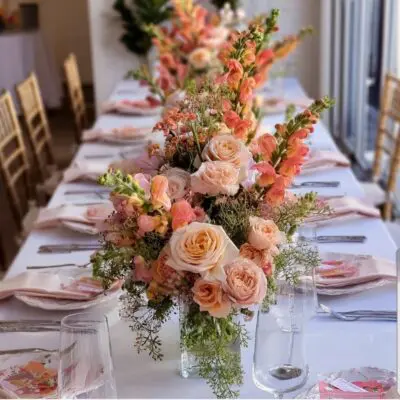
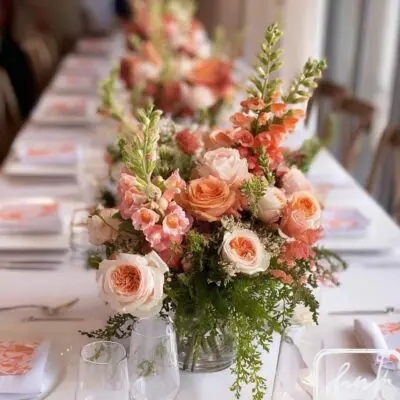
Peach Petals flower centrepiece for Wedding table
Price range: $79.00 through $149.00Recently Viewed Products
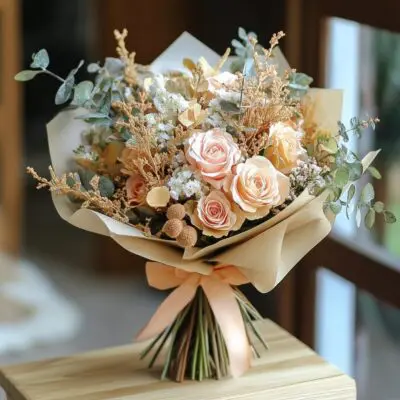
Birthday Bouquet Spring Notes: A Cheerful Celebration in Full Bloom
Price range: $99.00 through $229.00

Reviews
There are no reviews yet.