

Garden Style Wedding Bouquets White Fern
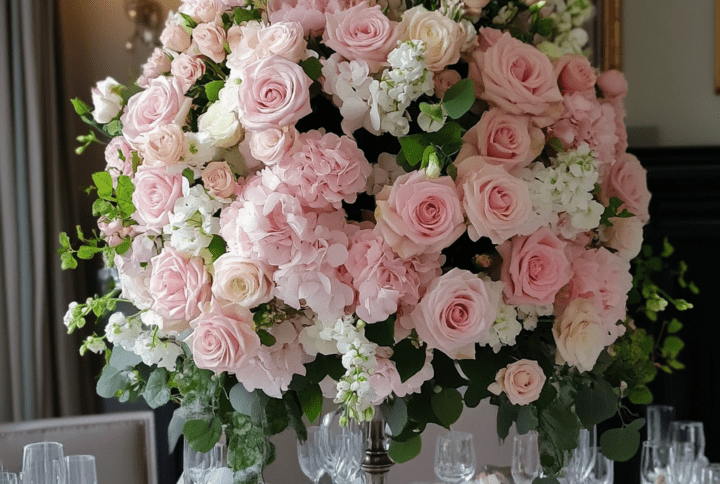
Garden Style Wedding Bouquets White Fern combines creamy roses, delicate white blossoms, eucalyptus, soft fern textures, and long trailing greenery. Its timeless ivory and green palette is ideal for garden, estate, church, vineyard, countryside, and elegant outdoor weddings.

-
Free shipping on all orders over $30 in the Greater Vancouver Area
wedding bouquet cost often reflects flower quality, bouquet size, seasonal availability, and the complexity of a flowing garden-style design.
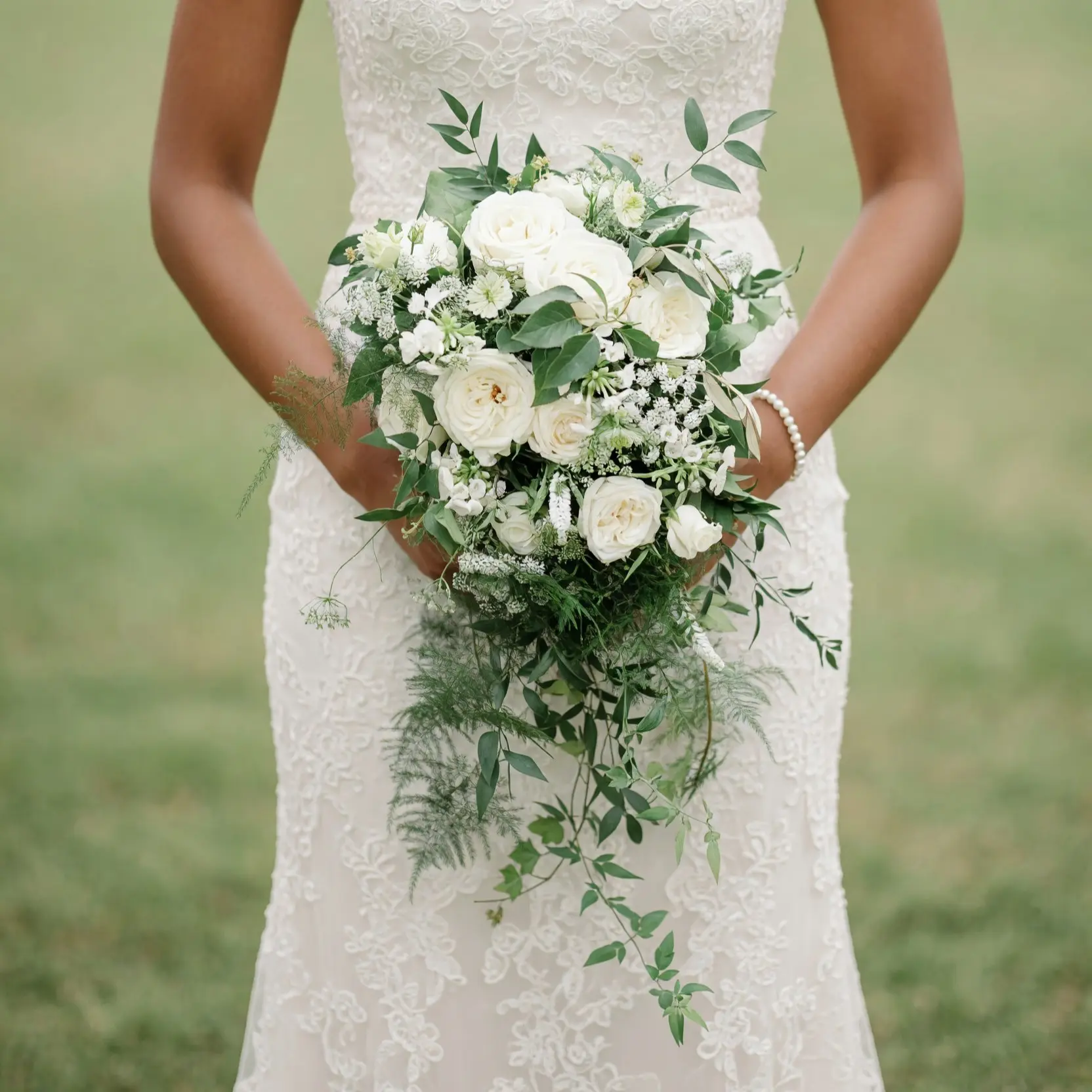
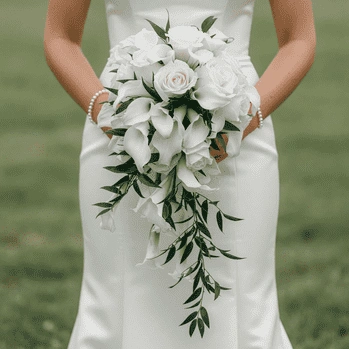
Garden Style Wedding Bouquets White Fern has a quiet, elegant presence built almost entirely from ivory flowers and layers of fresh green foliage. The bouquet combines creamy roses, smaller white blossoms, airy filler flowers, delicate buds, eucalyptus-style leaves, soft fern textures, and long trailing greenery. Rather than relying on bold color, the design uses shape, contrast, and movement to create an arrangement that feels refined, romantic, and beautifully natural.
The flowers are concentrated through the upper and middle sections, creating a generous but not overly dense composition. Larger ivory roses establish the classic bridal mood, while smaller white blooms soften the spaces between them. Fine clusters of tiny flowers add a lace-like quality that works particularly well with embroidered bridal gowns. This variation in flower size gives the bouquet depth even though the color palette remains intentionally restrained.
What makes White Fern especially distinctive is the way greenery becomes part of the design rather than simply surrounding the flowers. Rounded eucalyptus leaves bring a cool silvery tone, darker foliage provides contrast, and fine fern-like stems create an almost feathered texture beneath the blossoms. Several vines continue downward, producing a relaxed cascade that feels as though the bouquet is still growing.
The upper section remains slightly more structured, which gives the bride an easy focal point to hold. From there, the arrangement gradually loosens. Small white flowers begin to mix with longer leaves, and the bottom becomes increasingly airy. This transition creates movement without relying on a formal waterfall shape. The result is softer and more modern than a traditional cascade.
The white and green palette makes this bouquet particularly versatile. It can fit into a classic church wedding, a garden ceremony, a vineyard celebration, a countryside estate, a modern conservatory, or an intimate outdoor event. Because there are no dominant accent colors, the bouquet can adapt easily to different bridesmaid dresses, table linens, stationery, and venue styling.
White Fern is also a strong choice for brides who want the dress to remain the visual centerpiece. Against lace, the delicate filler flowers and fern textures echo the fabric’s intricate patterns. Against satin or crepe, the irregular greenery introduces natural movement and softens the clean lines of the gown. The bouquet works especially well with fitted silhouettes because the cascade extends vertically rather than adding too much width at the waist.
Its restrained palette also creates a timeless quality in photographs. White and green flowers are less dependent on a specific color trend and tend to remain visually elegant long after the wedding day. Natural light brings out the cream undertones of the roses, while shaded outdoor settings emphasize the different greens and make the bouquet feel especially fresh.
For brides who prefer a very polished look, the greenery can be kept slightly shorter and more controlled. For a looser garden style, longer vines and fern textures can be allowed to extend farther below the bouquet. This flexibility makes the design easy to adapt while maintaining its core character.
Bridesmaid flowers can take a simpler version of the same concept. Smaller bouquets with ivory roses, white filler flowers, and eucalyptus would coordinate naturally while leaving the longer cascade for the bride. Another option is to give attendants petite greenery-heavy arrangements with only a few white flowers, creating a subtle hierarchy without introducing new colors.
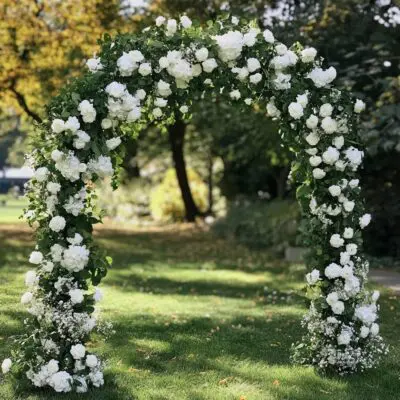
At the ceremony, White Fern can translate beautifully into an arch or altar arrangement. Instead of filling every area with flowers, foliage can create the structure while white blooms appear in concentrated clusters. This gives the installation an organic, architectural look and keeps the overall design airy.
Reception centerpieces can continue the same approach. Low arrangements with white roses, small blossoms, eucalyptus, and fern-like textures work beautifully on long tables, while individual bud vases can create a lighter atmosphere for smaller receptions. White candles, natural linen, clear glass, silver, sage, or pale wood tones can all complement the bouquet without competing with it.
When researching wedding bouquet cost, couples should remember that a white and green arrangement is not automatically inexpensive. Premium roses, specialty foliage, cascading mechanics, and the additional time required to build a balanced shape can all influence the final price. A bouquet with fewer expensive flowers but a large amount of carefully placed greenery may still require considerable design work.
The final wedding bouquet cost can also change with season and flower availability. Some ivory varieties may be abundant at one time of year and harder to source at another. Imported flowers, specialty roses, and unusual foliage may add expense. Allowing the florist to choose the best available white flowers within the desired style can often provide greater flexibility while preserving the look.
A practical way to order this design is to focus on its essential characteristics: ivory and white flowers, cool green foliage, fine botanical texture, and a graceful cascade. That gives the florist enough freedom to select fresh seasonal materials while keeping the bouquet visually close to White Fern.
On the wedding morning, keep the bouquet in a cool place away from direct sunlight, heaters, and strong airflow. Pale flowers can show dehydration and bruising more quickly than darker varieties, so gentle handling is especially important. If the florist recommends keeping the stems in water, use a clean container and make sure decorative ribbon stays dry.
Carry the bouquet by the wrapped handle rather than by the flower heads. Let the greenery hang naturally instead of repeatedly lifting or tucking it. The asymmetrical vines are intentional, and unnecessary adjustment can change the shape of the arrangement.
When placing the bouquet aside for photographs or during the reception, a tall vase is preferable. Make sure the lower greenery has room to fall freely and is not pressed underneath the main bouquet. Avoid placing pale flowers near makeup, food, drinks, or surfaces that could mark them.
For outdoor ceremonies in warm weather, return the bouquet to shade whenever it is not being used. Never leave it inside a parked vehicle. If the event schedule includes a long break, ask the florist whether the stems should be rehydrated before the reception.
White Fern also offers lovely preservation possibilities. Eucalyptus and some greenery can dry attractively, while individual roses and smaller flowers may be pressed. A framed arrangement combining petals, leaves, ribbon, and wedding stationery can turn part of the bouquet into a lasting keepsake.
Garden Style Wedding Bouquets White Fern is designed for a bride who prefers texture over color and movement over perfect symmetry. Creamy flowers create softness, eucalyptus adds cool elegance, feathery greenery introduces depth, and long vines give the bouquet its graceful garden finish. The result is understated, romantic, and beautifully timeless.
Related Products
Recently Viewed Products


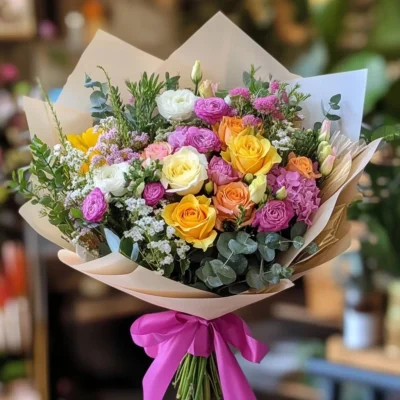
Birthday Bouquet Spring Notes: A Cheerful Celebration in Full Bloom
Price range: $99.00 through $229.00

Reviews
There are no reviews yet.